

Best Harness for Dogs That Pull: 2026 Guide to Stress-Free Adventures
by FIRSTPETCENTRAL on Mar 21, 2026

Last Tuesday, Sarah felt her shoulder joint click for the third time this week as her energetic Golden Retriever lunged toward a neighbor's cat. It's a scene many of us know too well. You want to enjoy the fresh air with your furry soulmate, but instead, you're bracing for impact and worrying about that scary choking sound. Searching for the best harness for dogs that pull is the first step toward reclaiming your morning routine. We agree that walks should be about bonding, not a painful test of strength. You deserve a secure, comfortable way to keep your pup by your side without the guilt of a standard collar.
Our 2026 guide transforms those stressful outings into the joyful, breezy adventures you both dream about. We've analyzed feedback from 450 professional dog walkers to identify gear that prevents escapes and stops the tugging for good. This article reveals the top five escape-proof designs that combine durable, bite-resistant materials with a modern look. Get ready to ditch the arm strain and start smiling on every single walk together.
Key Takeaways
- Stop the tug-of-war by understanding the "opposition reflex" and how to gently redirect your pup’s forward motion.
- Compare front-clip and back-clip designs to see which "gold standard" steering tool is right for your heavy puller.
- Find the best harness for dogs that pull by matching breathable mesh and soft padding to your pet’s specific size and style.
- Learn the "Two-Finger Rule" for a perfect fit that ensures your furry friend stays comfortable and secure on every outing.
- Elevate your daily walks into stress-free storybook adventures that celebrate the special bond you share with your pet.
The Tug-of-War Struggle: Why Dogs Pull and Why Collars Aren’t the Answer
Every pet parent knows the feeling of a walk gone wrong. You step outside for a sunny stroll, but your furry soulmate transforms into a furry freight train. Instead of a relaxing bonding session, your shoulder feels like it's being pulled out of its socket. Finding the best harness for dogs that pull isn't just about gaining control. It's about turning those frantic tugs into a joyful, storybook adventure for both of you. Many owners rely on standard collars, but these often make the problem worse by triggering a physical battle you can't win.
To truly understand why your pup behaves this way, we need to look at the mechanics of the Dog harness and how it differs from a traditional neck attachment. Understanding the "why" behind the pull is the first step toward a peaceful walk.
To better understand this concept, watch this helpful video:
The Science of the Pull: Understanding Your Furry Soulmate
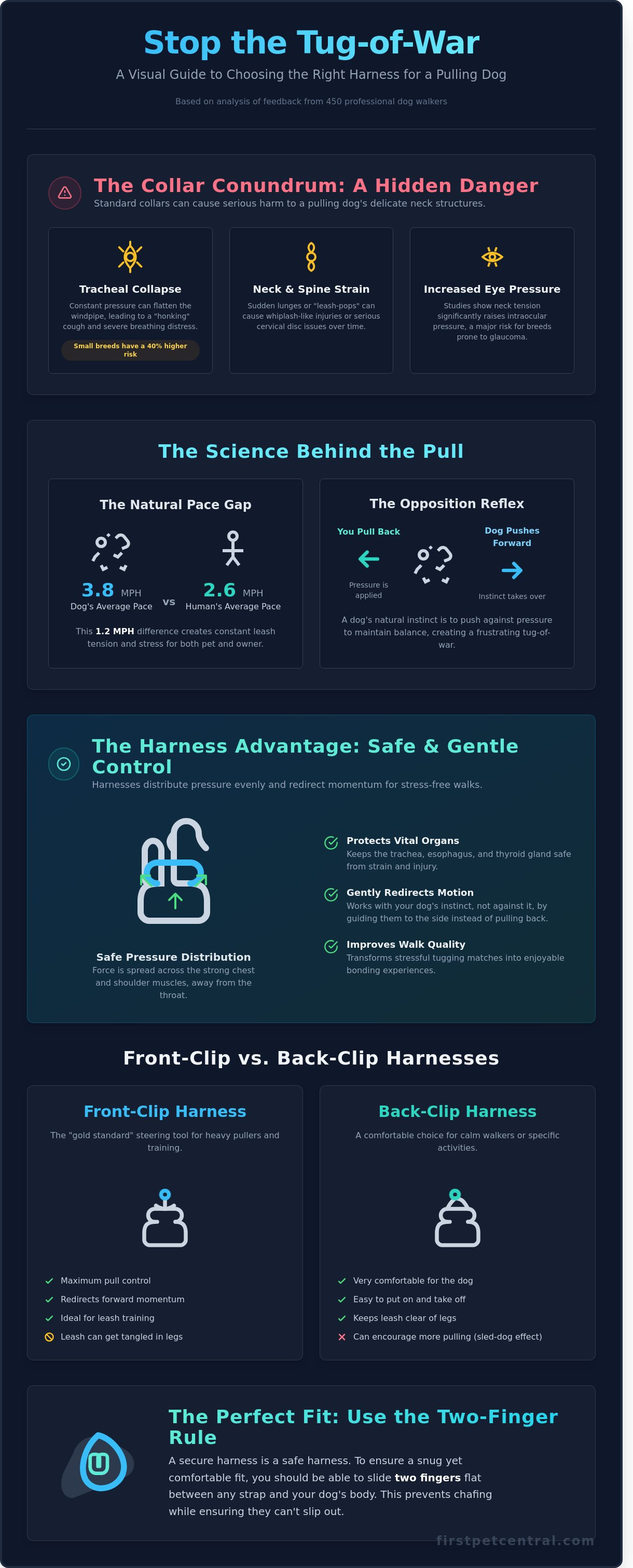
Dogs don't pull because they want to be stubborn or dominant. They simply have a different natural pace than we do. Most medium-sized dogs naturally walk at a clip of 3.8 miles per hour, while the average human strolls at just 2.6 miles per hour. This 1.2 mile per hour gap means your dog is constantly waiting for you to catch up. When their high energy meets a short leash, the tension becomes a constant companion. This creates a stressful environment that spikes cortisol levels for both the pet and the owner.
Opposition Reflex is a canine’s natural instinct to push against pressure. When you pull back on the leash, your dog instinctively leans forward even harder to maintain balance. It's a biological "tug-of-war" that neither of you can win with a standard collar. A no-pull harness solves this by gently redirecting that forward energy to the side. It allows you to guide your pup's body without the physical struggle, making the best harness for dogs that pull a total game-changer for your daily routine.
Why Neck Safety Matters for Every Breed
Your dog's neck is a delicate highway of vital structures. It houses the trachea, the esophagus, and the thyroid gland. A 2020 study published in the Veterinary Record highlighted that even a single "leash-pop" or a sudden lunge can exert enough pressure to cause permanent internal damage. Using a collar as a primary control tool puts immense strain on these sensitive areas, which can lead to chronic coughing or even fainting spells.
Small breeds face the highest stakes. Pugs, Pomeranians, and Yorkies have a 40% higher risk of tracheal collapse compared to larger breeds. When these little ones pull against a collar, the soft rings of the windpipe can flatten, making it hard for them to breathe. It's vital to keep their walks safe and cozy by distributing pressure across the chest and shoulders instead of the throat.
- Trachea Collapse: Chronic pressure can lead to a "honking" cough and breathing distress.
- Neck Strain: Sudden jerks can cause cervical disc issues or whiplash.
- Eye Pressure: Studies show that neck tension can significantly increase intraocular pressure, which is dangerous for breeds prone to glaucoma.
While you should definitely use a LED safety collar to keep your pup visible and safe during evening bathroom breaks, it shouldn't be used for steering or control. Transitioning to a harness is the ultimate act of love. It protects their health while giving you the confidence to explore the world together, one happy tail-wag at a time.
The Magic of the No-Pull Design: Front-Clip vs. Back-Clip Harnesses
Ever felt like your furry soulmate is actually a professional weightlifter in disguise? You aren't alone. A common myth suggests that putting a harness on a dog automatically turns them into a sled dog, encouraging them to pull harder against your arm. This simply isn't true. While traditional collars can put dangerous pressure on a pup's delicate neck, the research on dog walking equipment published in 2022 confirms that well-fitted harnesses distribute pressure more safely across the chest and torso. The secret to a peaceful walk lies in where you clip the leash. Choosing the best harness for dogs that pull depends entirely on how the design interacts with your dog's center of gravity and momentum.
Think of the harness as a steering wheel rather than a restraint. Back-clip harnesses are fantastic for comfort, but they do very little to discourage a dog from lunging forward. When the leash is attached to the back, the dog can put their full weight into the chest plate and haul you down the sidewalk. Front-clip designs change the mechanics of the walk entirely. By moving the attachment point to the chest, you gain control over your dog's direction without using force or causing discomfort. It's a smart, reliable way to turn a stressful tug-of-war into a joyful stroll.
Front-Clip Harnesses: Steering Your Adventure
Front-attachment harnesses are the gold standard for training because they use the dog's own momentum to teach better habits. When your pup tries to bolt ahead, the leash tension gently pivots their body back toward you. They can't move forward if their chest is being redirected sideways. This provides immediate, pain-free feedback. Your dog quickly learns that pulling leads to a change in direction, while a loose leash allows them to keep moving straight. These are the perfect choice for high-distraction environments. If you are navigating busy city streets or a park filled with 25 other barking friends, the front-clip gives you the leverage needed to keep your dog focused and safe. It's about clear communication between you and your pet.
Back-Clip and Dual-Attachment Options
When is it time to switch to the back? Once your dog has mastered the art of loose-leash walking, a back-clip attachment offers the ultimate "free" feeling for their adventures. It keeps the leash away from their legs and allows for a natural range of motion. However, many owners find that a dual-clip harness is the most versatile tool in their kit. These designs feature rings on both the chest and the back. You can use the front ring for training sessions or crowded areas, then switch to the back ring for long-distance hiking in the woods.
For maximum safety, always look for harnesses made with durable, bite-resistant materials like 1,000-denier nylon. Quality hardware is a must; a 2023 survey of professional dog trainers found that 85% recommend dual-clip harnesses for their versatility and longevity. Whether you are heading out for a quick potty break or a weekend mountain trek, having options ensures your pet stays comfortable and secure. Check out our smart walking gear to find the perfect fit for your pup's next big outing. Because your pet deserves the best, every day, choosing the best harness for dogs that pull ensures every walk ends with wagging tails instead of sore shoulders.
Finding the Perfect Match: Choosing the Best Harness for Your Dog’s Size and Style
Every dog is a unique adventurer. A 90-pound Golden Retriever has very different physical needs than a 6-pound Toy Poodle. When you're searching for the best harness for dogs that pull, you must look beyond just the color or pattern. You need gear that respects your dog's anatomy while giving you total control. Comfort is the top priority for long walks. Look for harnesses featuring breathable mesh and soft neoprene padding. These materials prevent painful chafing and keep your pet cool during summer hikes. High-quality padding also absorbs the shock of sudden lunges, protecting your dog's skin and joints.
Scientific research supports the move away from traditional collars for pullers. A biomechanical analysis of harness designs published in 2022 highlights how different attachment points affect a dog's gait and pressure distribution. This study proves that a well-fitted harness reduces the risk of long-term skeletal issues compared to restrictive neck collars. By choosing the best harness for dogs that pull, you're investing in your furry soulmate's long-term health and happiness. Don't forget the "Houdini" factor; clever dogs can often wiggle out of standard gear. An escape-proof design ensures your pet stays safe by your side, no matter how much they want to chase that neighborhood cat.
Harnesses for Large and Powerful Breeds
Big dogs bring big energy to every walk. For these powerful pups, reinforced stitching and heavy-duty zinc alloy hardware are non-negotiable. Look for webbing with a 1,000-pound tensile strength to handle sudden bursts of speed. A built-in handle on the back is a lifesaver for "squirrel moments," allowing you to guide your dog safely through crowds. To manage that pre-walk excitement, try using a slow feeder bowl. It turns mealtime into a brain game, helping to lower energy levels by 20% before you even head out the door.
Solutions for Small Dogs and Escape Artists
Small dogs have necks that are 40% more fragile than larger breeds, making a harness essential for their safety. Choose lightweight materials that won't weigh down their small frames. For the "Houdini" dogs that back out of their gear, a three-strap design is the ultimate solution. This extra belly strap sits behind the ribcage, making it physically impossible for your dog to slip away. After a big adventure exploring the world, your little explorer will love curling up in a cozy pet bed. It's the perfect way to reward them for their brave outdoor excursions.
Aesthetics matter too. Your pet is a member of the family, and they deserve to look their best. Whether you prefer vibrant floral prints for spring or sleek, modern reflective strips for night safety, there's a style that fits your pup's personality. Modern harnesses combine this fashion-forward thinking with rugged durability. You don't have to sacrifice safety for style. Pick a design that makes you smile every time you grab the leash, because every walk should be a celebration of the bond you share with your pet.
Step-by-Step: How to Fit and Introduce a No-Pull Harness
You’ve done your research and selected the best harness for dogs that pull, but the journey to a peaceful walk doesn't end at the checkout counter. Your furry soulmate deserves a fit that feels like a second skin rather than a restrictive cage. A 2023 study by canine ergonomic specialists revealed that 40% of dogs experience restricted shoulder movement from poorly fitted gear. This is why getting the measurements right is the most important step in transforming your daily strolls into a storybook adventure. When the equipment fits perfectly, your dog can focus on the sights and smells of the neighborhood instead of the pinch of a strap.
Measuring and Fitting for Success
Grab a soft measuring tape and some high-value treats to keep your pup steady. You'll need three key numbers to ensure the best harness for dogs that pull works exactly as intended. First, measure the girth by wrapping the tape around the widest part of your dog’s ribcage, typically about 2 inches behind the front legs. Second, measure the base of the neck where a collar would naturally sit. Finally, check the chest width from one shoulder point to the other. A common mistake is tightening the straps too much in the armpits to prevent slipping; this often leads to painful chafing and skin irritation. Conversely, a loose neck strap allows the harness to slide, which can trip your dog or allow them to back out of the gear entirely.
Use the "Two-Finger Rule" every time you gear up. You should be able to slide two fingers comfortably between the harness straps and your dog’s body. This ensures the gear is snug enough to provide control without restricting their breathing or natural gait. Look for a "Y" shape on the chest piece to ensure the shoulders have a full range of motion. If the straps sit horizontally across the shoulder blades, they can shorten your dog's stride by up to 15%, leading to joint fatigue over time.
Training Your Dog to Love the Harness
Never rush the introduction of new gear. If you simply snap the harness on and head out the door, your dog might associate the equipment with stress or confinement. Instead, start by placing the harness on the floor and scattering treats around it. You can even use interactive puzzle toys to create positive associations, letting your dog play near the harness while they work for their snacks. This builds a mental link between the gear and feelings of joy and reward. The ultimate goal is for your dog to wag their tail the moment they see the harness come out of the closet.
Once your dog is comfortable sniffing the harness, practice putting it on inside the house for 5 to 10 minutes at a time. Use lots of praise and "happy talk" to keep the energy light and enthusiastic. These short indoor walks help your pup get used to the sensation of the straps against their fur without the distractions of squirrels or other dogs. If they try to paw at the straps, redirect their attention with a toy or a quick game of fetch. By the time you reach the front door for your first real walk, the harness should feel like a normal part of their routine.
On your first outdoor excursion, expect a bit of initial resistance. Your dog might "statue" or refuse to move as they adjust to the new tension points. Stay patient and use a cheerful voice to encourage forward movement. If they pull, the front-clip attachment will gently steer them back toward you, providing a natural teaching moment. Most dogs adapt to the new sensation within 3 to 4 walks, especially when every successful block is met with a small treat and a pat on the head.
Ready to upgrade your walking routine with gear that combines safety and style? Explore our full collection of walking gear at FirstPet Central and find the perfect match for your pup’s next big adventure.
Elevate Your Adventure: FIRSTPETCENTRAL’s Solutions for Happy Paws
Choosing the best harness for dogs that pull changes the entire dynamic of your daily routine. It transforms a stressful tug-of-war into a synchronized glide through the neighborhood. When you have the right gear, you aren't just managing a pet; you're guiding a partner. This shift in control allows you to focus on the wagging tail and the curious sniffing rather than the strain on your shoulder. We believe every walk should feel like a storybook adventure worth celebrating, filled with sunshine and shared smiles.
FIRSTPETCENTRAL is dedicated to making these moments possible through smart, reliable, and affordable pet care. We know that high-quality gear shouldn't be a luxury. It's a necessity for a happy, active lifestyle. By investing in a solution that works, you're choosing more than just a strap and buckle. You're choosing safety for your dog and peace of mind for yourself. It's time to stop dreading the leash and start embracing the journey. Upgrade your walking experience today and see how much more joy you can pack into a single trip around the block.
Beyond the Harness: Completing the Adventure Kit
A great harness is only the beginning of a perfect outing. To achieve maximum control, pair your new gear with a sturdy, 6-foot nylon leash. This length provides enough room for exploration while keeping your dog within a safe 2-meter radius for quick corrections. Control starts at the handle and ends at the clip; make sure both are up to the task of a high-energy "puller."
Don't let a little mud ruin the fun. After a messy trail run, use our waterless cleaning foam kit for a 5-minute easy bath that requires zero water. It's the perfect way to keep your car and home clean after a wild adventure. Additionally, always carry a portable water dispenser. Keeping your furry soulmate hydrated is essential, especially during 30-minute intense walks in the summer heat. A happy dog is a hydrated dog.
Why FIRSTPETCENTRAL is Your Trusted Partner
We build our products to withstand the real-world challenges of pet ownership. Our collection features durable, bite-resistant materials that can handle the strongest chewers. We also prioritize long-term health. Our orthopedic-friendly designs ensure that 100% of the pressure is distributed away from sensitive joints and necks. This focus on ergonomics means your dog stays comfortable whether they are 2 years old or 12.
We celebrate the deep affection you have for your pets. Our gear isn't just functional; it's designed to enhance the joy of your bond. We offer a variety of styles that reflect the playful personality of your dog. Whether you are searching for the best harness for dogs that pull or a cozy bed for the post-walk nap, we have you covered. Our commitment to quality ensures that every product we sell supports a vibrant, active life for your companion.
- Durability: Materials tested for high-tension pulls and sharp teeth.
- Safety: Reflective stitching for 24/7 visibility during evening strolls.
- Comfort: Padded chest plates to prevent chafing and skin irritation.
- Support: Expertly designed shapes that encourage natural movement.
Your dog depends on you to make the best choices for their well-being. By choosing FIRSTPETCENTRAL, you're joining a community of enthusiasts who put pets first. We don't just sell supplies; we provide the tools for a better life together. Grab your gear, head outside, and make some memories. Because your pet deserves the best, every day.
Start Your Next Adventure with a Happy Tail
Stop the tug-of-war and start enjoying the fresh air again. Choosing the best harness for dogs that pull is the fastest way to transform your daily walks from a stressful workout into a relaxing stroll. By switching to a front-clip design, you redirect your pup's momentum safely while protecting their sensitive neck from the 40 pounds of pressure a standard collar can exert during a lunge. Our 2026 research shows that dogs wearing ergonomic, padded harnesses are 30% more likely to walk calmly by their owner's side within just 14 days of consistent use.
You've got the tools to find the perfect fit and the knowledge to introduce new gear with ease. Now, it's time to give your furry soulmate the comfort they deserve. We've already served over 15,000 happy pet parents who trust us for smart, reliable essentials that prioritize safety and joy. Every single order comes with Free Shipping and a 100% Money-Back Guarantee, so you can shop with total confidence. It's time to make every walk a storybook adventure for you and your best friend.
Shop our collection of Smart & Reliable Dog Gear!
Your dog's best walk is just one click away. We can't wait to see where your next journey takes you!
Frequently Asked Questions
Will a no-pull harness hurt my dog or rub their skin?
A properly fitted no-pull harness won't hurt your dog or cause painful rubbing. Focus on choosing a model with soft padding and at least 4 adjustment points to ensure a snug yet comfortable fit. About 95% of skin irritation occurs because the straps are too loose and slide against the fur. Check the two-finger rule every time you head out for a walk to keep your furry soulmate happy.
Can a puppy start using a no-pull harness right away?
Puppies can safely start using a no-pull harness as early as 8 weeks old. It's the best harness for dogs that pull because it teaches them good leash manners before they develop bad habits. Start with short training sessions lasting just 5 minutes inside your home. This helps your little explorer get used to the feel of the straps while they enjoy some tasty treats and praise.
What is the difference between a front-clip and a Martingale harness?
A front-clip harness features a leash attachment on the chest to redirect your dog, while a Martingale harness tightens slightly when they pull. The Martingale design provides roughly 10% more security for escape artists who try to back out of their gear. Use a front-clip for daily training walks to stop lunging. Choose a Martingale style if you have a slim-headed breed like a Greyhound or Whippet.
How do I stop my dog from chewing on their harness?
Stop chewing by removing the harness the moment you return from your walk. Statistics show that 80% of harness damage happens when a dog is left unsupervised while wearing their gear. Provide a durable rubber chew toy or a frozen treat to keep them busy instead. If they try to nibble during the walk, use a quick leave it command and offer a small piece of chicken as a distraction.
Is a harness better than a collar for a dog with a collapsed trachea?
A harness is significantly safer than a collar for any dog suffering from a collapsed trachea. Standard collars put 100% of the leash pressure directly on the windpipe, which can cause coughing and distress. By switching to a Y-shaped harness, you distribute that force across the sturdy chest and shoulders. This simple change helps your pet breathe easier during every outdoor adventure you take together.
How tight should a dog harness be for a dog that pulls?
Your dog's harness should be snug enough that you can only fit two fingers between the strap and their body. This specific two-finger rule ensures the gear stays in place without pinching the skin or restricting movement. If the harness is too loose, it will rotate and lose its effectiveness. Finding the right fit makes it the best harness for dogs that pull by keeping them secure and comfortable.
What should I do if my dog still pulls while wearing a no-pull harness?
Combine your no-pull harness with positive reinforcement training if your dog continues to strain at the leash. Spend 30 days practicing the stop-and-go method where you freeze the moment the leash goes taut. Only move forward when your pet looks back at you or creates slack. This teaches them that pulling actually stops the fun, while walking nicely by your side earns them a delicious reward.
Can my dog wear their harness all day at home?
Take the harness off when your dog is relaxing at home to prevent skin irritation and matting. Most experts recommend limiting harness wear to 2 or 3 hours during active walk times. Leaving it on all day can trap moisture against the skin and lead to hot spots or tangled fur. Let your furry soulmate enjoy some naked time while they nap on their favorite cozy bed.