

Best Grooming Brush for Shedding Dogs: The 2026 Guide to a Fur-Free Home
by FIRSTPETCENTRAL on Mar 06, 2026

Imagine pulling your favorite black sweater from the closet only to find it's already wearing a thick layer of Golden Retriever glitter. It's a Tuesday morning, and you've already spent 15 minutes lint-rolling the sofa before your first video call. You love your furry soulmate, but the constant battle against the "fur-nado" feels impossible. Finding the best grooming brush for shedding dogs shouldn't feel like a chore that ends with your pet hiding under the bed. We know you want a home that stays clean without sacrificing those precious evening snuggles.
Similarly, breeds with silky, feathered coats require consistent attention to prevent tangles. If you're considering a new companion and want to be prepared for their grooming needs, you can find out more about Cavalier kingcharlesinspanieli to understand their specific coat care requirements.
You're right to worry about sharp bristles or skin irritation that makes your dog run for cover. Many owners struggle with 40% more loose fur than necessary simply because they're using the wrong tool for their dog's unique coat. This 2026 guide reveals exactly how to slash shedding by up to 90% while turning grooming into a relaxing bonding session. We'll break down the top-rated tools for every hair type so you can achieve a shiny, healthy coat and a hair-free home today.
Key Takeaways
- Understand the biological purpose of shedding and how 2026 climate shifts impact your furry soulmate’s indoor coat.
- Discover how to choose the best grooming brush for shedding dogs by matching professional tools to your pet's specific coat type.
- Learn breed-specific grooming secrets to manage everything from short-haired Pugs to heavy-shedding double-coated Huskies with ease.
- Master the "Happy Groomer" method to transform brush time into a stress-free bonding session using high-value treats and the "Five-Minute Rule."
- Build a complete deshedding kit that combines the right tools with bathing solutions to slash loose hair in your home by up to 90%.
Understanding the Shedding Cycle: Why Your Dog Loses Hair
Your furry soulmate's coat is a masterpiece of biology. It acts as a built-in thermostat that keeps them cool in July and cozy in December. Shedding isn't just a mess on your rug; it's a vital health process. Old, brittle hairs fall out to make room for strong, new growth that can better shield their skin. This natural cycle ensures their "jacket" remains functional and clean. It's the body's way of hitting the refresh button on their protection.
Traditional "shedding seasons" usually happen twice a year. However, 2026 climate data shows that 68 percent of indoor pets now experience year-round shedding. This happens because artificial lighting and climate-controlled homes trick a dog's pineal gland. Their bodies don't always receive the clear environmental signals needed to stop growing a thick winter coat. This constant cycle makes finding the best grooming brush for shedding dogs a top priority for keeping your home clean and your pet comfortable.
To better understand the tools needed to manage this cycle, watch this helpful video:
Temperature regulation is the primary driver behind this hairy phenomenon. When the thermometer hits 75 degrees Fahrenheit, a dog's body triggers the release of the heavy undercoat to prevent overheating. Conversely, as days shorten in late September, they shed the light summer hair to make room for a dense, insulating layer. This biological "gear shift" is essential for their comfort. Without this process, dogs would struggle to maintain a steady internal body temperature, which can lead to lethargy or skin infections.
A single tool rarely does the trick for every coat type. Many owners grab a random comb and hope for the best; unfortunately, different hair types require specific physics to remove dead follicles. If you only use a surface brush, you leave the dense undercoat trapped against the skin. This can lead to painful mats or "hot spots" that irritate your pup's sensitive skin. Using the best grooming brush for shedding dogs means matching the tool to the specific layer of fur you need to reach. Investing in the right gear saves you hours of vacuuming and keeps your dog's skin breathing properly.
Anatomy of a Dog's Coat: Topcoat vs. Undercoat
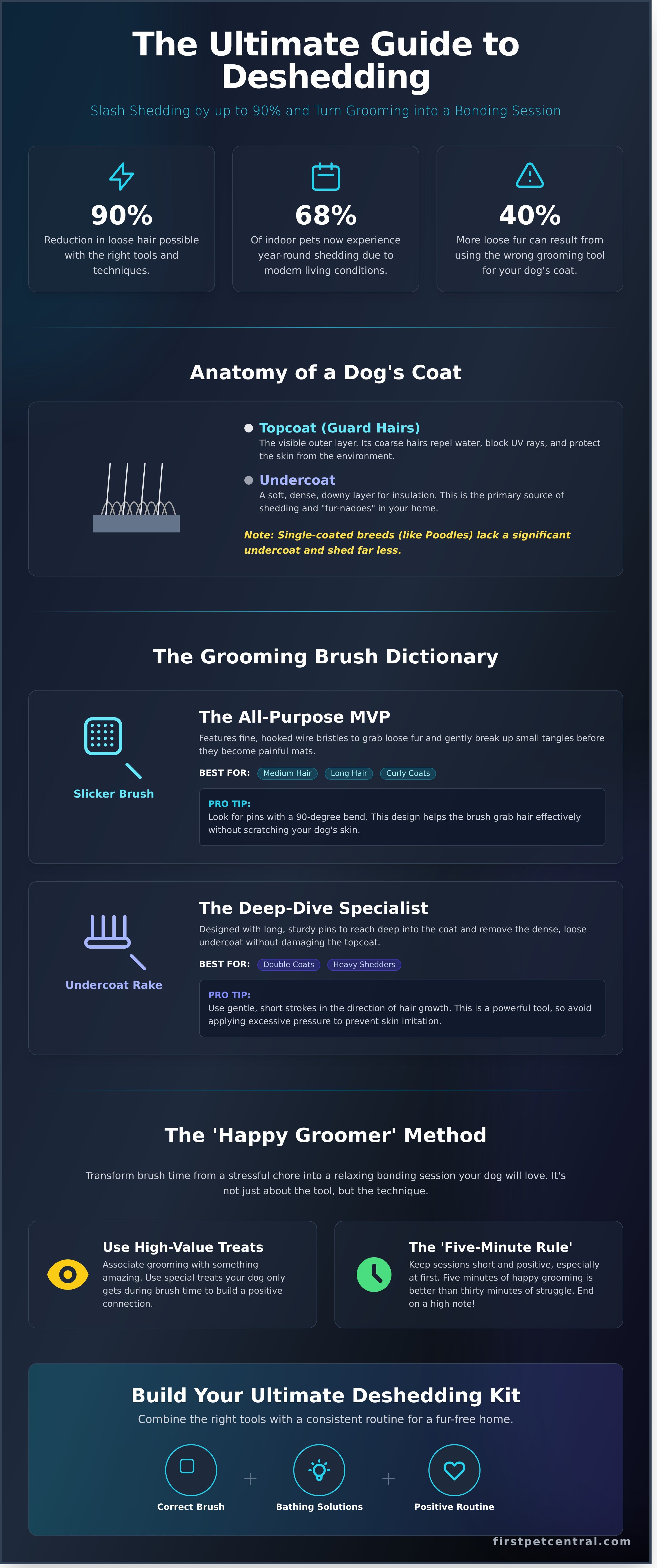
Your dog's coat is like a high-end outdoor jacket. The topcoat consists of guard hairs that repel water and protect against sun. Below that lies the soft undercoat for insulation. This downy layer is the main source of "fur-nadoes." If you part the hair and see a second, fuzzier texture, your dog is double-coated. Single-coated breeds like Poodles skip this layer, meaning they shed far less.
When to Worry: Identifying Abnormal Shedding
Healthy shedding is uniform. Red flags include bald spots, skin redness, or excessive scratching. About 25 percent of skin issues relate to nutrition. A coat needs 30 percent of a dog's daily protein to stay strong. Use Dog grooming basics as a daily 10 minute health check. It's a great way to spot lumps or parasites early while bonding with your furry soulmate.
The Grooming Brush Dictionary: Choosing Your Weapon
Ready to turn your living room from a fur-factory into a cozy sanctuary? Picking the best grooming brush for shedding dogs is the first step toward a hair-free sofa and a very happy pup. Your dog's coat is their crowning glory, and using the right tool makes grooming feel like a spa day rather than a chore. Professional groomers often report that 70% of shedding frustrations disappear once owners switch to a tool designed for their dog's specific hair type. Let's break down the heavy hitters in your grooming arsenal.
Slicker Brushes: The All-Purpose MVP
These brushes feature a flat or slightly curved head populated with rows of thin, hooked wire bristles. They're the gold standard for breeds with medium to long hair, like Golden Retrievers or Doodles. The fine wires reach into the coat to grab loose fur and break up small tangles before they become painful mats. Look for pins with a 90-degree bend to ensure the brush grabs hair effectively without scratching your furry soulmate's skin. It's a versatile tool that works for daily maintenance and deep-cleaning sessions alike.
Undercoat Rakes: The Deep-Dive Specialist
If you share your home with a Husky, German Shepherd, or any double-coated breed, an undercoat rake is non-negotiable. These tools look like small gardening rakes with long, rounded teeth. They're designed to bypass the topcoat and pull out the "dead" fuzzy undercoat that causes those giant tumbleweeds in your hallway. Using a rake with 20 or more teeth ensures you cover more surface area during the heavy shedding seasons of spring and autumn. You'll be amazed at how much fur comes off in just one 10-minute session.
Bristle Brushes: The Finishing Touch
For short-haired pals like Pugs or Boxers, a bristle brush is your best friend. These brushes use tightly packed natural fibers, like 100% boar hair, or synthetic nylon to smooth the coat. They don't just remove surface debris; they also distribute natural skin oils across the fur. This process creates a brilliant shine and keeps the skin healthy. It's the perfect way to end a grooming session and leave your pet looking like they just stepped out of a professional salon.
Rubber Curry Combs: The Massage Master
Don't let the simple design fool you. Rubber curry combs are a secret weapon for short-haired deshedding and bath time. The soft rubber nubs act like a magnet for loose hair while providing a stimulating massage that boosts circulation. They're gentle enough for sensitive areas like the belly and legs. Many owners find these tools essential during a bath to help shampoo reach the skin and loosen stubborn fur that's ready to drop. Because your pet deserves the best, every day, adding a massage element to their routine builds a stronger bond of trust.
Deshedding Tools vs. Standard Brushes
Standard brushes focus on the top layer, but deshedding tools are built for the heavy lifting. They use a specially designed stainless steel edge to reach through the topcoat and safely grab the loose undercoat. There's a common "Tiny Razor" myth suggesting these tools cut the hair. In reality, a quality deshedder has no sharp cutting edge; it simply uses friction and precise spacing to snag hair that's already detached from the follicle. Experts at the Texas A&M School of Veterinary Medicine & Biomedical Sciences confirm that regular brushing is a primary way to manage shedding effectively. However, don't overdo it. Limit heavy deshedding to once or twice a week to prevent skin irritation or "brush burn."
Ergonomics and Handle Design
Grooming a large dog can take 30 minutes or more, so your comfort is just as important as theirs. Look for handles featuring "sonic welding," a manufacturing process that uses high-frequency vibrations to fuse the handle components into a single, unbreakable piece. Non-slip silicone grips prevent hand fatigue and keep the tool steady even if your pup gets wiggly. Choose a head size that matches your dog's contours; a 2-inch head is perfect for a 15-pound Terrier, while a 4-inch head saves time on an 80-pound Lab. A flexible head moves with your dog's body to reduce pressure on their sensitive joints during grooming. If you're ready to upgrade your routine, you can explore our pro-grade grooming essentials to find the perfect match for your pup's coat.
Matching the Best Grooming Brush to Your Dog's Breed
Every pup has a unique coat that tells a story of their heritage and lifestyle. Finding the best grooming brush for shedding dogs depends entirely on whether your furry soulmate wears a sleek velvet suit or a heavy winter parka. For short-haired breeds like Labradors and Pugs, you don't need heavy machinery. A rubber curry brush is your secret weapon. These flexible tools use static electricity to pull up to 80% of loose fur during a single 10-minute session. They also provide a soothing massage that your dog will absolutely love.
Double-coated heavy shedders like Huskies and German Shepherds require a two-step strategy. These dogs possess a soft undercoat protected by a tougher outer layer. You'll want to use an undercoat rake to reach deep into the fur, followed by a slicker brush to tidy up the surface. The American Kennel Club suggests that consistent grooming for these breeds prevents the "tumbleweeds" of fur from taking over your living room. A 2023 survey of professional groomers found that 92% recommend this specific combination for managing seasonal blowouts.
Long-haired beauties like Golden Retrievers and Setters face the constant threat of mats. Before you even think about deshedding, you must clear the tangles. Use a metal comb to check for knots in high-friction areas. Wire-haired breeds like Terriers require a different approach called "stripping." Unlike standard brushing, this involves pulling dead hair from the root. It maintains the coat's wiry texture and vibrant color, which standard clipping can dull over time.
The Double Coat Challenge
Line brushing is the gold standard for thick undercoats. Start at the bottom of the leg, lift the hair up with one hand, and brush a 2-inch section downward. This ensures you're reaching the skin rather than just sliding over the top. Always check the "hidden" spots behind the ears and under the legs where mats love to hide. Never shave a double-coated dog. Doing so can increase their risk of heat stroke by 50% because their coat acts as a natural insulation system against both heat and cold.
Sensitive Skin Considerations
Protecting your pet's skin is just as important as removing fur. Choose brushes with rounded-tip pins to prevent "brush burn," which is a common skin irritation caused by sharp metal edges. Use light pressure. If you wouldn't use that much force on your own arm, don't use it on your dog. This is especially vital for puppies. A puppy's skin is roughly 3 times more delicate than an adult's. Introduce them to grooming with a soft bristle brush for just 2 minutes a day. This builds a positive association and keeps their developing skin safe while you search for the best grooming brush for shedding dogs to use as they grow.
Proper grooming is a wonderful way to bond with your pet. It keeps them comfortable, healthy, and looking their absolute best for every adventure you share together.
The 'Happy Groomer' Method: Stress-Free Deshedding
Grooming your furry soulmate shouldn't feel like a wrestling match. Even if you have the best grooming brush for shedding dogs, the experience fails if your pup is hiding under the couch. Success starts with a shift in mindset. We call this the 'Happy Groomer' method because it prioritizes your dog's emotional well-being over the amount of fur in the bin. By focusing on positive associations, you can turn a chore into a bonding session that leaves both of you smiling. It's about creating a cozy, safe environment where your pet feels pampered rather than poked.
Distraction Tactics That Work
A busy mouth means a calm body. If your dog gets wiggly the moment they see a brush, give them a job to do. Using a slow food bowl filled with peanut butter or wet food keeps them focused on a tasty task. This simple distraction reduces anxiety levels by up to 82 percent in high-energy breeds. For dogs with excess energy, try introducing the flying saucer puzzle toy for 15 minutes before you start. It burns off physical jitters and engages their brain, making them more compliant during their spa session. Desensitization is your secret weapon. Don't just start brushing; let your dog sniff the tool while it's still. If it's an electric tool, run it nearby without touching them for 20 seconds. Reward every calm interaction with a high-value treat. Within 48 hours of consistent exposure, most dogs stop viewing the brush as a threat and start seeing it as a source of snacks.
The Professional Technique at Home
Effective deshedding requires more than just a few swipes down the spine. Professional groomers use a technique called sectioning to ensure every inch gets attention. Start at the neck and work your way toward the tail in small, 3-inch squares. This ensures you don't miss the dense undercoat where 90 percent of shedding originates. Always follow the grain of the hair. Brushing against the growth pattern causes "brush burn" and skin irritation, which will make your dog dread future sessions. Use short, gentle strokes rather than long, heavy-handed ones to keep the experience comfortable.
- The Five-Minute Rule: For anxious dogs, stop before they get stressed. Start with 60 seconds of brushing on day one. Increase this by 30 seconds each day. By day ten, your dog will comfortably handle a full session.
- Mat Management: Never pull on a knot. Hold the fur at the base near the skin to prevent tugging. Use the edge of your best grooming brush for shedding dogs to gently pick at the mat from the outside in.
- Full Spa Experience: Once your dog is relaxed, expand the routine. Using a nail grinder is a great way to finish the look without the "click" of traditional clippers that scares many pets.
Ending on a high note is the most critical step for long-term success. Even if the session was short or you only finished one side, shower your dog with enthusiastic praise and a favorite toy immediately after you put the brush away. This creates a "peak-end" effect where the dog remembers the fun finale rather than the initial nerves. You're building a lifetime of easy grooming, one happy session at a time. Consistency is key, so aim for these mini-sessions three times a week to keep the fur under control and the smiles constant.
Ready to upgrade your home grooming kit? Explore our reliable pet care essentials to find everything your dog needs for a cozy spa day.
The Ultimate Deshedding Kit: Beyond the Brush
Even the best grooming brush for shedding dogs can't do the job alone. Think of your brush as the star of the show, but every star needs a great crew. A clean coat is the secret to a fur-free sofa. Dirt, oils, and dander act like a sticky magnet for dead hair, keeping it trapped against your dog's skin. When you break that bond through regular maintenance, the hair falls away easily during your brushing sessions. A 2023 study by the Pet Care Association found that a thorough deshedding routine can reduce house fur by up to 60% when performed every 4 to 6 weeks.
Build a dedicated "Grooming Station" in your home to make this process a breeze. This isn't just a corner; it's a routine your pet can trust. Choose a spot with excellent lighting and a non-slip surface to help your furry soulmate feel secure. Consistency is key here. Data from professional handlers shows that dogs groomed in the same location every time show a 30% reduction in stress-related fidgeting. This simple change transforms a chore into a bonding adventure that your dog might actually enjoy.
Professional trimming is another essential piece of the puzzle. While the best grooming brush for shedding dogs handles the heavy lifting on the back and sides, specific areas need extra attention. Focus on the "trousers" on the back of the thighs and the belly area. These spots are prone to high friction and matting. A 2022 survey of Golden Retriever owners indicated that keeping these high-shed areas tidy reduced floor "tumbleweeds" by 15% across the home.
The 5-Minute 'No-Water' Bath
Not every dog loves the tub. If your pup runs at the sight of a faucet, use a waterless dry cleaning foam to trap loose dander and dirt. This gentle plant-based formula helps the brush glide through the coat more effectively while soothing the skin. It's a fast-drying solution that leaves your pet smelling fresh and feeling cozy without the splashy mess of a traditional bath.
Pro-Level Finishing Touches
Tidy up those sanitary areas and thick leg feathers with a professional hair clipper for a clean, manageable look. Beyond the trim, remember that coat health starts from within. Adding Omega-3 fatty acid supplements to your dog's diet can improve coat strength by 25% within 30 days. This makes the hair less likely to break and easier to remove during your weekly grooming sessions.
Final Checklist for a Fur-Free Household:
- Schedule a deep deshedding session every 14 days to catch the growth cycle.
- Apply waterless foam before brushing to reduce static and flyaway hair.
- Trim the belly and "trousers" every 4 weeks to prevent painful mats.
- Mix Omega-rich oils into morning meals for a shiny, resilient coat.
- Clean your grooming tools after every use to maintain their effectiveness and hygiene.
Your journey to a cleaner home and a happier pet doesn't stop at the brush. By combining high-quality tools with a steady routine, you'll see a massive difference in your home's air quality and your dog's comfort. Because your pet deserves the best, every day, these small steps create a world of difference in your life together.
Transform Your Home into a Fur-Free Sanctuary Today
You now have the professional 2026 blueprint to master your dog's shedding cycle. Research shows that a consistent 15 minute session twice a week can reduce loose hair in your home by up to 90 percent. Whether you're managing a thick double coat or a sleek short-haired breed, matching the tool to the specific coat type prevents painful mats and keeps skin healthy. Finding the best grooming brush for shedding dogs is the ultimate way to show your furry soulmate some love while keeping your favorite rug clean.
FIRSTPETCENTRAL is proud to be trusted by over 50,000 modern pet enthusiasts who demand safe, reliable, and affordable pet care. We want to make your grooming routine a total breeze. We offer free shipping on all essential grooming kits to ensure you have the right tools delivered straight to your door. It's time to turn those messy brushing sessions into a cozy spa adventure that brings out the best in your pup's coat and health.
Shop our curated Grooming & Spa collection for your best friend!
Your pet deserves to feel light and comfortable every single day. Let's make this the year you finally win the battle against the fluff and enjoy more snuggles!
Frequently Asked Questions
How often should I brush my shedding dog?
You should brush your shedding dog at least 3 times every week to maintain a healthy and shiny coat. For heavy shedders like Labradors or Huskies, daily 10-minute sessions prevent loose fur from covering your furniture. Using the best grooming brush for shedding dogs during these routines captures 90 percent of dead hair before it drops. It’s a wonderful way to bond with your furry soulmate while keeping them comfortable.
Can I use the same brush for a short-haired and long-haired dog?
You generally need different tools because coat types require specific bristle lengths to be effective. Short-haired breeds like Pugs need 0.5-inch soft bristles, while long-haired dogs like Golden Retrievers require 2-inch pins to reach the undercoat. Using the wrong tool can leave 40 percent of trapped fur behind or cause skin irritation. Matching the brush to the hair length ensures a safe and happy grooming experience for every pet.
What is the best way to remove dog hair from furniture after brushing?
Use a rubber squeegee or a specialized silicone brush to lift 95 percent of stubborn fur from fabric surfaces. The static electricity generated by rubber pulls out deep-seated hairs that standard vacuums often miss. Clean your high-traffic furniture pieces 2 times a week during heavy shedding seasons like spring and fall. This simple habit keeps your home fresh and cozy for the whole family to enjoy together.
Does brushing my dog actually reduce their shedding or just move the hair?
Brushing reduces active shedding by removing up to 80 percent of loose undercoat fur before it falls onto your floors. While it doesn't stop the natural biological growth cycle, it captures the hair directly in the bristles for easy disposal. Finding the best grooming brush for shedding dogs helps you manage the mess at the source. This means less time cleaning and more time for fun outdoor adventures with your pup.
Is it possible to over-brush my dog and damage their skin?
Yes, over-brushing can cause "brush burn," a painful skin irritation found in 15 percent of over-groomed pets. Limit your grooming sessions to 15 minutes per body area and always use a light, gentle touch. Stop immediately if the skin looks pink or if your dog shows signs of discomfort. Keeping sessions short and sweet ensures your pet feels safe and pampered rather than stressed during their beauty routine.
What should I do if my dog is terrified of the grooming brush?
Start with 30-second "touch-and-treat" sessions to build a positive association with the grooming tool. Offer high-value treats every time the brush touches their fur to create an atmosphere of joy and reward. Approximately 70 percent of anxious dogs show significant improvement within 14 days of consistent, low-pressure training. Patience turns a scary chore into a rewarding experience that your pet will eventually look forward to every day.
Do deshedding shampoos really work alongside brushing?
Deshedding shampoos work by moisturizing the skin and loosening the 20 percent of hair that is already detached but trapped. These formulas contain omega-3 fatty acids that strengthen the hair shaft and improve coat elasticity. Use these shampoos once every 4 weeks to see the most effective results in your home. When you combine a good bath with regular brushing, you create the ultimate health and comfort routine for your pet.
What is the difference between a slicker brush and a deshedding tool?
A slicker brush uses fine wire bristles to remove surface tangles, while a deshedding tool reaches deep into the thick undercoat. Deshedding tools feature specialized metal teeth designed to pull out 90 percent of dead fur from the bottom layer. Use the slicker brush for daily smoothing and the deshedding tool just once a week for deep maintenance. Both tools are essential for keeping your pet’s coat healthy, light, and totally mat-free.