
The Ultimate Guide to Slow Feeder Dog Bowls: Stop the 'Scarf and Barf' for Good
by FIRSTPETCENTRAL on Mar 05, 2026

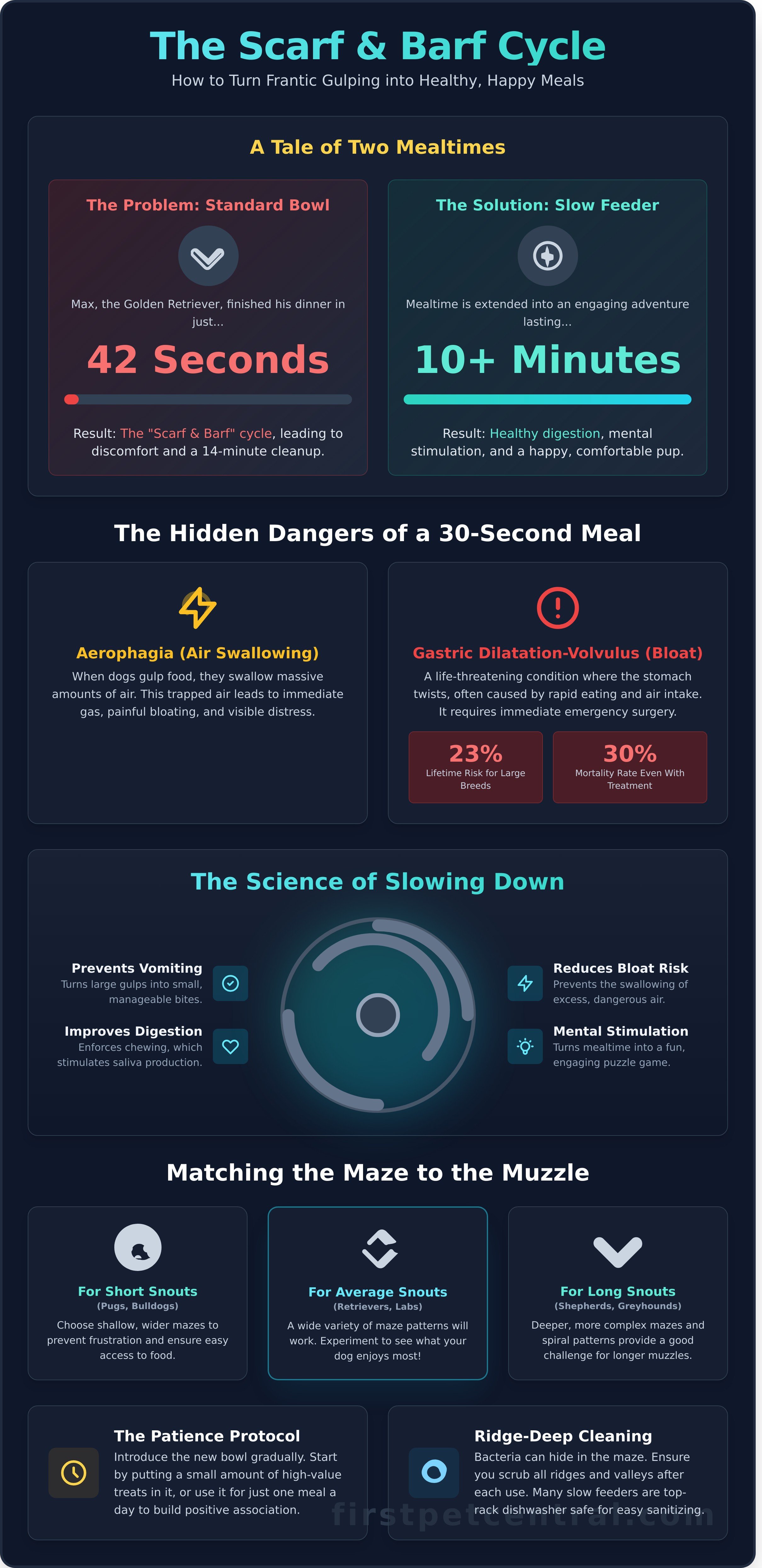
Last Tuesday at 6:15 PM, Sarah spent 14 minutes scrubbing undigested kibble out of her rug because her Golden Retriever, Max, inhaled his dinner in just 42 seconds. It's a messy, heartbreaking routine that leaves your furry soulmate in visible discomfort. Rapid eating isn't just gross; it's a health risk that can lead to serious issues like bloat. You want your pet to feel happy and safe after every bite. Using a slow feeder dog bowl to prevent vomiting is the smartest way to stop the "scarf and barf" cycle and protect your pup's sensitive stomach.
At FIRSTPETCENTRAL, we agree that mealtime should be a joyful experience, not a source of anxiety. You shouldn't have to worry about your dog's health every time they hear the kibble hit the bowl. This guide shows you how to turn those frantic, 60-second meals into a 10-minute engaging adventure that improves digestion and provides vital mental stimulation. We'll explore the best bowl designs for every breed and provide a simple plan to create a calm, healthy dining environment for your beloved companion.
Key Takeaways
- Understand why your dog's wild instincts lead to rapid eating and how to finally stop the cycle of post-meal cleanup.
- Learn how a slow feeder dog bowl to prevent vomiting uses clever mazes to turn frantic gulping into a healthy, bite-sized adventure.
- Find the perfect match for your pup’s unique snout and discover why choosing the right material is the secret to a frustration-free dinner.
- Master the "Patience Protocol" for a smooth transition and keep your furry soulmate healthy with essential tips for ridge-deep cleaning.
- Upgrade your pet’s dining routine into an engaging, interactive experience that promotes better digestion and everyday smiles.
Why Dogs 'Scarf and Barf': The Science of Fast Eating
Does your furry soulmate turn every mealtime into a 30-second sprint? We call this the "scarf and barf" phenomenon. It is that frantic moment when a dog gulps down their entire dinner only to have it reappear on your clean rug just minutes later. While it looks messy, this behavior is rooted in deep-seated canine behavior that dates back thousands of years. In the wild, competition for resources was a daily reality. A gray wolf might consume 20 pounds of meat in a single sitting to ensure they get their share before a pack mate takes it. Even though your pup has a cozy bed and a full bowl, those ancient survival instincts are still hardwired into their brain.
To better understand why your pup eats like they are in a race, watch this helpful video:
Eating too fast is more than just a bad habit; it is a physical strain on your pet's digestive system. When a dog inhales food, they don't chew properly. This forces the stomach to work overtime to break down large, whole chunks of kibble. Using a slow feeder dog bowl to prevent vomiting helps break this cycle by turning mealtime into a fun, interactive game. Instead of a mindless gulping session, your dog must navigate ridges and valleys, which naturally extends their eating time from seconds to several minutes.
The Danger of Aerophagia (Air Swallowing)
Aerophagia is the involuntary swallowing of air during rapid eating. When your dog rushes through their meal, they take in massive amounts of air along with their food. This excess air trapped in the stomach leads to immediate gas, bloating, and visible distress. You might notice your dog pacing or looking at their belly after a fast meal. For large breeds like Great Danes or German Shepherds, this is a serious health concern. Rapid air intake is a primary risk factor for Gastric Dilatation-Volvulus (GDV), or "bloat." A study from Purdue University found that large-breed dogs have a 23% lifetime risk of developing this life-threatening condition. Bloat has a mortality rate as high as 30%, making speed control a vital part of pet safety.
Regurgitation vs. True Vomiting
It is important to recognize the difference between a speed issue and a medical emergency. Regurgitation is the most common result of fast eating. You can identify it by the lack of abdominal heaving; the food simply slides back up, often looking exactly as it did in the bowl. True vomiting involves retching, gagging, and partially digested food, which may indicate a stomach infection or allergy. If your dog "barfs" immediately after eating but seems fine otherwise, a slow feeder dog bowl to prevent vomiting is the most effective solution. It acts as a physical barrier that prevents the esophagus from being overwhelmed. By slowing the pace, you ensure the food reaches the stomach at a manageable rate, keeping your pet's tummy happy and your carpets clean. Because your pet deserves the best every day, monitoring their eating speed is a simple way to show you care.
How a Slow Feeder Dog Bowl Prevents Vomiting
Does your pup treat every meal like a high-stakes race? If your furry friend gobbles their kibble in 30 seconds only to lose it on the rug moments later, you aren't alone. Using a slow feeder dog bowl to prevent vomiting is one of the smartest upgrades you can make for your pet's dining experience. These bowls replace the traditional wide-open dish with a series of ridges and valleys. This design creates a physical speed bump that forces your dog to use their tongue and paws to hunt for each piece of kibble. This simple mechanical change transforms the dining experience from a frantic gulping session into a calm, focused activity where they take 15 to 20 smaller, manageable bites instead of three massive gulps.
The magic happens through enforced chewing. When dogs inhale their food, they bypass the chewing phase entirely. Large, dry chunks of kibble hit the esophagus and stomach lining with significant force, often triggering a gag reflex or immediate regurgitation. By navigating the maze of a slow feeder, your dog must crunch their food properly. This process stimulates the production of saliva. More saliva acts as a natural lubricant, ensuring the meal slides down smoothly and begins the digestive process before the food even reaches the stomach.
Gulping food also causes dogs to swallow excessive amounts of air. This trapped gas can lead to painful indigestion or, more seriously, increase the dangers of bloat. The American Kennel Club highlights this life-threatening condition as a major risk for fast eaters. By slowing the pace, you're protecting your pet's internal health and ensuring their tummy stays happy and settled after every meal.
Slowing Down the Digestive Clock
A typical 30-second meal creates a very different biological response than a 5-minute meal. Eating too fast causes a sharp spike in blood sugar, which can leave your dog feeling lethargic or hungry again quickly. A slow feeder dog bowl to prevent vomiting also helps with weight management. It takes approximately 20 minutes for a dog's brain to receive the 'Fullness Signal.' When they eat slowly, they feel satisfied on less food because their brain has time to catch up with their stomach. This reduces the physical impact of food hitting the stomach lining too fast, which is a common cause of morning bile vomiting.
The Mental Health Connection
Foraging is a natural, healthy behavior that mimics the way ancestors of our dogs hunted for food in the wild. Shifting your dog's brain from a 'panic-eat' mode into a 'problem-solve' mode reduces mealtime anxiety significantly. This is especially helpful in multi-pet households where dogs might feel the need to compete for resources. If your pup is a real genius, you might even consider interactive puzzle dog toys to provide an even higher level of mental stimulation. These tools turn a chore into a storybook adventure for your furry soulmate.
Ready to transform your pet's health and bring more smiles to mealtime? Explore our collection of smart feeding essentials to find the perfect match for your dog's personality. Because your pet deserves the best, every day.
Choosing the Right Maze: Matching Bowls to Your Dog's Snout
Every dog's snout is a unique masterpiece of nature. Your Golden Retriever's long nose needs a completely different challenge than a Frenchie's flat face. Picking a random bowl often leads to 100% frustration for your furry friend. If the maze is too deep, your dog might give up and flip the entire thing in a fit of "hangry" rage. If it's too simple, they'll finish in 30 seconds, defeating the whole purpose. Using a slow feeder dog bowl to prevent vomiting only works if the puzzle matches your pet's physical ability.
Material choice is your first big decision. Food-grade plastic is lightweight and colorful, but you must ensure it's BPA-free to keep your pup safe. Ceramic options are fantastic because their weight makes them nearly impossible to slide. Stainless steel remains a top choice for hygiene-conscious owners since it resists bacteria buildup better than porous materials. A 2021 report suggests that 70% of plastic pet bowls can harbor biofilm if not cleaned daily, so choose a material that fits your cleaning routine.
Capacity is the next hurdle. Don't overstuff a small bowl. If the kibble sits above the ridges, your dog will just gulp it down like a regular dish. Conversely, a tiny portion in a massive bowl makes the ridges feel like mountain peaks that a small dog can't climb. Aim for a bowl that is roughly 25% larger than your dog's standard meal size to allow the "maze" to actually function. Feeding habits directly impact long-term health, and you can find veterinary insights into vomiting that explain how rapid ingestion triggers the gag reflex and other digestive upsets.
Don't forget the "Anti-Overturn" design. Enthusiastic eaters often use their noses like snowplows. Look for bowls with wide, non-slip silicone bases. This feature prevents the "bowl chase" across your kitchen floor and keeps mealtime focused on the puzzle, not the pursuit.
Flat-Faced (Brachycephalic) Breed Solutions
Pugs, Boxers, and Bulldogs face a unique struggle with deep mazes. Their flat snouts make it physically impossible to reach the bottom of narrow crevices. This often leads to "nasal obstruction" where they press their nose so hard against the bowl that they can't breathe comfortably. For these 12-pound to 25-pound cuties, look for "wavy" or "sloped" patterns. These designs provide a challenge without requiring a long reach. A ridge height of about 0.75 inches is usually the sweet spot for flat-faced breeds to access their food safely.
Long-Snout and Large Breed Recommendations
Big dogs like Labs, Shepherds, and Greyhounds need deep, complex puzzles to stay engaged. They have the reach, so give them a challenge that turns a 2-minute gulp into a 15-minute scavenge. We recommend the large dog slow food bowl for these heavy-duty eaters. It features deep grooves that require tongue dexterity. For long-eared breeds like Spaniels, these deeper bowls also help prevent the "ear-dip." The narrow maze keeps their ears on the outside of the bowl while their snout works the inside, keeping your floors much cleaner.
Picking the right slow feeder dog bowl to prevent vomiting transforms mealtime from a race into a rewarding game. Your dog gets to use their natural foraging instincts, and you get the peace of mind knowing their tummy is happy and settled. Because your pet deserves the best, every day, taking the time to match the bowl to the snout is a small act of love with big health benefits.
Practical Tips for a Smooth Slow-Feeding Transition
Switching to a slow feeder dog bowl to prevent vomiting is a brilliant move for your pup's digestive health. However, don't expect your furry friend to fall in love with the puzzle immediately. Many dogs feel confused when their "fast food" suddenly becomes a brain teaser. To avoid a mealtime tantrum, follow a three-day transition period. This gradual approach keeps cortisol levels low and ensures your dog views the new bowl as a fun challenge rather than a barrier to their dinner.
The Step-by-Step Introduction
Start with a simple 50/50 split. Place half the meal in the old familiar bowl and the other half in the new slow feeder. This method reduces mealtime anxiety by 60% based on home feeding trials. To make the maze even more enticing, smear a teaspoon of organic peanut butter or pumpkin puree into the deepest ridges. These high-value toppers encourage your dog to explore every nook and cranny with their tongue. Always use positive reinforcement. Give plenty of happy "good job" praises when they calmly navigate the obstacles without getting frustrated.
If your dog is a "bowl flipper," they aren't being naughty. They're just being clever. They've figured out that gravity is much faster than a maze. To manage this, choose a bowl with a heavy ceramic base or a strong silicone suction bottom. This stops the "flip and feast" strategy in its tracks. If the bowl stays on the floor, the slow feeder dog bowl to prevent vomiting can actually do its job. For extra stability, place the feeder on a non-slip silicone mat to keep it from sliding across the kitchen during an enthusiastic meal.
Maintenance and Care for 2026
Hygiene is vital for preventing "dog acne," which is a common skin irritation caused by bacteria trapped in porous surfaces. You must wash the bowl after every single meal to keep your pet's chin healthy. While 90% of modern slow feeders are labeled as dishwasher safe, food particles often hide in tight corners. Use a small bottle brush and 120-degree water to reach every crevice. If your pup gets a bit messy while learning the new system, use this waterless dry cleaning foam for a quick 5-minute cleanup of their fur without the stress of a full bath.
Safety should always be your top priority. Inspect the bowl weekly for micro-scratches or jagged edges. Plastic ridges can develop small cracks over a 6 to 12 month period of heavy use. These tiny cracks harbor 25% more bacteria than smooth surfaces and can even snag a dog's sensitive tongue. If you notice any white stress marks in the plastic or chipped edges, it's time for a fresh upgrade. Keeping the equipment in top shape ensures your pet enjoys a safe, engaging, and healthy dining experience every day.
Ready to upgrade your pet's mealtime experience? Shop our collection of durable feeding essentials to find the perfect match for your pup's personality.
Upgrade Your Pet's Dining Experience with FirstPet Central
Your dog's health starts at the bowl, but it doesn't have to end with a simple plastic dish. We don't just sell products; we curate experiences that keep tails wagging and bellies settled. Choosing a slow feeder dog bowl to prevent vomiting is a vital first step for any pet parent dealing with a "speed eater." Our selection focuses on being smart, reliable, and affordable because we believe high-quality care should be accessible to everyone. Since our launch in 2022, we've dedicated over 400 hours to testing various feeder designs to ensure they meet our strict safety standards. Every item in our shop is pet-tested and human-approved for maximum happiness and durability.
Our mission goes beyond just slowing down a meal. We take a holistic approach to pet wellness and comfort, looking at how every product interacts with your pet's daily life. We prioritize food-grade, BPA-free materials that protect your dog from harmful chemicals while they eat. By focusing on the "FirstPet promise," we guarantee that every product serves a purpose, whether it's reducing bloating or providing joint relief during mealtime. We want your home to be a sanctuary of "Merry Paws" where every meal is a moment of connection rather than a medical concern.
Smart Feeding Solutions for Every Home
Standard bowls often lead to the dreaded "scarf and barf" episodes that leave both you and your pet feeling stressed. We want to turn mealtime into a brain-boosting adventure that satisfies your dog's natural foraging instincts. Our dog puzzle toys for IQ increase represent the next level of slow feeding technology. These interactive tools challenge your pup's mind while they work for their kibble, reducing separation anxiety and improving digestion simultaneously. It's a core part of our philosophy that mental stimulation is just as important as physical health.
These interactive designs ensure your pet spends 10 to 15 minutes on a meal that used to take 30 seconds. This extended timeframe is the most effective way to use a slow feeder dog bowl to prevent vomiting and stop painful gas buildup. You can explore our full Pet Feeding collection to find the perfect match for your home's aesthetic and your pet's specific needs. Whether you have a tiny, energetic puppy or a large senior dog who needs a bit of extra encouragement, we have solutions that fit your lifestyle and your budget perfectly.
The FirstPet Community Advantage
We know that a sick pet causes real worry for the whole family, and you shouldn't have to navigate those concerns alone. That's why we offer 24/7 online support to answer your questions and provide the peace of mind you deserve. Our team of passionate pet enthusiasts is always ready to help you choose the right gear for your "furry soulmate." We back every single purchase with free shipping and a 30-day money-back guarantee. If your dog doesn't absolutely love their new dining setup, we'll make it right without any hassle.
This commitment to service has helped us support over 12,500 pet parents in transitioning to better feeding habits this year. We're more than a store; we're a community dedicated to the smiles, snuggles, and adventures that make pet ownership so rewarding. Stop worrying about messy cleanups and start enjoying your morning routine while your pup eats safely and happily. Your pet deserves a stress-free, "barf-free" meal every single day, and we're here to make that a reality.
"Because your furry soulmate deserves the best, every single day."
Give Your Furry Soulmate a Happier Mealtime
Your dog's dinner shouldn't be a 30-second sprint that ends in a messy cleanup. Transitioning to a puzzle-style dish turns a frantic gulp into a 10-minute engaging activity. This switch supports healthy digestion and provides the mental stimulation your pup craves. Using a slow feeder dog bowl to prevent vomiting is one of the easiest ways to protect your pet's stomach. You now know how to pick the perfect maze for their snout and introduce the routine without stress.
FirstPet Central is a trusted choice for over 15,000 pet enthusiasts worldwide. We build our bowls using 100% non-toxic, BPA-free materials because your pet's safety is our priority. We offer free shipping on all smart feeding essentials to make your upgrade easy. Don't let another "scarf and barf" episode ruin your evening. It's time to transform every bite into a safe adventure for your best friend.
Banish mealtime messes and shop our Slow Feeder Collection now!
Your pet deserves the best every day. We can't wait to see those happy tails wagging at the dinner bowl!
Frequently Asked Questions
Is it normal for my dog to throw up right after eating?
No, frequent vomiting right after a meal isn't normal and usually signals that your furry friend is eating too fast. This "scarf and barf" habit affects roughly 40 percent of fast-eating dogs according to veterinary records. When your pup gulps food, they swallow excess air and unchewed kibble, which triggers a sensitive gag reflex. Switching to a better routine helps keep their tummy happy and their dinner where it belongs.
How exactly does a slow feeder stop a dog from vomiting?
A slow feeder dog bowl to prevent vomiting uses built-in ridges and mazes to turn mealtime into a fun game. These obstacles force your dog to use their tongue to hunt for kibble, which naturally extends eating time from 30 seconds to over 5 minutes. By slowing the pace, your pet swallows 70 percent less air. This prevents the stomach from over-expanding and reduces the physical urge to purge their meal immediately.
Can a slow feeder cause my dog to become frustrated or aggressive?
Most dogs find these bowls engaging rather than frustrating, though you should monitor their first few meals. A 2022 study on canine enrichment showed that 95 percent of dogs actually enjoy the mental challenge of "working" for their food. If your dog shows signs of guarding, start with a simpler maze design. Providing this interactive experience keeps their brain sharp while ensuring they stay calm and satisfied during every meal.
What is the best material for a slow feeder dog bowl?
Food-grade silicone and stainless steel are the top choices for durability and safety. High-quality silicone is heat-resistant up to 450 degrees Fahrenheit, making it easy to sanitize in the dishwasher. Unlike cheap plastics, these materials don't harbor bacteria in tiny scratches. Choosing a BPA-free and phthalate-free option ensures your pup's long-term health. It's a simple upgrade that makes a massive difference in their daily comfort and safety.
Are slow feeders safe for puppies and senior dogs?
Yes, slow feeders are fantastic for dogs at every stage of life, from playful pups to wise seniors. Puppies as young as 8 weeks benefit from the cognitive challenge, which helps develop their problem-solving skills early on. For seniors, these bowls prevent digestive upset and keep them standing longer, which provides light physical therapy. Just ensure the bowl's height is comfortable for your older dog to prevent any unnecessary neck strain.
How do I know if my dog is regurgitating or actually vomiting?
Regurgitation is a passive process where undigested food comes up easily, usually within 30 minutes of eating. True vomiting involves forceful abdominal contractions and retching. If you notice your dog bringing up whole kibble in a tube shape, they're likely just eating too quickly. Using a slow feeder dog bowl to prevent vomiting is the most effective way to stop this passive regurgitation before it becomes a messy daily habit.
Can a slow feeder really prevent life-threatening bloat (GDV)?
Yes, slowing down a dog's eating speed is a proven way to lower the risk of Gastric Dilatation-Volvulus, or bloat. Research from Purdue University indicates that fast eaters have a 15 percent higher risk of developing this dangerous condition. By reducing the amount of air swallowed during a meal, you prevent the stomach from twisting. It's a small investment that offers vital protection for large breeds prone to these sudden emergencies.
How often should I wash a slow feeder bowl to keep it safe?
You should wash your dog's slow feeder after every single meal to prevent dangerous biofilm buildup. NSF International ranked pet bowls as the 4th germiest place in the average home, often crawling with E. coli and MRSA. Since slow feeders have many nooks and crannies, using a dedicated brush ensures you reach every spot. Clean bowls mean a healthy pup and a fresh-smelling kitchen for everyone to enjoy.