

Chew Proof Dog Beds 2026: The Ultimate Guide for Destructive Chewers
by FIRSTPETCENTRAL on May 09, 2026

You walk into the living room to find a "snowstorm" of white fluff, but it isn't winter; it's just your playful pup enjoying their third shredded mattress this month. It's heartbreaking to watch your hard-earned money turn into a messy pile of polyester scraps and dangerous zippers in under an hour. We understand the stress of worrying if your furry soulmate might ingest stuffing while you're away. You want your pet to feel cozy and enjoy sweet dreams, but you also need a chew proof dog bed that actually survives the night.
We agree that "tough" shouldn't just be a marketing buzzword. Discover how to end the cycle of destroyed furniture with our expert 2026 guide to indestructible materials and smart structural designs. You'll learn why military-grade ripstop nylon and aluminum frames are the secret to peace of mind. We'll preview the best options for every budget, from the $11.08 XIBUFE crate pad to the heavy-duty K9 Ballistics models that support up to 250 lbs. Get ready to find a long-term sleep solution that balances orthopedic comfort with the ultimate bite-resistant strength your dog deserves.
Key Takeaways
- Discover why 1680D ballistic nylon and ripstop weaves are essential for stopping punctures before they start.
- Compare metal frames and ballistic fabrics to find the best chew proof dog bed for your home and lifestyle.
- Learn to identify if your dog is a "Shredder" or a "Gnawer" to choose a structural design they can't defeat.
- Use interactive puzzle toys to redirect chewing energy and keep your pet's mind engaged and happy.
- Master simple maintenance tricks to protect your bed’s fibers from the damaging effects of saliva and natural oils.
The Frustrating Cycle of Destroyed Dog Beds
Coming home to a "stuffing snowstorm" in your living room is a rite of passage for many pet parents, but it's one we'd all like to skip. You see the shredded remains of a brand-new mattress and feel that sinking sensation in your stomach. It isn't just the mess; it's the frustration of watching money go down the drain. A true chew proof dog bed isn't just a regular pillow with a fancy name. It's a piece of high-performance gear specifically engineered to resist puncture, tearing, and seam-splitting from even the most determined, powerful jaws.
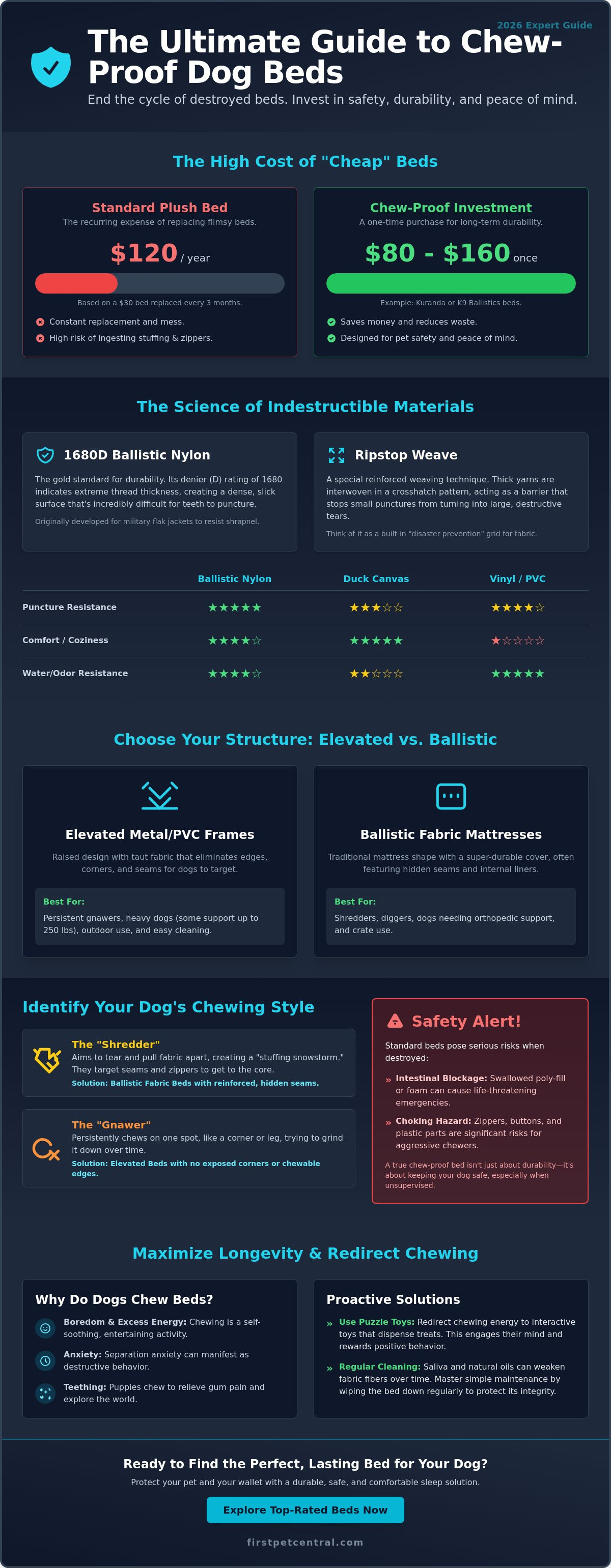
Think about the "Cost of Cheap" versus the "Investment of Durability." Spending $30 on a flimsy bed every three months adds up fast. By the end of a single year, you've spent $120 on trash. As of May 2026, investing in a high-quality, bite-resistant solution like a K9 Ballistics bed (priced between $110 and $160) or a Kuranda bed ($80 to $140) saves your wallet and your sanity. Common "bed-killing" behaviors like aggressive digging, persistent gnawing, and concentrated shredding require a structural design that can stand its ground.
To better understand how these beds hold up under pressure, watch this helpful video:
Why Do Dogs Destroy Their Beds?
Your dog isn't trying to be "bad" when they tear up their sleeping spot. Often, it's about understanding dog behavior and the physical needs behind the destruction. Puppies chew to soothe teething gums, while older dogs might use it to cope with separation anxiety. Boredom is another huge factor; without mental stimulation, shredding becomes a fun hobby. Try using an interactive dog puzzle toy to redirect that energy toward something productive and healthy.
The Safety Risks of Non-Durable Beds
Safety is our top priority because your pet deserves the best every day. When a bed falls apart, the inside becomes a major hazard. Swallowing poly-fill or foam can lead to dangerous intestinal blockages, while plastic zippers are serious choking risks for aggressive chewers. Pica in dogs is the persistent urge to eat non-food items like bed stuffing. Choosing a chew proof dog bed ensures your furry soulmate stays safe even when they're unsupervised.
Material Science: What Makes a Bed Truly Bite-Resistant?
Size matters when we talk about fabric strength. The "Denier" scale measures the thickness of individual threads in a weave. For a truly chew proof dog bed, 1680D ballistic nylon is the industry gold standard. Originally developed for military flak jackets in the 1940s, this material is designed to resist high-velocity impact and extreme abrasion. It's incredibly difficult for even the sharpest canine teeth to find a purchase on such a dense, slick surface.
Beyond just thickness, the way the fabric is woven makes a huge difference. Ripstop weaves use a special reinforced technique where thick yarns are interwoven at regular intervals in a crosshatch pattern. This grid acts as a structural barrier. If your pup manages to make a tiny puncture, the ripstop grid prevents that small hole from turning into a giant, stuffing-filled disaster. It's a smart way to keep your home tidy and your pet's bed intact.
Don't overlook what's happening underneath the surface. High-quality beds often feature "nesting" covers or internal liners. These provide a second layer of defense, ensuring that even if the outer shell is compromised, the core remains protected. This is particularly important for managing ASPCA on destructive chewing, as it slows down the dog's progress and gives you time to intervene.
Ballistic Nylon vs. Canvas vs. Vinyl
Ballistic nylon offers the best balance of comfort and extreme durability. It's easy to wipe clean and resists odors. Duck canvas feels more like a traditional fabric, but it lacks the puncture resistance needed for aggressive biters. Vinyl or PVC options are 100% waterproof and great for outdoor use, though they can be noisy and lack that "cozy" feeling your pet loves. For a sturdy indoor option that looks great in any room, you might consider a solid wood pet bed frame to keep the sleeping area secure.
Hardware and Construction Secrets
The strongest fabric in the world won't matter if the seams fall apart. Top-tier manufacturers use double-stitched bonded nylon thread for maximum integrity. You should also look for a "No-Zipper" design. Many chew proof dog bed models use heavy-duty Velcro or internal closures tucked deep inside the fabric. By using rounded corners and recessed zippers, designers remove "chew-start" points. If a dog can't get a good grip on a corner or a zipper tab, they're much less likely to start shredding.
Elevated Frames vs. Ballistic Fabrics: Which Wins for Your Dog?
Choosing the right home for your pup's dreams depends on their specific chewing personality. Do they want a sturdy platform or a cozy nest? A chew proof dog bed usually comes in two main styles: elevated cots and heavy-duty cushions. While both offer protection, they solve different problems for your furry soulmate. Every dog deserves a spot that feels safe, but the "Indestructibility Factor" varies depending on the materials used in the frame and the core.
Metal frames are the ultimate deterrent for the most aggressive chewers. Since the fabric is held taut within an aluminum or steel perimeter, there are no loose edges or corners for a dog to grab. Brands like Kuranda or K9 Ballistics use these designs to support dogs weighing up to 250 lbs. It's nearly impossible for a dog to destroy what they can't get their mouth around. This design effectively removes the temptation to gnaw, turning a potential "chew toy" back into a peaceful sleeping spot.
Environment also plays a huge role in your choice. Elevated beds are perfect for patios or crates because they're easy to hose down and keep clean. Cushions are often better for living rooms where you want a mix of durability and homey aesthetics. Either way, you're investing in your pet's safety and your own peace of mind. No more cleaning up shredded foam every time you run an errand.
The Case for Elevated "Cot" Style Beds
Elevated beds typically sit about 7 inches off the ground. This creates amazing airflow for thick-coated breeds, keeping them cool and happy during the summer. Aluminum or steel frames offer zero "bite-points," making them the most durable option on the market. If you want something stylish for your living room that still offers a sturdy base for moderate chewers, check out our solid wood pet beds. They provide a beautiful, modern look while being much tougher than standard plastic frames.
The Case for Ballistic Fiber-Filled Beds
Some dogs just need to nest and burrow to feel secure. Ballistic fiber-filled beds use the high-denier nylon we discussed earlier to protect soft, orthopedic foam cores. This is vital for senior dogs who need joint relief but still have a destructive streak. You get the "cloud-like" feel of a traditional bed with the strength of a chew proof dog bed shell. For those chilly winter nights when you're relaxing together, our High Weight Striped Plush Mat offers a cozy layer of supervised comfort that feels like a warm hug.
Choosing the Right Bed for Your Dog’s Chewing Style
Not all chewers are created equal. Identifying your pup's specific "art style" is the first step toward a peaceful home and a bed that actually lasts. Some dogs are surgical in their approach, while others use raw power to get the job done. By understanding these behaviors, you can choose a chew proof dog bed that targets their specific habits. This saves you from the frustration of buying another "tough" bed that ends up in pieces by Tuesday afternoon.
The Shredder is a precision worker. These dogs use their small front teeth to pick at tiny imperfections, zippers, or seams. They look for any loose thread to pull. For these meticulous pups, you need a bed with hidden seams and zero external hardware. Then you have The Gnawer. These are the power players who use their back molars to apply massive pressure. They love to grind down corners and frames. If your dog is a heavy gnawer, metal frames are your only real defense. Finally, The Nester isn't trying to be destructive. They just dig and scratch vigorously to find the perfect spot, which eventually thins out standard fabrics. They require high-denier ballistic nylon that can handle constant friction.
Size also plays a sneaky role in durability. If a bed is too big for your dog, it creates folds and bunches of extra fabric. This gives your dog a "handle" to grab, making it much easier for them to start a tear. A snug fit is always harder to puncture. To help curb these destructive habits before they start, try an interactive dog puzzle toy to keep their mind busy and their jaws away from the furniture.
The 5-Point Durability Checklist
Before you click "buy," run through this quick checklist to ensure the bed is truly up to the task. First, check for exposed zippers or "piping" edges that a Shredder could target. Second, verify the denier count of the outer shell; 1680D is the gold standard for strength. Third, look for "washable" claims that don't compromise fabric strength over time. Fourth, determine if the manufacturer offers a replacement warranty. For example, K9 Ballistics offers a 120-day chew-proof warranty, while Kuranda provides a full 1-year guarantee. Fifth, ensure the bed matches your dog's specific chewing style.
Size and Fit: Reducing the "Grab Factor"
A snug-fitting crate pad is significantly harder to destroy than a loose one because there are no corners to lift. The height or "loft" of a bed also matters. High-loft beds allow a dog to get a "deep bite" into the material. A taut fabric surface prevents dogs from gaining the leverage needed to puncture. When the fabric is pulled tight across a frame, teeth simply slide off the surface instead of sinking in. This simple structural secret is why elevated beds are so effective for the most persistent chewers.
Maximizing Longevity: Maintenance and FirstPet Central Solutions
Even the toughest high-performance gear needs a little love to stay in peak condition. Saliva contains natural enzymes that can slowly break down fabric fibers over time. If your pup is a heavy drooler, those oils and moisture can weaken even a high-quality chew proof dog bed. Regular maintenance ensures the materials remain bite-resistant for years of cozy naps. Keep your pet’s sanctuary fresh by wiping down the surface once a week to remove buildup before it sinks into the weave.
Consider adopting a "Two-Bed Strategy" to balance durability with ultimate comfort. Use a heavy-duty ballistic or elevated bed for unsupervised time when your dog might feel anxious or bored. When the family is together, treat your pup to a softer, plush option for supervised snuggles. This smart approach keeps the specialized gear fresh and prevents unnecessary wear during high-energy moments. It’s a simple way to ensure your pet feels pampered while staying safe.
Watch for signs of structural fatigue to keep your furry soulmate out of harm's way. Adhere to a strict "retire and replace" rule if you notice thinning spots or loose stitching. Even military-grade nylon eventually shows its age. Retire a bed immediately if you see exposed foam or frayed edges that could become a choking hazard. Because your pet deserves the best, every day, staying proactive about their gear is the best way to show you care.
Redirecting the Energy
Banish boredom by addressing the root cause of destructive "hobbies." Many dogs chew because they lack mental stimulation. Introduce the Flying Saucer Puzzle Toy to turn mealtime into an engaging adventure. Mental "work" tires a dog out more effectively than physical exercise alone, which significantly reduces the urge to shred furniture. You can find more engagement ideas in our guide to the Best Pet Toys of 2026. Using interactive dog puzzle toys helps transition your dog from a destructive chewer to a happy, focused problem-solver.
Cleaning Your High-Performance Bed
Properly caring for ballistic nylon keeps the chew proof dog bed looking and performing like new. Most high-denier fabrics feature a DWR (Durable Water Repellent) coating that can be stripped by harsh chemicals. Wash the cover in cold water using a mild, pet-safe detergent. Avoid heat drying at all costs; high temperatures can melt synthetic fibers and warp the "tough" texture. Air drying is the safest choice to maintain structural integrity. For daily upkeep, spot-clean small messes with a damp cloth to keep the sleeping area inviting and healthy.
Ready to End the Cycle of Shredded Beds Forever?
You've discovered that a true chew proof dog bed is a masterpiece of material science and structural engineering. Whether you choose the military-grade strength of 1680D ballistic nylon or the "zero-grab" design of an elevated metal frame, you're making a smart investment in your pet's safety. Remember that pairing these durable solutions with interactive puzzles helps redirect that natural chewing energy into healthy fun. No more cleaning up messy polyester scraps or worrying about dangerous zippers while you're away at work. You now have the tools to choose a bed that survives puppyhood and beyond.
FirstPet Central is proud to be the trusted source for modern pet enthusiasts who want the very best for their companions. We provide a curated selection of bite-resistant materials that balance orthopedic comfort with indestructible toughness. Enjoy free shipping on smart pet essentials and find the perfect sanctuary for your pup today. Shop FirstPet Central’s Sleep & Comfort Collection for Your Furry Soulmate and treat your dog to the cozy, secure sleep they deserve every single night.
Frequently Asked Questions
Is any dog bed truly 100% chew proof?
While no fabric is strictly indestructible, high-quality designs are engineered to be nearly impossible for a dog to defeat. Many top brands back this with limited-time warranties. For instance, K9 Ballistics offers a 120-day guarantee, while Kuranda provides a 1-year warranty to give you peace of mind. These beds focus on removing "chew-start" points so your pup simply can't get a grip.
What is the best material for a dog that shreds beds?
1680D ballistic nylon is the gold standard for dogs that love to shred. This military-grade material features a dense weave that resists punctures and tears better than standard canvas. Its slick surface makes it difficult for teeth to sink in. When combined with a ripstop pattern, it ensures that even a tiny nick won't turn into a giant hole.
Will a chew proof bed be comfortable for my senior dog?
Absolutely, senior dogs can enjoy both safety and comfort. You don't have to sacrifice joint support for durability. Many chew proof dog bed models feature orthopedic memory foam cores protected by a bite-resistant outer shell. This ensures your older furry soulmate gets the pressure relief they need for healthy joints without the risk of ingesting dangerous stuffing.
How do I know if my dog needs an elevated bed or a ballistic cushion?
Choose an elevated metal frame if your dog is an aggressive "Gnawer" who targets corners. These beds remove all fabric edges from reach. If your dog is a "Nester" who digs and scratches before sleeping, a ballistic cushion is usually better. Cushions provide that cozy, burrowing feel while the high-denier fabric stands up to sharp claws.
Can a dog chew through ballistic nylon?
It is incredibly difficult for a dog to puncture 1680D ballistic nylon. The slick, tight weave is designed to make teeth slide off rather than penetrate. However, the most persistent chewers might eventually find a weak spot if the bed has exposed zippers or loose seams. That's why choosing a bed with recessed hardware and rounded corners is vital for total protection.
Are chew proof beds safe for puppies?
Yes, these beds are actually much safer for puppies than traditional plush options. Puppies are curious explorers who often swallow zippers or poly-fill stuffing. A chew proof dog bed eliminates these choking hazards and intestinal blockage risks. It’s a smart way to protect your new best friend during their teething phase while keeping your living room tidy.
What should I do if my dog starts chewing his new "indestructible" bed?
Redirect their energy immediately toward a healthy alternative. If your pup starts gnawing, swap the bed for an interactive puzzle toy to banish boredom. Check the bed for any loose fabric or "grab points" that might be encouraging the behavior. Sometimes, simply tightening the fabric on an elevated frame or sizing down to a snugger fit solves the problem instantly.
How often should I wash a heavy-duty dog bed?
Spot clean your bed daily and perform a deep wash about once every 30 days. Saliva contains enzymes that can degrade fabric fibers if left to sit for too long. Use cold water and a gentle detergent to protect the material's integrity. Always air dry your heavy-duty bed, as high heat from a dryer can damage synthetic fibers and weaken the weave.