
How to Introduce a Slow Feeder Bowl: The Stress-Free Guide for Happy Eaters
by FIRSTPETCENTRAL on May 12, 2026

Is your furry soulmate treating every dinner like a high-speed race, leaving you worried about their tummy and your carpets? Last night, you might have watched them inhale their kibble in seconds, only to deal with the dreaded "scarf and barf" moments later. It's stressful to see your pet struggle with digestion or look bored when they should be enjoying their favorite part of the day. You aren't alone in this search for a better way. With search interest in slow feeders jumping 50 percent in late 2025, thousands of pet parents are looking for ways to protect their pets from bloat and indigestion.
Learning how to introduce a slow feeder bowl is the best way to turn a frantic feeding frenzy into a fun mealtime adventure. We promise to help you master this transition with our playful, step-by-step guide to healthier mealtimes. You'll learn how to build your pet's confidence through their natural foraging instincts while keeping them engaged and satisfied. We will walk through everything from picking the perfect puzzle design to ensuring your pet stays motivated and happy until the very last bite.
Key Takeaways
- Transform fast eating into a fun foraging adventure that protects your pet's digestion and prevents bloating.
- Master the "Sniff and Seek" method to learn how to introduce a slow feeder bowl while keeping your pet confident and excited.
- Choose the perfect bowl by matching maze complexity to your pet's unique "Puzzle IQ" and personality.
- Learn how to spot "Feeder Fatigue" and use the "Step Back" strategy to prevent mealtime frustration.
- Level up your pet's mental health by rotating feeders and turning every meal into a rewarding brain game.
Understanding the Magic of Slow Feeder Bowls
Think of a slow feeder bowl as a functional puzzle rather than just a dish. In the wild, your pet's ancestors spent hours sniffing and searching for their next meal. Modern pets often lose that spark when food is just handed to them in a flat bowl. By using ridges, valleys, and mazes, these feeders mimic natural foraging behaviors that keep their brains sharp. It's a simple way to boost your pet's psychological and physiological well-being while they eat.
Many pet parents struggle with the "Scarf and Barf" cycle. This happens when your pet eats so fast they immediately vomit it back up. It's messy, stressful, and means they aren't getting the nutrients they need. Learning how to introduce a slow feeder bowl breaks this cycle by forcing them to take smaller, more manageable bites. Plus, the extra effort burns energy. Experts often say that 15 minutes of puzzle eating is mentally equivalent to a 30-minute walk.
To better understand this concept, watch this helpful side-by-side demo:
Beyond just slowing down, these bowls offer major physical health wins. When your pet eats slowly, their body has time to signal to the brain that they're full. This helps prevent obesity and keeps them at a healthy weight. Consider these benefits:
- Better Digestion: Food is properly chewed and mixed with digestive enzymes in saliva.
- Weight Control: Slower eating prevents the overconsumption of calories.
- Reduced Bloat: Less air enters the stomach, keeping your pet comfortable after dinner.
Why Speed Eating is a Problem
Eating too fast isn't just a bad habit; it's a serious health risk. For larger dogs, "wolfing" food can lead to Gastric Dilatation-Volvulus (GDV), a life-threatening condition where the stomach fills with gas and twists. Cats aren't exempt from speed-eating issues either. When pets gulp food, they also swallow large amounts of air, which leads to feline indigestion and painful gas. Aerophagia is the medical term for this excessive air swallowing, and it's a primary cause of post-meal discomfort and burping.
The Mental Enrichment Bonus
Does your pet get the "zoomies" or act destructive after eating? They might be looking for more engagement. "Work-to-eat" programs use mealtime to reduce unwanted behaviors like chewing shoes or scratching furniture. Every time your pet navigates a ridge to find a kibble, their brain releases a hit of dopamine. This natural chemical makes them feel happy, calm, and accomplished. It turns a boring chore into a rewarding game. If you want to take this further, consider combining these bowls with Interactive Puzzle Dog Toys to keep their IQ growing every single day.
Picking the Perfect Puzzle for Your Furry Friend
Selecting the right gear is the first step in learning how to introduce a slow feeder bowl successfully. You want to match the challenge level to your pet's unique "Puzzle IQ." If you start with a complex, high-level maze, your furry soulmate might feel overwhelmed. They could give up before they even find the first piece of kibble. It's much better to start with simple ridges or wide valleys to build their confidence and keep them smiling through the process.
Material choice also impacts your pet's experience. BPA-free plastic is lightweight and easy to scrub, making it a popular choice for daily use. Food-grade silicone is another excellent option because it's soft on sensitive noses and virtually indestructible. If you have an enthusiastic eater, you must consider the "Flip Test." Look for bowls with heavy bases or non-slip rubber feet to ensure the bowl stays on the floor rather than ending up upside down. For pets who are a bit hesitant about new textures, lick mats are a fantastic gateway to slow feeding. Smearing a little wet food or a healthy treat on a mat creates a positive, low-pressure association with working for their meal.
Design vs. Snout Shape
One size definitely doesn't fit all faces. Pugs, Bulldogs, and Persian cats have flat faces that make deep mazes frustrating or even impossible to navigate. For these breeds, choose bowls with shallow valleys and wide gaps that allow them to reach the food without straining. Long-nosed breeds like Collies or Greyhounds thrive with deep, intricate mazes that challenge their reach and focus. A sturdy anti-overturning dog slow food bowl is often the best starter option because it provides a reliable, stationary target for pets who are still learning the ropes.
Capacity and Cleaning
Ensure the bowl actually fits your pet's full meal without overflowing. If you have to pile food on top of the ridges, the puzzle effect is completely lost until they eat the top layer. Busy pet parents should prioritize dishwasher-safe models to keep things hygienic and safe with minimal effort. For teething puppies, "bite-resistant" materials are a must to prevent them from turning the bowl into a chew toy. Using these specialized tools to slow down your dog's eating provides the essential mental stimulation they crave. If your pup is ready for a real brain teaser, you might want to explore our interactive feeding games to take their mealtime adventure to the next level.
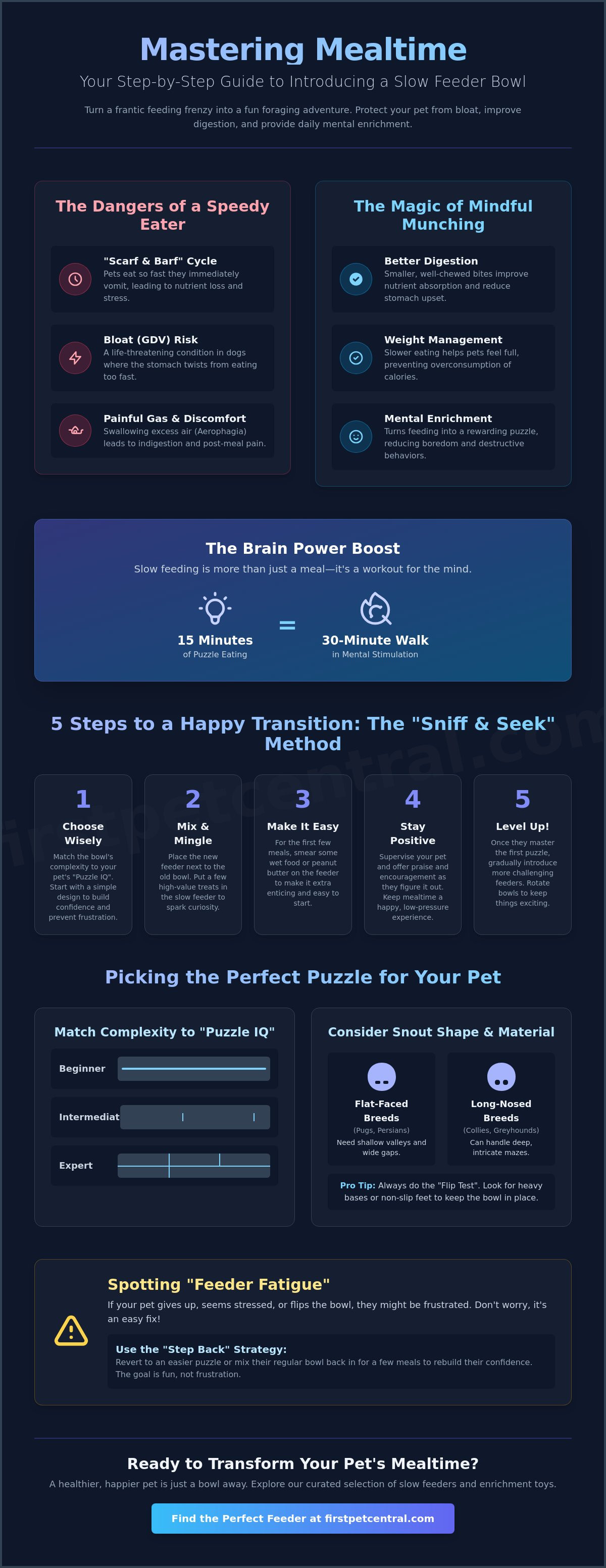
5 Simple Steps to Introduce a Slow Feeder Bowl
Let's turn mealtime into the best part of your pet's day! Learning how to introduce a slow feeder bowl is about more than just slowing down. It is a chance to turn a daily chore into a rewarding game that keeps your furry soulmate's tail wagging. Instead of a sudden change, think of this as a fun new adventure you're starting together. This gradual approach ensures your pet stays confident and excited about their new puzzle.
The first phase is the "Sniff and Seek." Place the empty bowl in your pet's favorite play area rather than their usual feeding spot. Let them explore the new textures and ridges on their own terms. This removes the pressure of hunger and lets them treat the bowl like a new toy. After 24 hours, move to phase two: "The Jackpot." This is where you build a love at first sight connection. Smear a high-value treat like peanut butter or wet food onto the ridges. As they lick it off, they'll realize that this weird looking bowl is actually a source of pure joy.
Once they're comfortable licking the bowl, start the "Hybrid Meal." Place half of their kibble in their old, familiar dish and the other half in the new slow feeder. This prevents any "feeder frustration" because they still have easy access to some of their food. Gradually shift the balance over three or four days until you reach phase four, the "Full Transition." At this point, your pet should be a pro at navigating the maze. Finally, enter phase five: "Supervised Success." Always watch your pet during the first few full meals. You want to make sure they're using their tongue and nose rather than trying to chew through the bowl itself.
Step-by-Step: From Sniffing to Swallowing
To keep the process stress-free, follow these specific instructions. Place the empty bowl in the play area, not the feeding area, for the first 24 hours. This helps your pet realize the bowl isn't a threat. Next, rub a tiny bit of wet food or peanut butter on the ridges to encourage licking. This builds a positive association quickly. As they get better at the game, gradually increase the difficulty by pushing kibble deeper into the crevices. This keeps the challenge level just right for their growing skills.
Pro-Tips for a Smooth Transition
Success is all about the vibes you bring to the table. Use the "praise-and-pet" method whenever they successfully move a piece of kibble or solve a tricky corner. Your enthusiasm tells them they're doing a great job! Keep these early sessions short. If your pet walks away or seems bored, that is okay. Don't force it; just pick up the bowl and try again later. When you keep it light and fun, your pet will naturally look forward to every meal. Mastering how to introduce a slow feeder bowl is a journey, so celebrate every small win along the way!
Overcoming Frustration: What to Do If Your Pet Quits
Sometimes the road to a slower pace has a few bumps. If your furry soulmate stops mid-meal or looks totally confused, they might be experiencing "Feeder Fatigue." This isn't laziness. It's just a sign that the puzzle is currently a bit too tough for them. Watch for signs like aggressive pawing, barking at the dish, or simply walking away. These behaviors tell you that your pet is feeling overwhelmed rather than engaged. When this happens, it's time to use the "Step Back" strategy. This means simplifying the maze or going back to a lick mat for a few days to rebuild their confidence. It's a normal part of learning how to introduce a slow feeder bowl, so don't get discouraged!
You can also keep them interested by using "Texture Tricks." Smearing a little "sticky" food like plain pumpkin, mashed banana, or unsweetened yogurt into the deep crevices keeps them licking for longer. Licking is a naturally soothing behavior for pets and helps lower their stress levels. If they still seem to struggle after a few days, check the bowl's design. Sometimes a bowl is physically uncomfortable for their specific face shape. If their whiskers are constantly hitting high ridges, they might quit just to avoid the sensation. Switch to a shallower design with wider gaps to keep the "game" fun and painless.
Troubleshooting the "Impatience" Factor
Hunger can make even the calmest pet feel a bit frantic. To help them out, try mixing their kibble with a little water or low-sodium broth. This makes the food "float" to the top of the ridges, making it much easier to grab during those first few tries. You should also start by putting only 25 percent of their meal in the slow feeder. Give them the rest in their old, familiar bowl so they don't feel stressed while they learn. You should never leave a frustrated pet alone with a new bowl because they might try to chew through the material to reach the food.
The "Bowl Flipper" Fix
Is your pet a "flipper"? Some clever dogs and cats decide that dumping the bowl upside down is much faster than solving the maze. If your pet has figured out this gravity-defying shortcut, you need a more stable setup. Look for bowls with strong suction-cup bottoms or very heavy bases that stay put during a feeding frenzy. A sturdy frame can also prevent the bowl from sliding across the kitchen floor. After a successful "work" session, your pet will likely be mentally tired and ready for a cozy nap. Treat them to a relaxing break in a Solid Wood Pet Bed to celebrate their hard work and keep them feeling pampered.
Beyond the Bowl: Making Every Meal an Adventure
Once you've mastered how to introduce a slow feeder bowl, don't stop there. The real magic happens when you treat mealtime as a rotating storybook adventure. If your pet uses the same maze every single day, they'll eventually memorize the pattern. Their brain stops working as hard once the challenge becomes predictable. To keep their "Puzzle IQ" high, try rotating between three different designs throughout the week. This keeps the game fresh and exciting for your furry soulmate, ensuring they stay engaged with every single bite.
You can take the fun even further by combining different types of gear. For example, use the slow feeder for the main course and then hide a few high-value treats in an Interactive Puzzle Dog Toy. This creates a multi-layered experience that burns even more mental energy. During hot summer months, turn mealtime into a "Spa Day" for your pet. Fill the crevices of the slow feeder with water, broth, or yogurt and pop it in the freezer. It provides a cooling, long-lasting challenge that keeps them busy and comfortable while the sun blazes outside. These small changes make a huge difference in their daily joy.
Advanced Foraging Games
Introduce variety with snuffle mats or rolling puzzles to mimic different types of natural hunting behaviors. These tools dog puzzle toys increase IQ and prevent boredom-driven mischief around the house. You can even set up a "Multi-Course" meal by placing small amounts of food in different feeding stations across the room. It encourages your pet to move and sniff, turning your living room into a rewarding scavenger hunt. This level of enrichment leads to a much calmer and more satisfied pet after the meal is over.
Final Checklist for New Slow-Feeders
Even with the best gear, safety comes first. Check for wear and tear, like deep chew marks or sharp plastic edges, every single week. This is especially important for teething puppies or pets who tend to be aggressive chewers. Always clean the bowl after every session, particularly if you use wet food or sticky treats. Bacteria can hide in those tiny crevices if they aren't scrubbed properly. Finally, we want to see your progress! Invite your friends and share your "Slo-Mo" success stories on social media. It's a great way to inspire other pet parents who are still learning how to introduce a slow feeder bowl to their own pets.
Mealtimes are often the absolute highlight of your pet's day. By transitioning to a slow feeder, you've made a wonderful investment in their long-term health and happiness. Keep exploring new ways to make their day special. Every puzzle solved is a win for their confidence and well-being. Because your pet deserves the best, every day.
Ready for Your Next Mealtime Adventure?
You now have all the tools to turn a frantic dinner into a rewarding brain game for your furry soulmate. By choosing the right design for your pet's unique face shape and following a gradual path, you're protecting their digestion and boosting their daily happiness. Mastering how to introduce a slow feeder bowl is a gift of long-term health that keeps on giving. Your pet will feel more satisfied, mentally tired, and ready for those cozy post-meal snuggles in their favorite bed. Every meal becomes a storybook adventure when you swap the simple dish for an engaging puzzle.
Ready to start this exciting journey? Our collection features reliable and bite-resistant designs that are already trusted by thousands of happy paws across the country. We make it easy to get started with free shipping on all orders over $50. Upgrade your pet’s dining experience with our Smart Slow Feeder Collection!
Take it slow, keep the vibes positive, and celebrate every successful lick. Your pet is going to love their new "work-to-eat" lifestyle. Because your pet deserves the best, every day.
Frequently Asked Questions
Can I use a slow feeder for a puppy or kitten?
Yes, puppies and kittens can start using these bowls as soon as they transition to solid food. Starting early is a great way to prevent bad habits like gulping from the very beginning. Choose a bite-resistant material since young ones love to chew everything in sight. A shallow design works best for their smaller mouths. It turns their early growth stages into a fun learning adventure while keeping their tummies happy.
How do I clean a slow feeder bowl with deep crevices?
Most slow feeders are dishwasher safe, which makes cleaning a breeze for busy pet parents. For those deep, tricky crevices, a soft bottle brush or a dedicated pet sponge works wonders. Soak the bowl in warm, soapy water for a few minutes to loosen any stuck kibble or wet food. Regular cleaning is essential to keep your pet's dining area fresh and free from unwanted bacteria every single day.
Will a slow feeder help with my dog’s anxiety?
Slow feeders are fantastic tools for reducing anxiety in many pets. The act of licking and searching for food releases calming endorphins in their brains. This mental focus helps distract them from stressful triggers like loud noises or separation. It's a wonderful way to provide comfort while also ensuring they get the nutrients they need. Your furry soulmate will feel much more relaxed after a successful foraging session.
What if my cat refuses to eat from the slow feeder?
If your cat is hesitant, they might be experiencing whisker fatigue from the high ridges. Ensure the maze walls aren't too tall or sharp for their sensitive face. You can follow our tips on how to introduce a slow feeder bowl by starting with just a few treats on the very top. If they still refuse, try a flat lick mat first to build their confidence before moving back to a maze.
How long should a meal take with a slow feeder bowl?
A healthy mealtime should ideally last between 5 and 15 minutes for most pets. If your pet finishes in under two minutes, the puzzle is likely too easy and they need a more complex maze. On the flip side, if they're still working after 20 minutes, they might get frustrated and quit. Finding that "sweet spot" ensures they stay engaged and happy without feeling overwhelmed by the mealtime challenge.
Is it okay to use wet food in a slow feeder maze?
Yes, using wet food is a great way to make mealtime even more interactive and tasty. It turns the bowl into a giant lick mat, which is perfect for hydration and extra mental stimulation. Smearing wet food into the valleys of the maze provides a different sensory experience for your pet. Just remember to give the bowl a thorough scrub after every wet-food session to keep it safe and hygienic.
Can slow feeders cause chin acne in cats?
Plastic bowls can sometimes trap bacteria that leads to feline chin acne if they aren't cleaned properly. To prevent this, choose slow feeders made from non-porous materials like food-grade silicone or high-quality stainless steel. Always wash the bowl after every meal to remove oils and food particles. Keeping their dining area spotless is the best way to protect your kitty's sensitive skin and keep them smiling and healthy.
What is the best material for a slow feeder bowl?
The best material depends on your pet's needs, but food-grade silicone is a top favorite for many owners. It's durable, safe, and soft on sensitive noses and tongues. BPA-free plastic is another excellent, lightweight choice for daily use. When you are learning how to introduce a slow feeder bowl, picking a bite-resistant and non-toxic material ensures your furry friend stays safe while they play their new favorite mealtime game.