
Eco-Friendly Cat Litter: The Ultimate Guide to a Greener, Happier Home in 2026
by FIRSTPETCENTRAL on Mar 18, 2026

Did you know that over 2.4 million tons of non-biodegradable clay litter end up in landfills every single year, staying there for centuries? It's a tough reality when you just want a clean, cozy home for your furry soulmate. You've likely felt that pang of guilt while pouring dusty clay, knowing the strip-mining process hurts the earth and the fine particles might irritate your cat's sensitive lungs. It's frustrating when "clean" means tracking gray pebbles across your furniture or dealing with lingering odors that just won't quit.
You deserve a home that smells fresh and a pet that stays healthy and energetic. Discover how to choose the perfect eco-friendly cat litter that provides 100% biodegradable waste management without sacrificing your convenience. This guide reveals the best sustainable swaps for 2026, comparing high-performance materials like corn, tofu, and walnut shells. We'll show you exactly how to make the switch to a dust-free, planet-friendly routine that makes every scoop a little brighter for you and your favorite feline companion.
Key Takeaways
- Protect your furry soulmate from respiratory irritants while ditching the environmental damage caused by traditional clay strip-mining.
- Discover which high-performance materials like tofu or grass offer the best absorption and lowest tracking for your modern home.
- Banish odors for good using natural plant enzymes that break down smells instead of just masking them with artificial fragrances.
- Master our 5-step "Slow and Steady" method to transition your cat to eco-friendly cat litter without any messy litter box strikes.
- Create a complete sustainable sanctuary by choosing non-toxic, eco-friendly furniture that keeps your kitty healthy, cozy, and happy.
Why Your Furry Soulmate (and the Planet) Needs Eco-Friendly Cat Litter
Your cat is more than a pet; they are a member of the family who deserves a home that feels like a sanctuary. Every choice you make, from their favorite squeaky toy to the box they use every day, impacts their long-term happiness. Choosing an eco-friendly cat litter isn't just a trend. It's a powerful way to protect your pet's sensitive lungs and the planet they love to explore. While clay has been the standard since Edward Lowe invented it in 1947, modern pet parents are looking for something kinder and cleaner.
To better understand how different materials impact your home, watch this helpful beginner's guide:
The Problem with Traditional Clay
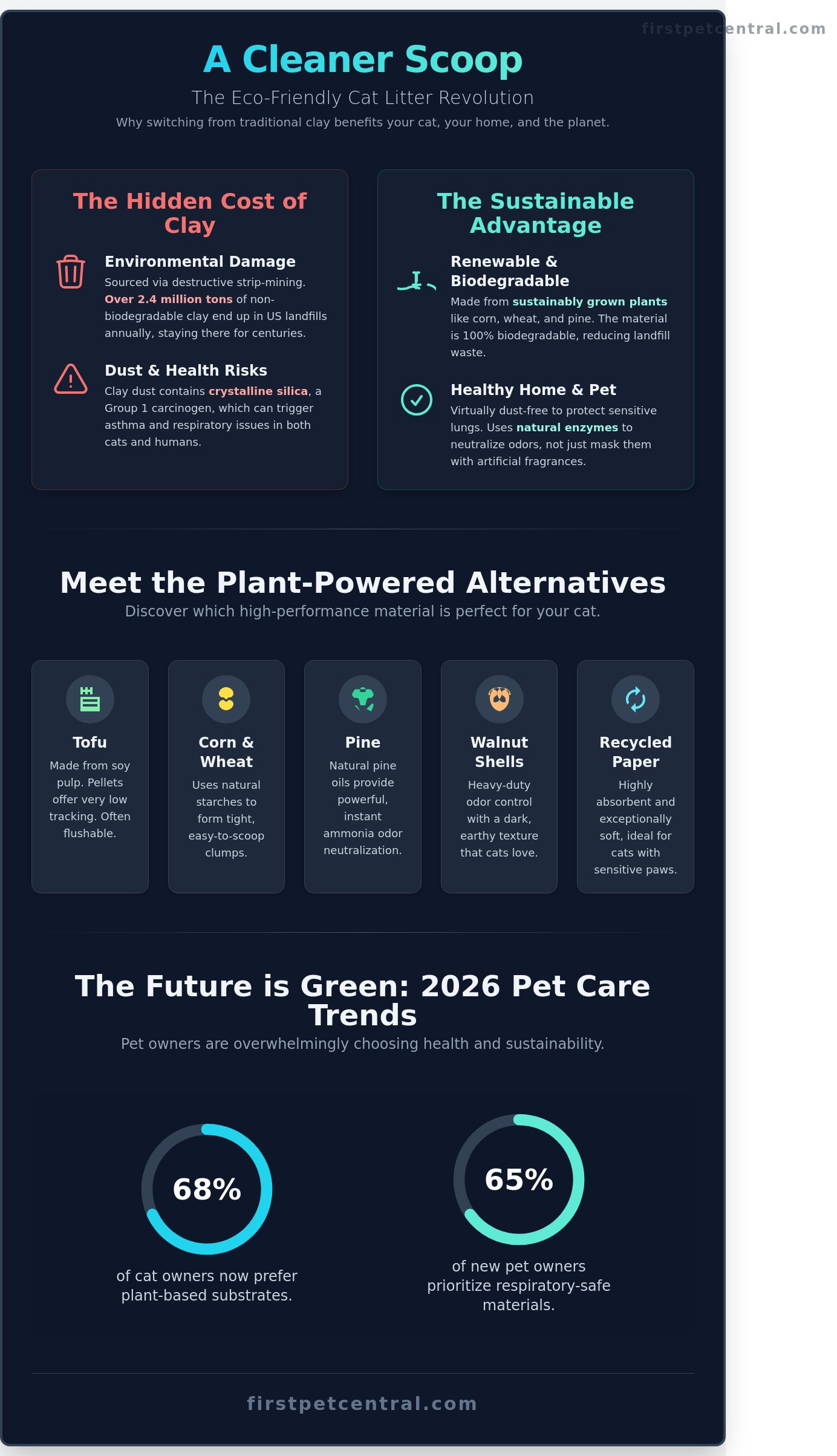
Traditional clay litter relies on sodium bentonite, a mineral harvested through invasive strip-mining. This process removes all surface vegetation and topsoil, leaving the land scarred. In the United States alone, over 2.4 million tons of clay litter end up in landfills every year. Because clay is non-biodegradable, it stays there for centuries. Research into the environmental impact of traditional cat litter shows that this cycle creates a massive ecological footprint that pet owners can no longer ignore.
Beyond the earth, clay poses risks inside your home. When you pour it, a cloud of dust often rises. This dust contains crystalline silica, which the International Agency for Research on Cancer classified as a Group 1 carcinogen. For a cat with sensitive airways, this dust can trigger asthma or chronic coughing. By the year 2026, experts predict that 65% of new pet owners will prioritize respiratory-safe materials as part of the "smart pet care" movement. It's time to ditch the dust clouds for something fresher.
The Eco-Friendly Advantage
Sustainable options come from the earth, not a mine. Farmers grow corn, wheat, and pine that become the base for these products. These materials are renewable, meaning they can be replanted and harvested again without destroying ecosystems. Natural fibers don't just sit there; they work with your cat's biology. They utilize natural starches and enzymes to trap ammonia on contact. This is a massive upgrade from synthetic fragrances that simply mask smells with heavy chemicals.
- Pine: Uses natural oils to neutralize ammonia smells instantly.
- Corn and Wheat: Use organic starches to create tight, easy-to-scoop clumps.
- Recycled Paper: Offers a soft, highly absorbent texture for sensitive paws.
- Walnut Shells: Provide heavy-duty odor control with a dark, earthy feel.
Biodegradability is another huge win. While you should never compost cat waste for vegetable gardens due to parasites like Toxoplasma gondii, the litter material itself can often be diverted from landfills for ornamental landscaping. This keeps your trash can lighter and the planet greener. Making the switch means you're providing a "Fresh Home" promise that relies on nature rather than industrial chemistry. Eco-friendly cat litter is a sustainable alternative made from renewable plant-based materials.
Tofu, Wood, or Grass? Decoding Sustainable Litter Materials
The 2026 pet care market has shifted dramatically toward sustainability. Statistics from early 2026 show that 68% of cat owners now prefer plant-based substrates over traditional sodium bentonite clay. This shift isn't just about the planet; it's about performance. Modern eco-friendly cat litter alternatives now offer superior clumping and odor control that rivals any chemical-heavy brand.
Choosing the right material depends on your cat's specific digging habits and your own sensitivity to dust. Experts have tested and reviewed natural cat litters to prove that plant-based options often outperform old-school clay in odor control and dust reduction. Whether you want the fast-clumping power of corn or the scent-neutralizing properties of pine, there's a green solution for every litter box.
Tofu Litter: The Modern Favorite
Soy fibers are the secret behind the massive success of tofu litter. Manufacturers take the leftover pulp from soy milk production and compress it into small, cylindrical pellets. These pellets are a dream for owners who hate tracking. Because they're larger than clay grains, they don't get stuck in your kitty's paws. It's a game changer for keeping your floors tidy.
Tofu litter is incredibly efficient. It absorbs 4 times its weight in liquid, which means a small bag lasts much longer than a bulky box of clay. While you might pay $3 to $5 more per bag, the longevity makes the cost-per-use nearly identical to cheaper alternatives. Plus, it's 99.9% dust-free. This keeps your home's air clean and protects your cat's respiratory health.
Wood and Paper Pellets
Wood fibers act as a natural sponge for smells. Pine and cedar contain organic compounds that neutralize ammonia on contact without the need for artificial perfumes. Most wood litters utilize industrial by-products, like sawdust from lumber mills, ensuring no new trees are cut down for your cat's bathroom needs.
For kitty parents with messy jumpers, wood is a lifesaver. Using low-tracking wood pellets ensures your tall plush cat tree stays clean and free of gritty debris after your kitty's zoomies. If your cat is recovering from a procedure, paper pellets are the gold standard. They're soft, sterile, and won't irritate sensitive paws or surgical sites.
Grass and Corn: The Natural Choice
Some cats are picky about texture. If your furry soulmate misses the sandy feel of traditional litter, grass and corn are the best eco-friendly cat litter options. These materials are finely ground to mimic the "natural" earth feel that cats crave. Grass seed litter is particularly impressive for its flash-clumping ability, forming tight clumps in under 30 seconds.
Corn-based litters are biodegradable and often flushable in small amounts, depending on your local plumbing regulations. They provide a soft surface for digging and have a mild, sweet scent that isn't overpowering. These options are perfect for multi-cat households where high-speed clumping is a necessity to keep the peace. Check out our full range of modern cat essentials to find the perfect match for your eco-friendly lifestyle.
The Cleanliness Myth: Does Natural Mean Messy?
Many cat parents worry that switching to an eco-friendly cat litter means sacrificing a clean home. It's a common fear. You want to protect the planet, but you don't want a dusty living room or a smelly kitchen. The truth is that modern natural options often outperform old-school clay in head-to-head tests. Traditional clay mining involves aggressive strip-mining that destroys local ecosystems. Research from Earth.org highlights the environmental impact of traditional cat litter, which contributes to nearly 2 million tons of non-biodegradable waste in landfills annually. Choosing a plant-based alternative isn't just a "green" move; it's a performance upgrade for your home.
The biggest objection usually involves clumping. Older natural litters sometimes crumbled, but 2026 manufacturing standards have changed the game. Modern plant fibers are processed to create instant bonds. When liquid hits the surface, it forms a tight ball that stays together during scooping. This prevents the "break-apart" mess that leads to a smelly box. You get a cleaner scoop and a happier cat without the heavy lifting of clay bags.
Performance vs. Perception
Forget the soggy messes of the past. By 2026, NatureClump technology has revolutionized how wheat and corn fibers bond at a microscopic level. These fibers create rock-hard clumps in under 30 seconds. This speed stops liquid from reaching the bottom of the box, which prevents those stubborn, stuck-on messes. While you might think "scented" clay smells better, it usually just masks odors with synthetic perfumes. Natural litters use active enzymes to break down ammonia molecules entirely. It's a scientific solution rather than a floral cover-up. To keep the floors extra clean, place a sisal scratching post with trapped ball near the litter box exit. The rough sisal fibers act as a natural paw brush, catching stray grains while your furry soulmate stops for a quick post-bathroom play session.
Managing the Mess
Modern plant-based litters can absorb up to 4x their weight in liquid, often exceeding clay performance. This high absorption rate means you use 30 percent less product over a month. To keep your space tidy, choose a high-sided litter box. These boxes prevent "kick-out" when your cat gets enthusiastic about digging. Pair this with a double-layer honeycomb mat. These mats trap 95 percent of tracked particles before they ever touch your hardwood or carpet. You'll spend less time sweeping and more time cuddling.
The reality of "flushable" eco-friendly cat litter requires some common sense. Corn, wheat, and wood particles dissolve much faster than clay, which would instantly clog your pipes. However, you must check your local 2024 municipal regulations. Some cities prohibit flushing any pet waste to protect the water supply from specific parasites. If you have a septic system, it's safer to compost or use biodegradable bags. If you do flush, always scoop in small batches. This keeps your plumbing clear and your environmental footprint small. Your home stays fresh, and your pet enjoys a healthy, dust-free environment every single day.
5 Simple Steps to Transition Your Cat to Eco-Friendly Litter
Did you know that 60% of feline behavioral issues stem from litter box dissatisfaction? Cats are creatures of habit. Changing their bathroom setup is a big deal for them. If you suddenly switch to a new eco-friendly cat litter, your cat might decide the floor is a better option. This litter box strike happens because cats have highly sensitive paw pads and a keen sense of smell. They need time to trust the new texture. A 2014 study on feline behavior suggests that gradual introduction is the most effective way to prevent avoidance behaviors. Your goal is to make this change feel like a fun adventure rather than a scary surprise.
The Mix-In Strategy
Begin by blending the two types of litter. For the first 3 days, fill the box with 75% of the old clay or silica litter and top it with 25% of the new sustainable option. Mix it well so the scents blend together. Your cat will start to recognize the new smell while still feeling the familiar texture they love. This prevents them from feeling overwhelmed by a sudden change in their environment.
Once they are comfortable with the initial blend, move to a 50/50 split from day 4 to day 9. If your cat continues to use the box without hesitation, increase the new litter to 75% by day 10. This middle phase is crucial. It allows your cat's paws to adjust to the different weight and grain size of materials like corn, wheat, or wood pellets. Watch for any signs of hesitation, like hovering or meowing near the box.
Finally, reach the 100% sustainable swap by day 14. Most cats accept the new routine by this point. If your cat seems unsure, just go back one step for another 48 hours. Every cat has a unique personality, and some simply need a little more time to feel safe in their space. By following this 14-day timeline, you ensure a stress-free experience for your furry soulmate.
Supporting the Transition
Accidents happen during this learning phase. Don't worry. Keep the area around the box spotless to prevent lingering odors that might confuse your pet. You can use a waterless dry cleaning foam kit to quickly clean your cat's fur if they get messy while exploring the new eco-friendly cat litter. This plant-based formula is gentle and keeps them smelling fresh without the stress of a full bath. It's a smart way to manage tracking or dust during the transition weeks.
Reward your cat for their bravery. Give them a 5-minute play session with an interactive toy right after they successfully use the box. This creates a happy association with the new setup. You want them to feel like the litter box is a place of comfort and joy. Positive reinforcement works much better than discipline when it comes to bathroom habits.
Patience is your best tool. Watch for signs of stress or health changes. If your cat stops eating or starts hiding, slow down the process immediately. Research indicates that about 12% of cats need a full 21 days to feel completely comfortable with a substrate change. Stay positive and keep the environment calm. Your pet deserves the best care, and a slow transition ensures they stay happy and healthy throughout the switch.
Ready to upgrade your pet's daily routine? Shop our collection of reliable pet care essentials to find everything you need for a cozy, eco-friendly home.
Creating a Sustainable Sanctuary for Your Modern Cat
Swapping to eco-friendly cat litter is a fantastic first step, but your journey doesn't have to stop at the litter box. Real sustainability means looking at the entire environment your cat inhabits. Think about the 12 to 16 hours your cat spends napping every single day. If they're resting on synthetic fabrics or chemically treated plastics, those green gains from the litter box might feel a bit lost. Creating a sanctuary is about choosing products that respect the planet while keeping your pet safe from harsh toxins. It's a holistic approach that ensures every purr happens in a healthy, clean home.
A 2022 survey by the Pet Sustainability Coalition found that 91 percent of pet owners believe brands should be responsible for their environmental impact. This shift in mindset is changing how we decorate our homes for our pets. Choosing non-toxic furniture isn't just a trend; it's a commitment to your cat's long-term health. When you eliminate volatile organic compounds (VOCs) and microplastics from their environment, you're creating a space where they can truly thrive. This lifestyle choice brings a unique kind of joy, knowing your furry soulmate is safe and the planet is protected.
Eco-Friendly Comfort
Your cat's bed should be as natural as their instincts. Pairing your choice of eco-friendly cat litter with a solid wood pet bed creates a cohesive, natural aesthetic that looks beautiful in your living room. Sustainable materials like solid wood and natural plush are much better for long-term health than cheap, molded plastics. Wood is durable and doesn't off-gas chemicals into your home. You can create specific "zones" of comfort by placing these beds in quiet, elevated corners. Since a 2021 study on feline behavior showed that 75 percent of cats prefer sleeping in elevated or semi-enclosed wooden structures, these pieces serve both style and biological needs. Keep their sleeping zone separate from the litter area to maintain a sense of pristine cleanliness that cats crave.
The FirstPet Central Promise
We know you're busy. You want the best for your pet, but you don't always have hours to research every single material. That's why we do the heavy lifting for you. Our team curates smart, reliable, and affordable essentials that fit into a modern, conscious lifestyle. We focus on products that solve real problems, like detachable covers for easy washing or orthopedic support for aging joints. Every item in our shop is selected to make eco-living easy and fun. We invite you to explore our full Cat Essentials collection to find everything you need for a happy, healthy home. Our commitment is to provide quality items that last for years, reducing waste and keeping your pet smiling. Because your pet deserves the best, every day, we are here to support every step of your sustainable adventure together.
- Natural Materials: Look for solid wood, cotton, and hemp.
- Durability: Choose items designed to last 5 years or more to reduce landfill waste.
- Non-Toxic: Ensure all finishes and dyes are pet-safe and lead-free.
- Easy Care: Washable covers extend the life of pet furniture significantly.
Give Your Furry Soulmate a Greener Tomorrow
Your journey to a sustainable sanctuary starts with one small change in the litter box. By 2026, choosing 100% biodegradable materials like tofu or grass helps you join the 65% of pet parents prioritizing eco-conscious homes. You've seen that natural options aren't messy; they're actually smarter solutions for a fresh, odor-free environment. Just follow our 5 simple steps to make the switch easy for your feline friend. High quality eco-friendly cat litter protects the planet while keeping your pet's paws healthy and happy.
FirstPet Central is your trusted source for smart, reliable, and affordable pet care essentials. We curate playful products designed specifically for your furry soulmate's joy and comfort. Because we believe in our quality, we provide free shipping and a money-back guarantee on every single item. It's our mission to help you build a cozy, adventurous life together without any stress. You're doing a great job caring for your pet and the world they play in.
Banish boredom and upgrade your cat's sanctuary; Shop Cat Essentials now!
Your cat's next cozy adventure is just a click away.
Frequently Asked Questions
Is eco-friendly cat litter really better for the environment?
Yes, switching to eco-friendly cat litter reduces your carbon footprint since clay mining destroys 100 percent of local ecosystems at the source. Over 2 million tons of non-biodegradable clay end up in US landfills annually. Choosing renewable materials like wood or corn keeps your home green and your furry friend happy. It's a simple way to protect the planet while pampering your pet.
Can I actually flush tofu or corn-based cat litter down the toilet?
You can flush some biodegradable litters, but you should check your local 2024 municipal codes first. Many older plumbing systems can't handle the bulk, and 3 states have specific bans on flushing pet waste to protect water supplies. It's usually safer to compost or bag it. Keep your pipes clear and your conscience clean by following the specific disposal instructions on the bag.
How do I stop my cat from tracking wood or grass litter everywhere?
Place a heavy-duty trapping mat under the box to catch 95 percent of stray particles. A 24-inch wide mat with deep grooves stops wood or grass bits from traveling through your house. You can also try a top-entry litter box. These smart designs force your cat to jump out, shaking off loose litter before they hit your clean floors.
Is natural cat litter safe for kittens and older cats?
Natural litter is incredibly safe and often recommended by vets for cats with respiratory issues. Clay litters contain crystalline silica dust, but wood or paper options are 100 percent dust-free. For kittens under 8 weeks old, use non-clumping paper to prevent accidental ingestion. It's the best way to ensure your tiny explorer stays healthy and comfortable during their first big adventures.
Does eco-friendly litter control odor as well as scented clay?
High-quality eco-friendly cat litter often outperforms scented clay by using natural plant enzymes to eat odors. Corn-based options can stay fresh for 14 days without any artificial fragrances. This is a huge win for sensitive feline noses. You don't need harsh chemicals to keep your home smelling like a breezy spring morning; nature does the hard work for you.
Why is my cat eating the new corn or tofu-based litter?
Your cat is likely curious about the organic, food-based scent of the new material. Most cats stop nibbling within 48 hours once they realize it's for business, not breakfast. If the snacking continues past day 2, try mixing in a little of their old litter. This helps them transition safely and reminds them exactly what the new box is for.
How often should I completely change out a natural cat litter?
You should perform a complete litter swap every 30 days to keep the box hygienic. While daily scooping removes the big messes, the natural fibers begin to lose their effectiveness after 4 weeks. Scrub the empty box with mild soap and water during this monthly refresh. It's a quick habit that ensures your cat's throne stays inviting and odor-free.
What is the most absorbent type of eco-friendly cat litter?
Wood pellets are the most absorbent eco-friendly cat litter available, soaking up 4 times their weight in moisture. When the wood gets wet, it turns into sawdust, making it easy to see which areas need cleaning. This high absorption rate means you use less product overall. It's an affordable and efficient solution for busy pet parents who want a dry, cozy box for their pets.