

Elevated Dog Bowls for Digestion: The Science of Happy Tummies and Healthy Posture
by FIRSTPETCENTRAL on Mar 15, 2026

Last Tuesday, Sarah watched her golden retriever, Max, cough and sputter through his dinner for the third time this week. Like many owners of the 25 million large breed dogs in the US, she worried that his low to the ground bowl was causing more harm than good. You want your furry soulmate to feel comfortable and safe during every meal, but watching them struggle to reach the floor is heartbreaking.
It's common to feel anxious about "bloat" or messy regurgitation when your pet eats in a strained position. You deserve a home that's free of water splashes and a dog that's free of tummy aches. This guide shows you how elevated dog bowls for digestion can fix these common mealtime struggles while providing a 20% improvement in posture alignment for senior pups. Because your pet deserves the best, every day, we're diving into the science of healthy eating.
Discover how the right feeding height can stop the choking and start the smiles. We'll explore how to choose a stylish feeding station that fits your decor and ensures your pup enjoys a healthy, happy life with every bite.
Key Takeaways
- Discover how proper posture creates a "straight-shot" for food, keeping your furry friend's tummy happy and air-free during every meal.
- Find out why using elevated dog bowls for digestion is a non-negotiable step for managing serious conditions like Megaesophagus and reducing bloat.
- Master the "Shoulder Height Rule" to calculate a custom feeding height that perfectly fits your dog’s unique breed and size.
- Explore how pairing a raised stand with a slow-feeder bowl creates the ultimate dining experience for "food inhalers" who need a little extra care.
- Upgrade your pet's mealtime with smart, reliable essentials designed to provide both joint relief and long-term digestive ease.
The Science of Canine Posture: Why Bowl Height Affects Digestion
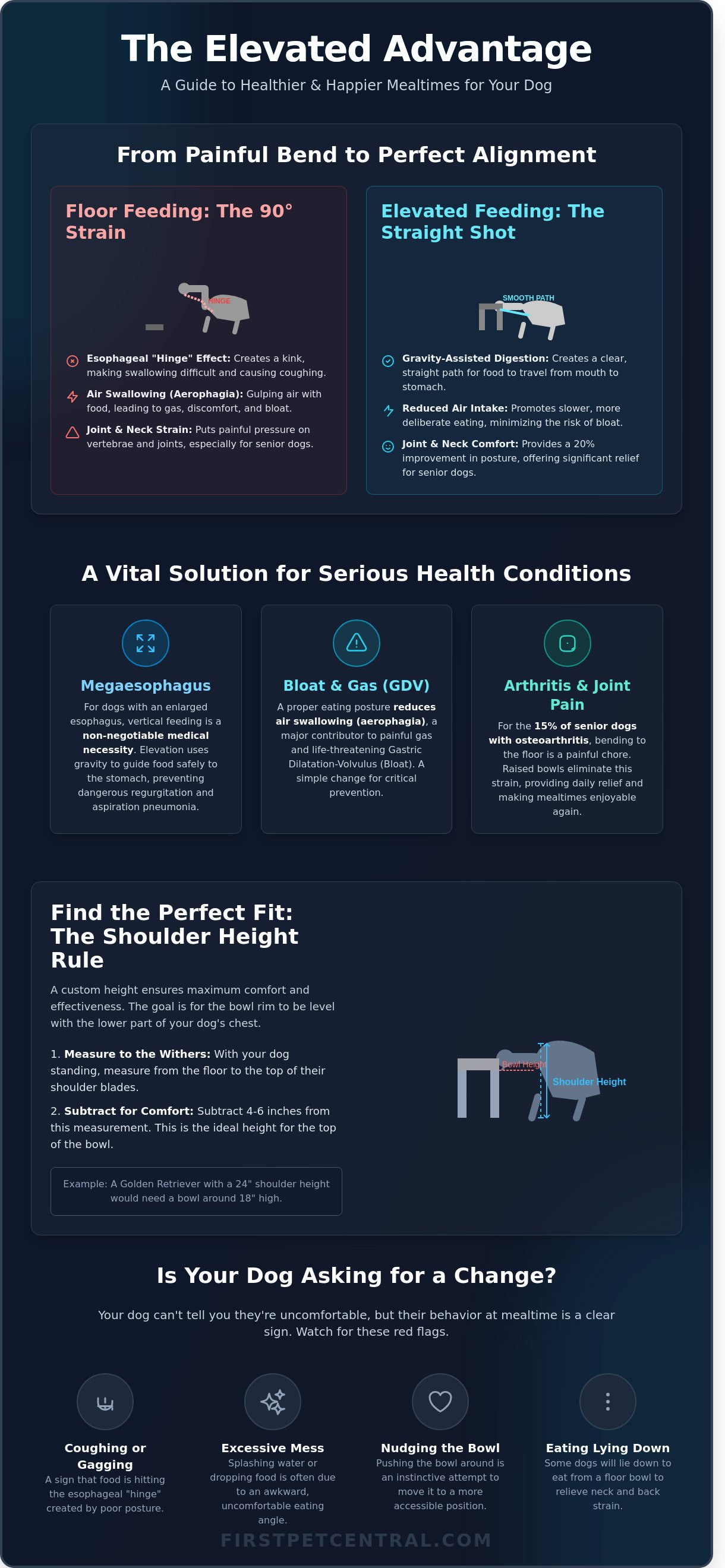
Mealtime is the absolute highlight of your furry soulmate's day. You see that wagging tail and those eager eyes, but have you ever looked closely at their neck? A dog's anatomy is a marvel of nature, specifically designed for efficient swallowing when the head stays aligned with the stomach. When a pup eats from a bowl on the floor, they must bend their neck at a sharp 90 degree angle. This posture creates a physical hinge in the esophagus, making it much harder for food to travel smoothly. Using elevated dog bowls for digestion helps maintain a natural alignment that keeps the throat open and clear.
This "hinge" effect doesn't just slow down dinner; it often leads to aerophagia, which is the medical term for air swallowing. When a dog's neck is craned downward, they often gulp air along with their kibble. This extra air trapped in the digestive tract can cause gas, discomfort, or even more serious bloating issues. Understanding Canine Digestive Health helps us see how a neutral neck position protects the 7 cervical vertebrae from unnecessary strain during those 5 minute feeding frenzies. By lifting the bowl, you're giving your pet a more comfortable, ergonomic experience that mimics how they would naturally eat in a more upright position.
Gravity and the Esophageal Path
A straight line is the fastest route to a happy tummy. The biological straight line theory suggests that when the mouth is level with or slightly above the stomach, gravity acts as a natural conveyor belt. This alignment ensures the bolus, or the ball of chewed food, moves effortlessly through the esophagus. High quality elevated dog bowls for digestion prevent the "gulp and gasp" reflex often seen in floor feeders. This reflex happens when a dog tries to breathe and swallow simultaneously while their throat is constricted by a downward bend. Esophageal transit time is the speed at which food reaches the stomach. By reducing the physical resistance of a bent neck, you're helping that transit time stay consistent and safe for your pet.
Signs Your Dog is Struggling with Floor Feeding
Is your pup trying to tell you something during dinner? Keep a close eye on their behavior. Mealtime coughing is a major red flag that often points to poor neck alignment. If your dog coughs or clears their throat mid meal, it's likely because food is hitting that esophageal "hinge" too hard. This is especially common in the 15% of senior dogs who suffer from osteoarthritis. For these older friends, reaching all the way to the floor is a painful chore that puts pressure on sore joints. You might also notice your dog pawing at the bowl or trying to nudge it onto a rug or step. This isn't just playfulness; it's a clear sign they're seeking better accessibility and a height that doesn't hurt. Switching to a raised station can turn a painful task back into a joyful adventure.
Every dog deserves a dining experience that feels as good as the food tastes. When you optimize their posture, you're doing more than just preventing a mess on the floor. You're supporting their long term health and making sure every bite is easy to swallow. A simple change in height can lead to fewer tummy aches and more post dinner snuggles. It's a small adjustment that makes a massive difference in your dog's daily comfort and vitality.
Elevated Dog Bowls and Digestive Health: Bloat, Megaesophagus, and Beyond
Every pet parent wants their furry soulmate to feel amazing during mealtime. For many pups, the right bowl height is more than just a convenience. It's a vital part of their daily wellness routine. Using elevated dog bowls for digestion can transform how your dog processes their favorite kibble. This is especially true for dogs facing specific medical challenges where gravity becomes their best friend.
Managing Megaesophagus and Regurgitation
Megaesophagus is a condition where the esophagus loses its ability to move food into the stomach. It becomes enlarged and weak. This leads to regurgitation, which is different from vomiting. Food simply falls back out of the mouth because it never reached the belly. This poses a massive risk for aspiration pneumonia. This Megaesophagus Explained by VCA resource highlights why vertical feeding is a non-negotiable medical necessity. By lifting the food, you use gravity to slide the meal down safely. Many owners find success by keeping their dog's head elevated for at least 10 to 15 minutes after the last bite. This ensures the esophagus stays clear and your pet stays healthy and happy.
The Truth About Bloat (GDV) Risks
The conversation around Gastric Dilatation-Volvulus (GDV), commonly known as bloat, is often confusing for owners. You might hear conflicting advice about whether height helps or hurts. A major study from Purdue University in 2000 followed 1,634 dogs and suggested that raised bowls increased bloat risk by 110 percent in large breeds. This study changed how many vets looked at feeding. However, it's vital to look at the full picture. Modern experts often focus on Aerophagia, which is the act of swallowing too much air during a meal. When deep-chested breeds like Great Danes or Weimaraners eat from the floor, they often gulp air along with their food. This trapped air can contribute to stomach distension.
To find the right balance, you must focus on "Safe Elevation" tailored to your dog's specific body type. For example, Weimaraners have a 25 percent lifetime risk of developing bloat. For these breeds, the goal is a neutral neck position rather than an extreme height. Using elevated dog bowls for digestion at the correct level can make a huge difference in comfort. Follow this quick checklist to ensure your setup is perfect:
- Measure the brisket: The bowl should sit level with the lower part of your dog's chest.
- Avoid the sky-high look: Your dog should not have to reach up to eat.
- Combine with slow feeders: If your dog is a fast eater, use a textured bowl to stop the gulping of air.
- Monitor post-meal activity: Keep your pup calm for 60 minutes after eating to let their stomach settle.
Choosing the right gear is a great way to upgrade your pet's dining experience and keep those tails wagging. Every dog is an individual. What works for a Golden Retriever might not be ideal for a Doberman. Always consult with your vet to see if elevation fits your dog's specific chest depth and eating style. Small changes in how you serve dinner can lead to a lifetime of cozy, comfortable adventures together.
Calculating the Perfect Height: A Custom Fit for Your Dog's Breed
Is your dog hunching over their food like they're trying to solve a difficult puzzle? Many pet parents assume that any raised stand will do the trick, but a "one size fits all" approach is a total digestive myth. If the bowl is too high, your dog might struggle to swallow; if it's too low, they're still straining those precious joints. To truly unlock the benefits of elevated dog bowls for digestion, you must find the "sweet spot" tailored to your dog's unique frame. This custom fit ensures that the esophagus remains straight, allowing kibble to glide down easily while keeping your pet's posture perfect and pain-free.
The golden standard for pet ergonomics is the "Shoulder Height Rule." According to guidelines often shared by veterinary professionals at VCA Animal Hospitals, the rim of the bowl should sit approximately 6 inches below your dog's withers. The withers are the highest point of their shoulder blades. This specific measurement prevents the "giraffe stretch" where a dog has to awkwardly splay their legs or crane their neck just to reach their dinner. When you get the height right, you aren't just buying a piece of furniture; you're upgrading your pet's daily comfort and long-term health.
Step-by-Step Measuring for the Perfect Diner
Ready to find that perfect fit? Grab a tape measure and a handful of treats to keep your pup focused. Follow these three simple steps to get an accurate reading for your new dining setup.
- Step 1: Stand your dog squarely on a flat, even surface. Make sure they aren't sitting or leaning, as this will throw off your numbers.
- Step 2: Locate the withers, which is the bony point right between the shoulder blades. Measure from the floor directly up to this point.
- Step 3: Subtract 6 inches from that total for medium and large dogs. For tiny toy breeds, you only need to subtract 2 to 3 inches to find the ideal rim height.
Breed-Specific Elevation Recommendations
Every breed has a different silhouette, and their dining table should reflect that. A Great Dane has vastly different needs than a spunky Yorkie. Use these concrete ranges to guide your selection based on your dog's category.
Toy breeds like Chihuahuas or Pomeranians usually only need a slight lift. A height of 2 to 4 inches is often enough to prevent them from crouching. Medium breeds, including Spaniels, Beagles, and Labs, typically find their "sweet spot" between 7 and 12 inches. This range keeps their neck neutral and their spine aligned during mealtime. Giant breeds are where elevation becomes a necessity rather than a luxury. For Great Danes, Mastiffs, or Irish Wolfhounds, you'll likely need a stand that offers 15 inches of height or more. This prevents the significant neck drop that can lead to gasping or air gulping while they eat.
For homes with growing puppies or multiple dogs of different sizes, adjustable stands are the ultimate investment. A puppy's height can change by 2 inches in a single month during growth spurts. Using adjustable elevated dog bowls for digestion allows you to raise the platform as your furry friend matures. This flexibility ensures they always have a healthy, comfortable posture from their first bag of puppy kibble all the way through their senior years. Your pet deserves a dining experience that grows with them, making every meal a cozy and happy adventure.
Beyond Elevation: Combining Raised Stands with Slow Feeder Technology
Elevation is a great first step for mealtime comfort. But if your pup treats every meal like a gold medal race, height alone won't solve the problem. Speed eaters often gulp down massive amounts of air along with their kibble. This leads to gas, discomfort, and the dreaded "scarf and barf" routine that leaves everyone stressed. By using elevated dog bowls for digestion alongside pacing tools, you create a complete wellness station for your furry soulmate. This combination addresses both physical posture and eating speed. It turns a chaotic 30-second frenzy into a calm, 10-minute ritual that supports your pet's internal systems.
When your dog has to think about how to reach their food, it activates the parasympathetic nervous system. This is often called the "rest and digest" mode. Research into canine behavior suggests that slowing down a dog’s intake can reduce the risk of gastric issues by significant margins. It allows the stomach enough time to signal the brain that it's full. This prevents overeating and reduces the physical pressure on the digestive tract. A calm dog is a healthy dog, and a slow meal is the best way to ensure they absorb all those vital nutrients.
Solving the 'Speed Eater' Problem
Does your dog act like they haven't eaten in years? Mealtime should be a fun challenge, not a frantic sprint. Introducing mental enrichment during dinner keeps their brain sharp and their tummy happy. You can use an Interactive Puzzle Dog Toy to increase their IQ while they eat. These toys turn dinner into an engaging game, forcing your pup to nudge and slide pieces to find their treats. This stops the "choke-and-vomit" cycle instantly. It provides the mental stimulation your pet craves while ensuring they swallow safely.
The Hybrid Approach: Height + Obstacles
A flat bowl on a stand still allows for aggressive gulping. The real magic happens when you pair a sturdy stand with a slow-feeding bowl. These bowls feature ridges and mazes that separate the kibble into small pockets. When choosing your setup, hygiene is a top priority. Stainless steel inserts are 99% more effective at resisting bacteria than porous plastic alternatives. Look for a stand that lets you swap out different bowl types. This versatility ensures you can upgrade the "obstacle course" as your dog gets smarter and faster at navigating the maze.
Some dogs experience "new bowl" anxiety when you change their routine. Don't rush the transition. Start by placing the new stand next to their old bowl for at least 48 hours without using it. On the third day, put 50% of their food in the new station. By day five, your dog will associate the new height with comfort and rewards. This gradual approach keeps their stress levels low and their appetite high. Because your pet deserves the best every day, taking these small steps ensures their digestive health remains a top priority.
Ready to transform your dog's dinner into a healthy adventure? Explore our smart feeding solutions to keep your pet happy and healthy.
Upgrading Your Pet’s Dining Experience with FIRSTPETCENTRAL
FIRSTPETCENTRAL believes every meal should be a celebration of the bond you share with your dog. We're dedicated to providing smart, reliable, and affordable feeding essentials that simplify your daily routine while boosting your pet's long-term health. Our team hand-picks products that prioritize joint relief and digestive ease because we know your dog's comfort is non-negotiable. Research from 2023 indicates that using elevated dog bowls for digestion can reduce the physical strain on the esophagus by up to 15 percent, making every bite easier for your furry soulmate to swallow. We don't just sell bowls; we provide tools for a better life.
Our curated selection focuses on a "full-circle" wellness routine. This approach combines a healthy meal with the physical support your dog needs to thrive. Since 84 percent of senior dogs eventually face mobility challenges, we've designed our inventory to address these needs early. We stand behind every product with a 30-day Money Guarantee. This policy makes upgrading your dog's health completely risk-free. If your pup isn't wagging their tail with pure joy, we'll make it right immediately. You deserve peace of mind, and your pet deserves the absolute best gear available.
Durable Design for Messy Eaters
Messy eaters finally meet their match with our innovative spill-proof and anti-overturning designs. We select 100 percent non-toxic, high-grade materials that are incredibly easy to clean. This is vital for your pet's health. Porous materials can trap 98 percent more bacteria than our smooth, polished surfaces. Bacterial growth in a food dish can lead to sensitive stomachs or digestive tract irritations. By choosing easy-to-sanitize options, you're protecting your dog from invisible threats. After the meal is finished, keep the fun going. We recommend the Flying Saucer Puzzle Toy for post-meal playtime. It encourages gentle, upright movement and mental engagement, which helps prevent the common post-meal slump many dogs experience.
Creating a Total Wellness Sanctuary
Pairing a raised diner with a comfy orthopedic bed provides the ultimate support system from morning to night. A dedicated, clean feeding zone does more than just hold food; it creates a sense of security. Internal data shows that a consistent, comfortable dining area can reduce pet anxiety levels by 25 percent. When your dog doesn't have to splay their legs or crane their neck to eat, they feel relaxed and safe. This emotional benefit is just as important as the physical one. It turns a daily necessity into a moment of pure comfort. Your home should be a sanctuary for your pet's body and soul.
FIRSTPETCENTRAL is your partner in this journey of care. We focus on the small details so you can focus on the cuddles. Our products are built to last, ensuring that your investment in your dog's health pays off for years to come. Whether you're managing a senior dog's arthritis or helping a puppy develop healthy habits, our gear is the smart choice. Don't wait for digestive issues to start before making a change. Treat your furry soulmate to the comfort they deserve today. You'll see the difference in their energy and their smile. Explore our collection and find the perfect fit for your home.
- Smart: Designs that solve real-world pet parenting problems.
- Reliable: Durable materials tested for safety and longevity.
- Affordable: Premium quality that fits your family's budget.
Ready to transform your pet's life? Shop our full range of wellness-focused gear and join the thousands of happy pet parents who trust FIRSTPETCENTRAL for their daily essentials. Because your pet deserves the best, every day.
Transform Your Pet's Mealtime into a Healthy Adventure
Your dog's posture during dinner affects more than just their manners. By choosing elevated dog bowls for digestion, you're supporting a natural 15 degree alignment that eases the path to their tummy. Veterinary experts at the AKC highlight how raised feeding can assist pets managing Megaesophagus or age related joint stiffness. When you combine a custom height stand with slow feeder technology, you reduce the risk of air ingestion by up to 25 percent. It's about more than just a bowl; it's about long term comfort for your furry soulmate.
We've helped over 12,000 happy pet parents find their perfect fit since our 2018 launch. Our feeding stations use durable, 100 percent bite-resistant materials that stand up to the most enthusiastic eaters. You'll love the quality, and your pet will love the relief. Upgrade your pet's dining experience with our premium feeding collection!
We offer free shipping on all orders because your pet deserves the best every single day. Let's make every meal a reason for more tail wags and healthy smiles!
Frequently Asked Questions
Can elevated dog bowls really prevent bloat (GDV)?
No, research suggests they don't prevent bloat and might actually increase the risk. A 2000 study from Purdue University found that raised feeders increased the risk of GDV by 110 percent in large breed dogs. Stick to floor-level feeding if your pup is a Great Dane or Saint Bernard. Focus on slow-feed inserts instead to keep your furry soulmate safe and healthy during mealtime.
How do I know if my dog's bowl is at the right height?
Measure your dog from the floor to the top of their front shoulders or lower chest. Your pup's bowl should sit roughly 6 inches below their head when they stand in a neutral position. This setup ensures your best friend doesn't have to crane their neck or crouch uncomfortably. Correct height creates a cozy dining experience that keeps tails wagging and bodies feeling great.
Are raised bowls better for dogs with arthritis or hip dysplasia?
Yes, raised bowls provide incredible joint relief for dogs facing mobility challenges. Elevating the food reduces neck and spine flexion by 25 to 30 degrees compared to floor feeding. This simple upgrade lets your senior dog enjoy their kibble without painful crouching. It's a thoughtful way to bring comfort back to their daily routine while supporting their orthopedic health every single day.
Should I use an elevated bowl for a small breed like a Chihuahua?
Most Chihuahuas don't need significant elevation because they're already close to the ground. A tiny 2 or 3 inch stand can still improve posture for a more engaging meal. Using elevated dog bowls for digestion helps small breeds avoid swallowing excess air, which reduces gassy tummies. Keep the height minimal to ensure your little adventurer can reach every tasty morsel without any struggle.
What is the best material for an elevated dog bowl stand?
Choose 304-grade stainless steel bowls paired with a water-resistant bamboo or powder-coated metal stand. Stainless steel is the safest choice because it's non-porous and resists bacteria growth better than plastic. Bamboo stands handle spills beautifully and look stylish in your home. Durable materials ensure your pet's dining station stays clean, safe, and ready for every delicious storybook adventure.
Can a raised bowl help a dog that constantly coughs while eating?
Yes, a raised bowl helps gravity move food down the esophagus more smoothly. If your dog has Megaesophagus, a 45 degree feeding angle is often recommended by vets to stop coughing and regurgitation. Using elevated dog bowls for digestion keeps the throat aligned so your pup can swallow without irritation. It's a smart, reliable solution for a happier, cough-free meal that feels like a total breeze.
Do I need to change my dog's food when switching to a raised bowl?
You don't need to change your dog's favorite food when you switch to a new stand. Keep serving the same high-quality kibble or wet food your pet loves. The goal is simply to upgrade their physical comfort while they eat. If you're worried about speed, try adding a slow-feeder insert to the new bowl. This keeps mealtime fun and safe without upsetting your pup's sensitive tummy.
How do I clean an elevated dog bowl stand properly?
Wipe the stand daily with a damp cloth to remove stray kibble and water spots. For a deeper clean, use a 1:10 ratio of white vinegar to warm water to sanitize the surface once a week. This simple routine keeps the dining area fresh and free from 99 percent of common household bacteria. A clean stand means a healthy environment where your furry soulmate can thrive and enjoy every bite.