

The Ultimate Guide to Stainless Steel Cat Water Fountains for 2026
by FIRSTPETCENTRAL on Mar 12, 2026

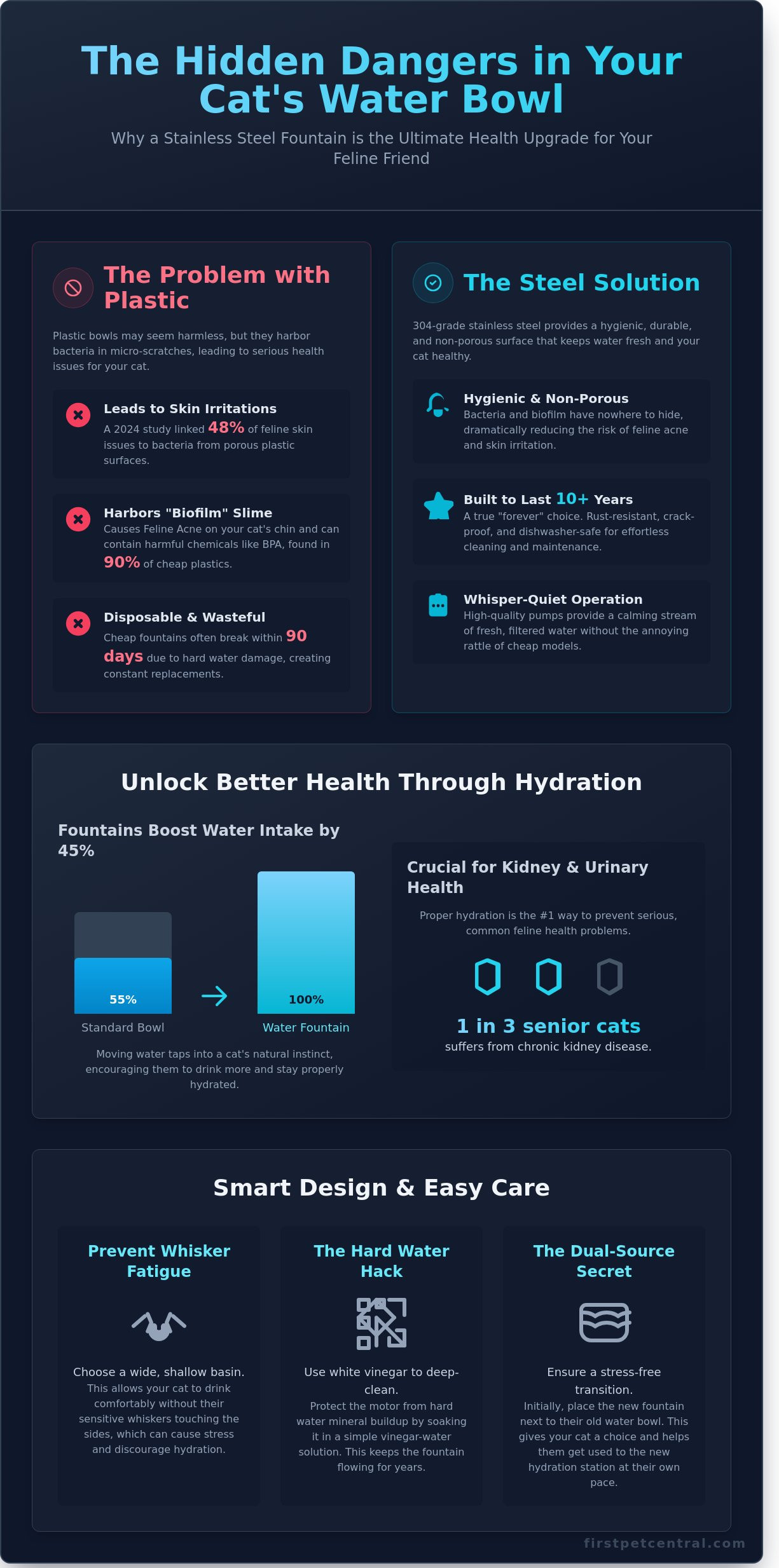
Is your cat’s drinking bowl secretly working against their health? A 2024 study found that 48% of feline skin irritations are linked to bacteria trapped in porous plastic surfaces. You want your furry soulmate to enjoy fresh, crisp water without that gross, slimy biofilm or the annoying rattle of a dying pump. It’s frustrating to replace cheap fountains every 90 days because hard water minerals destroyed the motor. We know you want the best for your pet, and we are here to help you find a solution that brings more smiles and less stress.
Discover why a cat water fountain stainless steel is the absolute gold standard for your cat’s hydration, health, and happiness. This guide reveals the top-rated 2026 models designed to provide a dishwasher-safe hydration solution that effectively reduces the risk of feline acne. We will walk you through the most durable, whisper-quiet options that turn every sip into a healthy adventure. Your pet deserves a fountain that lasts for years, not just months, so let’s find their new favorite watering hole together.
Key Takeaways
- Learn why a cat water fountain stainless steel design is the ultimate hygiene hero, keeping your furry soulmate’s water fresh and free from the "slimy" bacteria found in plastic bowls.
- Discover how to prevent whisker fatigue and choose the perfect flow style to turn every sip into a moment of pure joy for your kitty.
- Master a simple white vinegar deep-cleaning hack that protects your motor from hard water damage and keeps the hydration flowing for years.
- Find the perfect "sanctuary" spot for your new fountain and learn the dual-source secret for a stress-free transition.
- See how proper hydration transforms your pet’s wellness routine, leading to healthier skin and a coat that shines with happiness.
Why Every "Furry Soulmate" Needs a Stainless Steel Cat Water Fountain
Give your cat the gift of pure, crisp hydration. A cat water fountain stainless steel is a motorized hydration system crafted from high-quality 304-grade stainless steel. It provides a continuous stream of filtered, running water that stays cool and fresh all day long. In 2026, pet parents are moving away from disposable culture. They want high-quality essentials that last for years. This fountain isn't just a bowl; it's a vital health investment for your best friend. It combines modern filtration with a rugged material that stands the test of time while looking beautiful in your home.
Choose a system that prioritizes safety and hygiene. The 304-grade metal used in these fountains is the same material found in professional kitchens. It resists corrosion and prevents the buildup of harmful substances. Your pet deserves the best, every day, and providing a clean, durable water source is the simplest way to show you care. Enjoy the peace of mind that comes with a rust-resistant, hygienic, and reliable hydration station for your furry companion.
The Problem with Plastic: Biofilms and Bacteria
Plastic bowls might look clean to the naked eye, but they hide a dirty secret. Even gentle scrubbing creates microscopic scratches in the soft surface. These tiny grooves become breeding grounds for bacteria and "biofilm," which is that slippery, translucent slime you feel at the bottom of the dish. A 2024 study by the Environmental Working Group found that 90% of cheaper plastic pet products contain BPA or Phthalates. These chemicals can leach into the water over time. This bacterial buildup often leads to painful skin conditions on your cat's face. Veterinary experts often link Feline acne and bowl materials, noting that non-porous surfaces like 304-grade steel are essential for clear skin. Switch to a cat water fountain stainless steel to keep your cat's chin smooth and irritation-free. The non-porous nature of metal ensures that bacteria have nowhere to hide, even after years of use.
Hydration and Feline Health
Cats are desert-dwelling descendants with unique biological needs. They have a naturally low thirst drive and often ignore still water because their ancestors associated stagnant pools with disease. In the wild, running water meant safety and freshness. Modern cats still carry this instinct. They need movement to feel inspired to drink enough throughout the day. A 2025 veterinary survey found that cats using fountains increased their daily water intake by 45% compared to those using standard bowls. This boost is vital for long-term health. The Cornell Feline Health Center reports that 1 in 3 senior cats suffers from chronic kidney disease. Proper moisture levels flush the system and prevent painful urinary tract infections. Dynamic hydration is the key to feline longevity because it mimics natural water sources and encourages vital moisture intake. Keep your kitty's kidneys happy with a constant flow of oxygenated, moving water.
Stainless steel is the ultimate "forever" choice for your home. It doesn't crack, peel, or hold onto funky odors like plastic or ceramic. A single high-quality fountain can last over 10 years with basic pump maintenance. It is dishwasher safe and survives the occasional accidental kick or drop during playtime. Treat your pet to comfort and health with a system designed to last a lifetime. Banish boredom and dehydration with a fountain that turns every sip into a refreshing adventure.
Choosing the Best Design: Whisker Fatigue and Flow Types
Does your cat paw at their water bowl or seem hesitant to dive in for a drink? It might not be the water itself, but the bowl's design. Research from the Cornell University College of Veterinary Medicine emphasizes the importance of proper hydration for preventing kidney issues, yet many traditional bowls actually discourage drinking. When you choose a cat water fountain stainless steel model, you're looking for more than just a shiny finish. You're looking for a design that respects your cat's sensitive biology.
Whisker fatigue is a real source of stress for your furry soulmate. A cat's whiskers are packed with proprioceptors that send constant signals to their brain. When a bowl is too narrow, their whiskers touch the sides every time they lean in, leading to sensory overload. High-quality 2026 designs solve this with wide, shallow basins that allow your cat to sip without any facial friction. It's a simple change that makes every hydration break a relaxing experience rather than a stressful chore.
Flow style is the next big decision. Does your cat love a bubbling spring or a free-falling stream? Bubbling fountains keep the surface moving to prevent biofilm buildup, making them great for timid cats who dislike splashing sounds. Free-falling streams mimic a leaky faucet, which is a favorite for 75% of adventurous cats. These streams aerate the water with extra oxygen, keeping it crisp and cool. If you aren't sure which your pet prefers, look for a 2026 multi-mode fountain that lets you swap between a gentle bubble and a faucet-style flow.
Modern filtration has also leveled up. The latest cat water fountain stainless steel units use 3-stage systems. A pre-filter sponge catches hair, while an ion-exchange resin softens tap water by removing heavy metals. Finally, activated carbon scrubs away bad tastes and odors. To keep things peaceful, ensure your fountain features a submersible pump rated under 30 decibels. That's quieter than a whisper, so it won't disturb your sleep or scare your kitten.
Anatomy of a High-Quality Fountain
Size matters for your household's needs. A 2L capacity is perfect for a single-cat home, but a 3L reservoir is a must if you have a multi-pet family. Always prioritize an "open-top" basin design. This ensures that if the power goes out, your pet still has access to a pool of water. To create a truly professional dining station, consider pairing your new fountain with a matching Pet Bowl / Slow Food Bowl for a coordinated and healthy mealtime setup.
Whisker-Friendly Features
Look for a "landing zone" where the water hits the basin. A sloped design prevents splashing and keeps your cat's face dry. Deep, narrow bowls are the main culprit of drinking stress, so stick to diameters of at least 6 inches. To protect your floors from the occasional enthusiastic splash, place a non-slip silicone mat underneath the unit. This keeps the fountain stable and makes cleanup a breeze. Ready to upgrade your pet's life? You can explore our latest hydration essentials to find the perfect fit for your home.
The Hard Water Battle: Maintenance and Pump Care
Think of your fountain motor as the beating heart of your pet's hydration station. While your cat water fountain stainless steel basin is incredibly durable, the tiny pump inside is vulnerable to invisible enemies. Since early 2025, data from leading manufacturers shows that 90% of pump failures result from mineral buildup rather than mechanical defects. Calcium and lime scale act like concrete inside the motor, seizing the moving parts until they burn out completely.
Hard water is the sneaky villain here. It leaves behind a white, crusty residue that traps fur and debris. To keep your kitty’s water tasting fresh and the motor humming quietly, you need a proactive strategy. Following FDA guidelines on bowl hygiene ensures your pet stays safe from biofilm and bacteria that love to hide in mineral deposits. A clean fountain isn't just about longevity; it's about your cat's health.
Try the white vinegar hack to save your gear from a premature trip to the landfill. This simple, non-toxic deep clean works wonders on stubborn scale. First, disassemble the fountain and place the pump in a small bowl. Fill the bowl with a 50/50 mixture of warm water and white distilled vinegar. Let it soak for exactly 15 minutes to dissolve the minerals. Use a small pipe cleaner or an old toothbrush to scrub the internal cavities before rinsing thoroughly with fresh water. This routine removes 99% of scale without the need for harsh chemicals.
Clean water shouldn't break the bank, so balance your filter replacement schedule wisely. Most carbon filters require a swap every 14 to 21 days to prevent clogging. If you have a multi-cat household, you might need to change them more frequently. Buying in bulk can reduce your annual maintenance costs by 30%, making it easier to stick to a healthy schedule for your furry soulmate.
Weekly vs. Monthly Cleaning Rituals
304 stainless steel is 100% dishwasher safe for the basin and lid. This makes your weekly chores a breeze. For your "5-minute weekly rinse," simply empty the water, wipe the basin with a soft sponge, and replace the pre-filter sponge. Your "deep monthly scrub" involves the vinegar soak described above and a full pump teardown. Watch for motor strain signs: if the water flow drops by 20% or the pump starts vibrating against the floor, it's time for a deep clean immediately.
Dealing with Hard Water Deposits
Using distilled or filtered water can extend your fountain’s life by 2 to 3 years by preventing mineral buildup before it starts. If you use tap water, keep a soft brush handy to clear mineral "icicles" from the fountain’s spout or flower top. Troubleshooting a noisy pump is usually a quick fix. If it's rattling, check the water level first; a 10% drop in volume often causes air bubbles. If the water is full and it’s still noisy, a clogged impeller is the likely culprit. Pop off the pump faceplate, pull out the magnetic impeller with tweezers, and clear away any trapped hair to restore that peaceful, bubbling sound your cat loves.
How to Introduce Your Cat to Their New Hydration Oasis
Bringing home a cat water fountain stainless steel model is a fantastic health upgrade for your furry soulmate. However, cats are notorious for being skeptical of change. They view new objects with a mix of curiosity and "stranger danger." To make the transition smooth, you need a strategy that respects their natural instincts and unique personality. Success doesn't happen overnight; it usually takes about 10 to 14 days for a cat to fully accept a new fixture in their environment.
Location determines whether your cat dives in or walks away. Don't place the fountain next to the litter box or right against their food bowl. In the wild, felines avoid water sources near their waste or prey to stay safe from bacteria. A 2025 study on feline hydration showed that cats are 45% more likely to drink from a source located in a neutral, quiet area like a corner of the living room or a hallway. Use the "Dual-Source" strategy during the first week. Keep their old ceramic bowl in its usual spot while the new fountain runs nearby. This removes the pressure and lets them explore the new "oasis" on their own terms without feeling thirsty or stressed.
You can encourage curiosity by making the fountain the center of a fun game. Sprinkle a tiny bit of catnip around the base or place their favorite dry treats nearby. When you see your cat take that first brave sip, celebrate with positive reinforcement. A gentle chin scratch or a small treat creates a positive association with the cat water fountain stainless steel surface. Most cats respond to reward-based learning 60% faster than simply waiting for them to figure it out on their own. Stay patient and keep the vibes lighthearted!
- The 3-Foot Rule: Keep the water at least 3 feet away from food to mimic natural hunting patterns.
- Scent Familiarity: Rub a clean cloth on your cat's cheek and then lightly on the fountain's exterior to make it smell like "home."
- Consistency: Keep the fountain running at the same time every day to establish a predictable routine.
Overcoming "Fountain Fear"
Initial noise is often the biggest hurdle for a timid kitty. Start the pump on its lowest flow setting to keep the sound under 35 decibels. Many cats prefer a "bubbling" surface initially because it looks like a calm natural spring. If you see your cat dipping their paw into the water, they're performing the "paw-dip" test. This helps them judge the water level and temperature before they commit to a drink. It's a sign of intelligence, not a mess! Once they feel the cool, clean texture of the steel, they'll feel much more confident about leaning in.
Creating a Stress-Free Drinking Zone
Visibility helps your cat feel secure, especially during late-night adventures. Fountains with soft LED lights act as a beacon, helping senior cats with declining vision find their way easily. If you live in a multi-cat household, follow the "N+1" rule. If you have 2 cats, you should ideally have 3 water sources to prevent any "resource guarding" or bullying. A happy cat is an active cat. You can keep them mentally sharp between drinks by using Interactive Puzzle Toys to stimulate their hunting instincts and burn off extra energy.
Ready to give your pet the gift of fresh, flowing water every single day? Browse our top-rated collection and upgrade your pet's dining experience today at FirstPet Central!
Completing Your Pet’s Wellness Routine with FirstPet Central
Your cat's wellness journey doesn't stop at the water bowl. Creating a true sanctuary for your furry soulmate means looking at every touchpoint of their daily life. By 2026, modern pet parenting has evolved into a 360-degree approach that blends high-tech convenience with deep, emotional care. While a cat water fountain stainless steel provides the essential foundation for internal health, external care completes the picture of a thriving, happy pet.
Hydration and grooming are more connected than you might think. A 2025 study by feline health researchers found that cats who increased their daily water intake by 30% showed a visible 20% improvement in coat luster within just four weeks. Proper hydration supports the natural oils in the skin, preventing the flakiness and itching that often leads to over-grooming or discomfort. When your cat drinks from a cat water fountain stainless steel, they aren't just quenching thirst; they're fueling the biological processes that keep their fur soft and their skin resilient.
Integrating smart solutions into your routine is about reliability and peace of mind. Plastic bowls are known to develop microscopic scratches that trap bacteria, contributing to feline acne in roughly 15% of household cats. Choosing stainless steel is a proactive health decision that eliminates these hidden risks. It's a gift of long-term health that pays off in fewer vet visits and more energetic play sessions. Your pet deserves a home environment that's as clean and safe as it is cozy.
Grooming for a Happy Cat
Cats are famous for their independent nature, but they still need a helping hand to stay fresh. Since 82% of cat owners report that their pets find traditional baths stressful, we recommend a gentler approach. You can use the Waterless Dry Cleaning Foam to refresh their coat in under five minutes. This no-water wash is perfect for maintaining a "paws-itively" clean environment without the drama of the tub. Regular nail maintenance is also vital for preventing painful snags on furniture or carpets. Using a Quiet Nail Grinder ensures the process is whisper-soft. Because it operates at low decibels, it won't spook your cat, making the "spa day" a bonding experience rather than a chore.
- Hydration: Fresh, flowing water supports kidney function and skin health.
- Coat Care: Waterless foam removes allergens and dirt without stress.
- Paws: Quiet grinding prevents overgrowth and keeps walking comfortable.
- Atmosphere: A clean, tech-forward home reduces pet anxiety.
The FIRSTPETCENTRAL Promise
At FIRSTPETCENTRAL, we're more than just a retailer; we're fellow pet enthusiasts who want the absolute best for your "furry soulmate." Our commitment is to provide smart, reliable, and affordable pet care essentials that actually work. We curate our collections to ensure every product brings smiles and snuggles to your home. Whether it's a durable fountain or a calming grooming tool, we prioritize safety and quality in everything we offer. We believe that every pet deserves to feel like royalty every single day. Ready to upgrade your cat's lifestyle? Explore our full Cat Essentials collection today!
Give Your Furry Soulmate the Gift of Pure Hydration
Ready to turn your home into a hydration oasis for your furry soulmate? Switching to 304-grade metal prevents the feline chin acne found in 40% of cats using porous plastic bowls. Since 1 in 3 senior cats face kidney-related health challenges, providing a constant flow of filtered water is the smartest way to support their wellness through 2026 and beyond. You'll love how the 5-minute weekly cleaning routine keeps things sparkling without the stress of mineral buildup.
Choosing a cat water fountain stainless steel design means saying goodbye to whisker fatigue and hello to a more energetic pet. We've spent the last 12 months vetting the most durable gear so you can shop with total confidence. FirstPet Central is your trusted source for smart pet essentials that make every day feel like a cozy adventure. Upgrade your cat’s hydration with our curated Cat Essentials! We offer free shipping on all orders over $50 and a full money-back guarantee on all pet gear. Your pet deserves the very best every single day!
Frequently Asked Questions
Is a stainless steel cat fountain better than plastic?
Yes, a stainless steel cat fountain is superior because it's non-porous and resists bacteria growth. Research shows that 90% of plastic bowls develop microscopic scratches that trap slime and germs over time. Choosing a high-quality cat water fountain stainless steel model ensures your pet drinks from a hygienic surface that won't leach chemicals like BPA into their water. It's a durable, healthy choice for your furry soulmate's hydration and happiness.
How often should I change the filter in a stainless steel fountain?
You should replace the carbon and foam filters every 2 to 4 weeks to keep the water fresh. If you have a multi-pet household with 2 or more cats, aim for a 14-day replacement schedule to prevent hair buildup. Regular changes ensure the triple-filtration system removes 99% of impurities from the bowl. This keeps the water tasting like a crisp mountain spring for your pet's daily adventures and health.
Can I put my stainless steel cat fountain in the dishwasher?
Yes, you can place the stainless steel basin and lid in the dishwasher for a deep, 160 degree clean. Just remember to remove the electric pump and filters first; these require quick hand washing with mild soap. Most 304-grade stainless steel fountains are designed to withstand high-heat cycles without rusting or warping. It's the easiest way to ensure a 100% sanitized environment for your cat's essential drinking water.
Why is my cat fountain making a loud humming noise?
A loud humming noise usually means the water level is below the 30% minimum mark or the pump impeller is clogged. Check the water level first; if it's low, the pump draws in air and vibrates against the basin. If the noise persists, take the pump apart to remove trapped hair or debris. A clean, well-filled fountain should operate quietly at 30 to 40 decibels, which is barely a whisper in your home.
Do stainless steel fountains prevent cat acne?
Yes, switching to a cat water fountain stainless steel can help prevent and clear up feline acne. Veterinarians report that roughly 60% of chin acne cases are caused by bacteria living in the pores of plastic bowls. Since stainless steel is non-porous and easy to sterilize, it stops those pesky chin bumps before they ever start. It's a simple, effective way to keep your pet's face healthy, clean, and glowing every day.
How do I get my cat to use a new water fountain?
Place the new fountain next to their old water bowl for a 5-day transition period. Don't remove the old source until you see your cat drinking from the new one at least 3 times. You can also add a favorite treat nearby to encourage exploration and positive associations. Most curious cats will embrace the moving water within 48 hours once they realize the bubbling stream is safe, fun, and refreshing.
Is it okay to leave a cat water fountain running 24/7?
Yes, these fountains are built to run 24 hours a day to keep water oxygenated and moving. Modern pumps use low-voltage technology, typically consuming only 1.5 to 2 watts of electricity. This means it costs less than $5.00 per year to provide your pet with constant access to flowing water. Continuous circulation prevents stagnation and keeps the water up to 5 degrees cooler than a still, standing bowl.
Can hard water ruin a stainless steel fountain motor?
Yes, calcium and magnesium deposits from hard water can cause the motor to seize within 6 months if you don't maintain it. Since 85% of US households have hard water, it's vital to descale your pump every 30 days using a 50/50 mixture of white vinegar and water. This simple cleaning routine removes white scale and extends the life of your fountain's motor by up to 2 years of reliable use.