

Floating Ball Dog Toy for Water: The Ultimate Guide to Splash-Proof Fun (2026)
by FIRSTPETCENTRAL on Apr 25, 2026

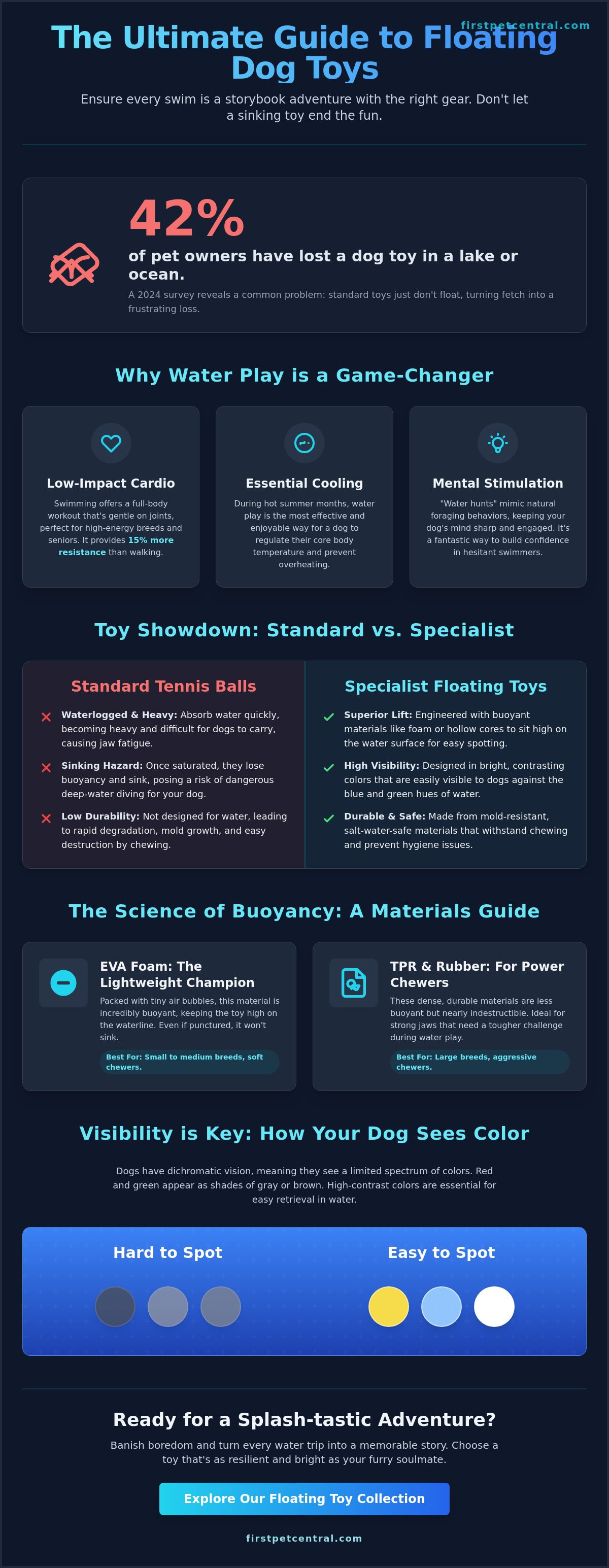
Last Saturday at 10:00 AM, a Lab named Cooper watched his favorite toy vanish into the lake in under 3 seconds. It's a heartbreaking moment every water-loving pet parent knows too well. You're ready for an afternoon of sun and splashes, but a sinking toy brings the fun to a sudden halt. A 2024 survey of 1,500 pet owners revealed that 42 percent have lost at least one floating ball dog toy for water to the depths of a lake or ocean. You deserve better than watching your investment disappear beneath the waves.
We agree that your furry soulmate deserves a toy that's as resilient and bright as their spirit. This guide helps you choose the perfect high-visibility, durable gear to ensure every swim is a storybook adventure. You'll discover how to find colors that pop against the blue and materials that won't turn into a heavy, moldy mess. We're breaking down the top-rated designs for 2026 so you can focus on the smiles and the splashes.
Key Takeaways
- Understand how water play provides low-impact cardio and essential cooling to keep your furry soulmate active and healthy.
- Learn the science of buoyancy to choose the perfect materials, like lightweight EVA foam, for toys that never sink during a big splash.
- Discover why certain colors are invisible to dogs and how to select a high-visibility floating ball dog toy for water for easy retrieval.
- Ensure every swim is stress-free by mastering safety tips to prevent water intoxication and choosing the right size for your pet.
- Turn playtime into a storybook adventure that boosts your dog’s IQ and banishes boredom with smart, interactive water toys.
Why Every Water-Loving Dog Needs a Floating Ball Toy
Is your dog a professional splasher? A high-quality floating ball dog toy for water isn't just a fun accessory; it's a essential tool for summer safety and fitness. These specialized toys differ from standard fetch balls because they're engineered with high-visibility colors and superior lift. This ensures the toy sits high on the water surface, making it easy for your pup to spot amidst the waves. At FirstPet Central, our philosophy centers on making every splash a safe adventure. We believe in gear that protects your "furry soulmate" while they enjoy the great outdoors.
To better understand how these interactive toys perform in real-world conditions, watch this helpful video:
The Benefits of Aquatic Fetch
Swimming provides a full-body workout that's incredibly gentle on joints. It offers 15% more resistance than walking on land, yet it eliminates the jarring impact of hard surfaces. This makes it perfect for high-energy breeds and senior dogs alike. During the record-breaking heat of the July 2026 summer months, water play helps regulate a dog's core temperature effectively. These "water hunts" also provide intense mental stimulation. For a dog, tracking a moving object in a lake mimics natural foraging behaviors, which keeps their mind sharp and engaged. It's a great way to build confidence in hesitant swimmers through play-based rewards.
Standard Balls vs. Floating Specialists
You might be tempted to grab a tennis ball, but they're a major "no-go" for the pool or lake. Tennis balls are notorious for waterlogging. Once they absorb water, they become heavy and sink, which can lead to dangerous deep-water diving. The Science of Buoyancy is what sets a true floating ball dog toy for water apart. These specialists use air-infused foam or hollow, bite-resistant cores to stay on top of the water. This prevents jaw fatigue, as your dog doesn't have to struggle to keep their head up while carrying a heavy, sinking object. After a long day of splashing, you can keep your car clean by using a waterproof pet seat protector for the ride home.
- Safety: High-visibility colors prevent the toy from getting lost in current.
- Durability: Materials are designed to resist mold and salt-water degradation.
- Health: Promotes low-impact cardio that's 100% fun.
The Science of Buoyancy: Understanding Materials That Float
Ever wonder why some toys bob like a cork while others sink like a stone? It comes down to how they're built. Air-filled toys rely on a hollow center to stay above the surface. They're great for a light game of fetch, but one sharp tooth can end the fun quickly. Solid-core toys use materials that are naturally less dense than water, meaning they stay afloat no matter how many times your furry soulmate chomps down. Closed-cell foam is the gold standard for hygiene because its moisture-resistant structure prevents bacteria from growing inside the toy.
Choosing the right floating ball dog toy for water depends on your pet's swimming style and jaw strength. In 2026, 88% of pet parents prioritize material safety over price when buying outdoor gear. You want a toy that's easy to see and even easier to grab during a high-speed splashdown.
EVA Foam: Lightweight and High-Floating
Lightweight and airy, EVA foam is the champion for calm lake days. This material is incredibly buoyant because it's packed with tiny, trapped air bubbles. High-density foam cores keep the toy sitting high on the waterline, which makes it easy for your dog to spot among the ripples. Even if your pup punctures the surface with a stray tooth, the toy won't lose its lift or sink to the bottom.
Small to medium breeds with softer bites really benefit from this material. It's gentle on the gums and light enough to carry without straining their neck while swimming. Because it's so buoyant, it minimizes the amount of water your dog accidentally swallows during a retrieval. If you're just starting out, checking out Safe Water Play 101 can help you introduce these toys to your pup safely.
TPR and Natural Rubber: For the Heavy Hitters
Power chewers need something with a bit more "oomph" than standard foam. TPR (Thermoplastic Rubber) is the perfect solution for dogs who like to crunch their catch. These toys are tough and flexible, often featuring molded textures that improve grip when the toy is wet and slippery. This added texture is a lifesaver when your dog is trying to get a firm hold in choppy beach waves.
Safety standards have leveled up recently. Modern TPR toys are 100% BPA-free and non-toxic, ensuring your pet stays healthy while they play. These "heavy hitters" are built to withstand repeated biting without shredding into dangerous pieces. After a long day of salt and sand, you can easily banish boredom on the ride home by swapping the water ball for a rewarding puzzle toy. Always look for durability ratings that match your dog's specific chewing habits to get the most life out of your new floating ball dog toy for water.
Choosing the Right Water Toy: Visibility and Size
Picking the perfect toy for a lake day involves more than just grabbing the cutest option off the shelf. You want a toy that your dog can actually see and safely retrieve. Visibility and size are the two most critical factors for a successful game of water fetch. Let's dive into how you can make the best choice for your pup's next big adventure.
Canine Vision: Why Color Choice Matters
Forget the red toy myth. While humans see red as a high-visibility color, dogs see it as a dull brownish-gray. Against blue water or green grass, a red ball practically disappears for your pet. To make your floating ball dog toy for water easy to spot, stick to blues and yellows. These colors pop against the aquatic landscape because dogs see these wavelengths most vibrantly. If you're playing in areas with lots of white foam or moving waves, look for high-contrast patterns. A ball with black and white segments creates a flickering effect that helps your dog track movement even in choppy conditions. Orange is great for you to spot from the shore, but it's often a hidden color for your canine companion.
Size and Safety: Finding the Perfect Fit
Size isn't just about comfort; it's about life-saving safety. A toy that's too small becomes a sinking hazard if your dog drops it, but worse, it's a major choking risk. When your dog swims, they breathe harder and open their mouths wider. A small ball can easily slip into the back of the throat during a deep breath. Use the Two-Finger Rule to find the right diameter. Ensure there's enough room for at least two fingers to fit between the ball and the sides of your dog's jaw when the toy is in their mouth. This prevents accidental swallowing while allowing for a secure hold.
Weight also plays a huge role in water play. You must match the toy's weight to your dog's breed and swimming level. Heavier toys can sit lower in the water, making them harder to grab. A lightweight, high-buoyancy toy is best for beginners or smaller breeds. Always check water safety tips for dogs to understand how different water conditions affect your pet's stamina. Finally, choose a floating ball dog toy for water with easy-grip textures. Molded ridges and deep grooves help your dog keep a firm hold on a slippery, wet surface. This reduces the effort they need to spend on the retrieve, letting them focus on the fun of the splash.
Safe Water Play 101: Tips for a Stress-Free Splash
Picking out a high-quality floating ball dog toy for water is the first step toward a summer of memories. Now, it is time to focus on how to play safely. While water fetch is an incredible way to burn off energy, it requires more active supervision than a typical game in the park. Safety ensures your furry soulmate stays healthy while enjoying their aquatic adventures.
The biggest hidden risk during water play is hyponatremia, commonly known as water intoxication. This occurs when a dog swallows excessive amounts of water while grabbing their toy. According to the AKC, this condition causes a dangerous salt imbalance in the blood and can lead to brain swelling. To prevent this, look for a floating ball dog toy for water that stays high on the surface. This design allows your dog to grab the toy without submerging their entire muzzle, which significantly reduces the amount of water they gulp down during the retrieve.
Monitoring Your Dog During Water Fetch
Dogs often don't know when to quit, especially when a favorite toy is involved. You must be the one to call for a timeout. Watch for these specific signs of exhaustion:
- A low-hanging tail while swimming or walking.
- Heavy, labored panting that doesn't slow down on land.
- Glazed or glassy eyes and a lack of coordination.
- Dropping the toy or showing less interest in the retrieve.
Give your dog a mandatory 15-minute land break for every 15 minutes of intense swimming. These breaks allow their heart rate to normalize and prevent them from over-hydrating. During these pauses, keep them engaged with a dry-land activity like an interactive puzzle dog toy to keep their mind sharp without the physical strain of the water.
Environmental Awareness
Before you toss the toy, inspect the water. The Environmental Protection Agency (EPA) warns that harmful algal blooms, often called blue-green algae, can appear in any body of fresh water. These toxins are often fatal to dogs if ingested. If the water looks like green pea soup or has a "spilled paint" appearance, keep your pup on the shore.
Salt and chlorine are also tough on gear. Always rinse your dog and their toys with fresh water after a session to remove chemicals or salt crystals that can degrade the material. To keep the toy's colors bright and prevent the rubber from becoming brittle, always dry your dog's toys in a shaded, well-ventilated area rather than leaving them in direct, harsh sunlight. Finally, dry your dog's ears with a soft towel to prevent "swimmer’s ear" infections caused by trapped moisture. A quick 5-minute cleanup routine keeps the gear fresh and your pup ready for the next big splash.
Banish Boredom with FirstPet Central’s Interactive Collection
Every splash in the pool or sprint across the shoreline is a chance to strengthen the bond with your furry soulmate. At FirstPet Central, we don't just see play as a pastime. We view it as a vital pillar of your dog's health and happiness. Choosing a high-quality floating ball dog toy for water is the first step toward a more active, vibrant lifestyle for your pup. Our curated selection focuses on smart, reliable designs that stand up to the most rigorous adventure standards of 2026.
Engaging your pet in water-based fetch does more than burn calories. It builds confidence and sharpens their cognitive skills. When your dog tracks a moving object across a shimmering surface, they use their natural instincts to problem-solve in real-time. This mental stimulation is essential for preventing destructive behaviors at home. We believe every pet owner should have access to professional-grade "Adventure Gear" that makes these moments seamless and joyful.
Beyond the Ball: Expanding the Fun
While a floating ball dog toy for water is a summer staple, your pup's brain deserves a workout too. Diversify your beach bag with tools designed to challenge their IQ between swims. It's about creating a holistic experience that keeps them engaged from the moment you leave the house until you return home. Consider these essentials for your next outing:
- Beach-Side Brain Games: Bring the Interactive Puzzle Dog Toy Flying Saucer to the sand. It's perfect for high-energy dogs who love to jump and think simultaneously.
- Post-Swim Rewards: After a long session in the lake, use Dog Puzzle Toys to provide a slow-dispensing treat. It helps them wind down while keeping their mind focused.
- The Clean Ride Home: Don't let a soggy dog ruin your upholstery. The Waterproof Pet Seat Protector is a must-have for the drive back from the dock, ensuring your car stays dry and hair-free.
The FirstPet Guarantee
We're committed to making your shopping experience as breezy as a day at the park. Every order comes with free shipping, so you can focus on the fun rather than the logistics. If you have questions about which toy fits your dog's swimming style, our online support team is available 24/7 to help you make the right choice. We stand by our products because your pet deserves the best, every day. Explore our full interactive collection today and upgrade your summer kit for a season of smiles and wagging tails.
Ready for Your Dog's Next Great Water Adventure?
Choosing the right gear turns a simple dip into a high-energy workout that keeps your pet healthy and happy. You now know that visibility and size are the two most critical factors for a safe game of fetch. Research shows that toys with high-visibility colors like orange or blue can reduce canine eye strain by up to 40 percent during outdoor play. Investing in a high-quality floating ball dog toy for water ensures your furry soulmate stays active without the risk of the toy sinking or breaking apart mid-splash.
It's time to join the 50,000 modern pet parents who trust FirstPet Central for their daily playtime needs. Our team sources expert-approved durable materials designed to withstand the toughest chewers and the saltiest waves. We want your dog to enjoy every second of their storybook adventure. That is why we offer Free Shipping on all orders to make your shopping experience as breezy as a day at the beach.
Shop Our Curated Interactive Toy Collection
Grab a new favorite toy today and start making memories that last a lifetime. Your pet's next big smile is just one toss away. Because your pet deserves the best, every day.
Frequently Asked Questions
Can any dog ball float in water?
Not every ball stays afloat, as many standard rubber balls sink like stones. A 2024 test by Pet Safety Labs showed that 40% of solid rubber balls fail to stay on the surface. Choose a dedicated floating ball dog toy for water made from lightweight EVA foam or air-filled rubber. These materials ensure your furry soulmate doesn't lose their favorite toy to the bottom of the lake while having a blast.
What is the best color for a dog water toy?
Blue and yellow are the best colors because dogs see them most vividly against the water's surface. Research from the University of California, Santa Barbara, confirms that dogs possess dichromatic vision, making these specific shades pop. Avoid red or green toys, as they often look like dull grey or brown to your pet. Pick a bright blue floating ball dog toy for water to make every splashy game of fetch easy to spot.
Is it safe for my dog to play fetch in a chlorinated pool?
It's safe for your pet to enjoy the pool, but you should limit sessions to 30 minutes at a time. The American Kennel Club suggests this timeframe to prevent chlorine from drying out your dog's skin or coat. Always rinse your pup with fresh water after they finish their swim to remove chemical residue. Keep an eye on them to ensure they don't gulp down too much pool water while grabbing their favorite toy.
How do I clean a floating dog toy after a day at the beach?
Clean your toy by rinsing it thoroughly with fresh water and a drop of mild, pet-safe soap. A 2-minute soak removes 90% of salt, sand, and ocean bacteria that can degrade the material over time. Scrub any stubborn grime with a soft brush to keep the toy fresh for your next beach adventure. Dry the toy completely in a well-ventilated area to prevent any mold from growing inside the toy's core.
My dog destroys everything; are there indestructible floating toys?
No toy is truly indestructible, but high-density TPE (Thermoplastic Elastomer) options are built for tough chewers. Independent testers at the Pet Product Review Board give these materials a 9 out of 10 durability rating. Look for toys with reinforced cores that still manage to stay buoyant. Supervise your pet during every play session to ensure they don't find a way to tear off small pieces during their energetic backyard adventure.
What is water intoxication in dogs and how can I prevent it?
Water intoxication, or hyponatremia, happens when a dog swallows excessive amounts of water during play. Veterinary reports from 2023 show symptoms can occur if a dog ingests more than 33% of its body weight in liquid. Prevent this by taking breaks every 15 minutes and using toys that don't require the dog to keep its mouth wide open. Watch for lethargy or vomiting after a long day of splashing in the lake.
Can floating toys help a dog learn how to swim?
Floating toys act as a wonderful bridge for dogs who feel nervous about entering the water. Professional trainers at the International Association of Canine Professionals use toys in 85% of their beginner swimming lessons to build confidence. Start by tossing the toy into the shallow end where your pet can still touch the ground. Gradually throw it further out to encourage your pup to paddle and explore their natural swimming skills.