

Heated Cat Bed for Winter: The Ultimate Guide to Cozy, Safe Snuggles
by FIRSTPETCENTRAL on Apr 27, 2026

Picture walking through your front door on a 15-degree January evening to find your furry soulmate shivering on a cold tile floor. It's a heartbreaking sight that makes any pet parent want to crank the thermostat to 80 degrees just for their cat. You deserve to feel confident that your pet is cozy and happy while you're at work. We all agree that your cat's comfort shouldn't come with a side of worry about cheap heating elements or high electricity bills.
Finding the right heated cat bed for winter means balancing deep-sleep comfort with modern safety standards. This guide helps you choose a bed that provides the perfect 102-degree warmth your cat naturally craves. You'll learn the difference between plug-in pads and self-warming fibers so you can shop with total peace of mind. We'll explore the latest safety features, compare energy-efficient technologies, and help you find a stylish design that keeps those purrs coming all season long. Let's turn those winter chills into the ultimate storybook snuggle.
Key Takeaways
- Understand why your kitty feels the chill even at 70°F and how to protect vulnerable seniors and kittens from winter's bite.
- Compare the energy efficiency of low-voltage electric heat versus self-warming thermal layers to find the most cost-effective cozy solution.
- Learn how to identify critical MET or UL safety certifications to ensure your "furry soulmate" stays safe while snuggling unattended.
- Discover how to choose the perfect heated cat bed for winter by matching the design to your pet's unique "Cave Dweller" or "Sprawler" personality.
- Explore how to blend 2026 home decor trends with reliable, plush fabrics to create a stylish and functional winter sanctuary.
Why Your Furry Soulmate Needs Extra Warmth This Winter
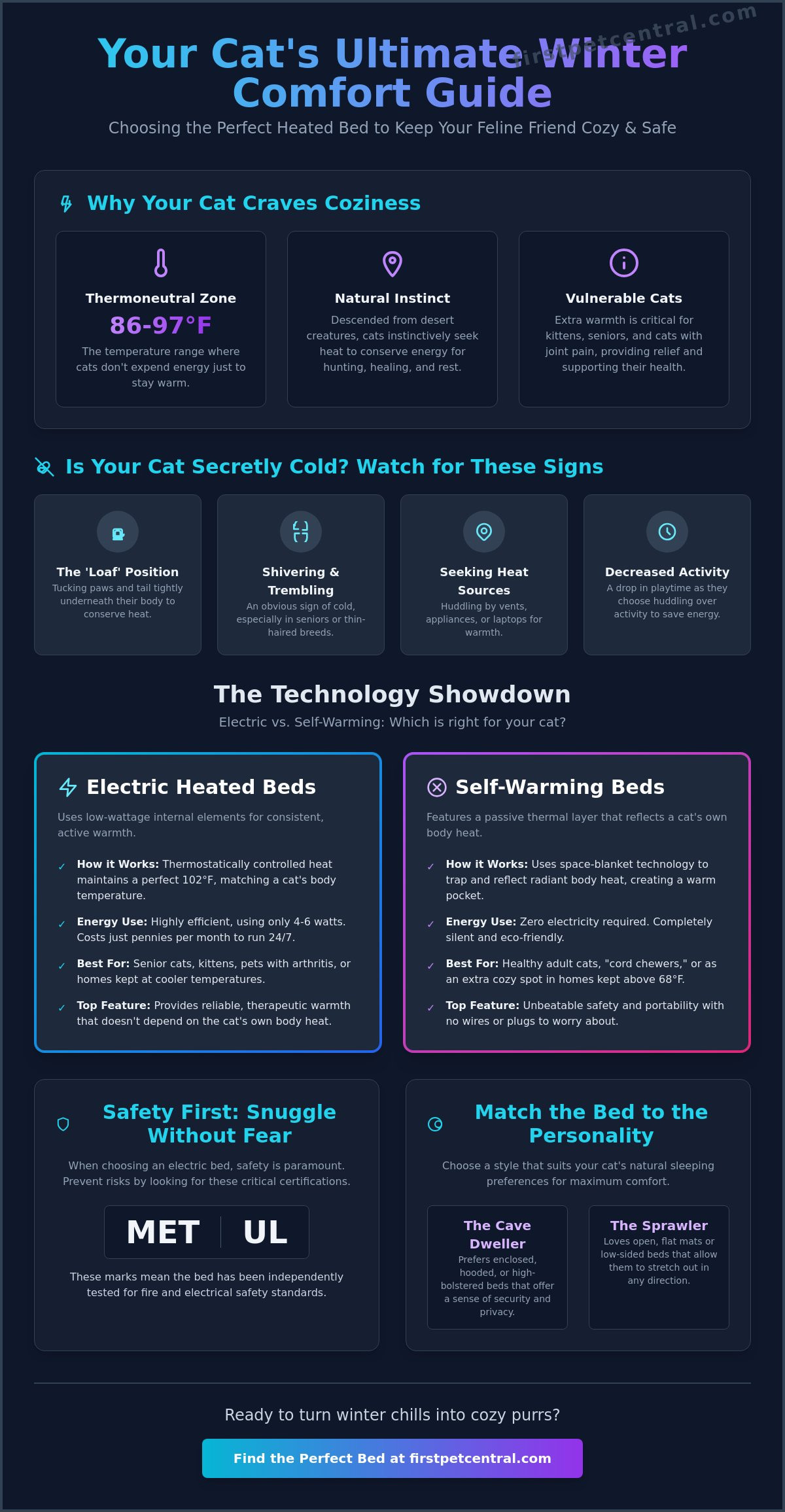
Your cat is a tiny desert creature living in a modern home. While you feel perfectly cozy in a sweater at 70°F, your kitty might actually be struggling to stay warm. Biologists identify a cat's thermoneutral zone as being between 86°F and 97°F. This is the temperature range where their bodies don't have to work to maintain a stable internal heat. When your thermostat drops during a December 2026 cold snap, your pet's metabolism goes into overdrive just to keep them shivering. Investing in a heated cat bed for winter helps bridge this gap, ensuring they stay in their happy place without burning precious energy.
Specific groups of cats face even bigger challenges when the frost hits. Kittens don't have the body fat or fur density to regulate their own heat yet. On the other end of the spectrum, a 2023 study showed that 90% of cats over age 12 suffer from some form of degenerative joint disease. Cold weather makes the fluid in their joints thicker and less lubricating, which leads to stiffness and pain. A dedicated warm spot provides much-needed relief for these "furry soulmates." Seeking heat is part of a cat's natural instincts to maintain their core temperature and protect their health during harsh weather.
Safety is another huge factor for indoor pets. If they don't have a warm bed, they will find heat elsewhere. This often leads to "radiator-seeking" behavior where cats jump onto hot stoves, huddle too close to space heaters, or sleep behind refrigerators. These spots are dangerous and can cause accidental burns or house fires. You can prevent these risks by providing a safe, controlled heat source. Treat your kitty to a winter warm plush mat to keep them away from household hazards. Warmth also triggers a relaxation response in the feline nervous system. This reduces stress hormones and allows your cat to fall into the deep REM sleep cycles they need for a healthy immune system.
The Science of the Feline Body Clock
Cats are masters of energy conservation, sleeping up to 16 hours a day to prep for "the hunt." When they find an external heat source, they can stop using calories for thermoregulation and redirect that energy toward cellular repair. Warmth also keeps joint tissues flexible and less prone to inflammation. Thermal comfort for cats is a state of metabolic ease where the body maintains its ideal temperature without effort.
Signs Your Cat is Feeling the Winter Chill
- Look for the 'loaf' position where they tuck their paws and tail tightly under their body to trap heat.
- Watch for shivering or trembling, especially in thin-haired breeds or seniors.
- Listen for increased vocalization or "pestering" near heating vents and kitchen appliances.
- Monitor for a 25% decrease in activity levels during the darker months of 2026 as they choose huddling over playing.
Electric vs. Self-Warming: Which Technology Wins?
Choosing the right heated cat bed for winter feels like a big decision. You want your furry soulmate to stay cozy without any worries. Two main technologies dominate the market: active electric heating and passive self-warming layers. Each one solves a different problem for your home and your pet's lifestyle.
Electric beds use internal heating elements to reach a specific temperature. Most modern versions are incredibly efficient. They typically run on just 4 to 6 watts of power. This means they cost only pennies a month to operate. The American Veterinary Medical Association highlights that cats are vulnerable to cold weather risks like hypothermia. Providing a consistent heat source helps prevent these issues, especially in homes where the thermostat stays low at night.
Self-warming mats use a clever thermal reflective layer. This is the same technology found in space blankets. It catches your cat's natural body heat and bounces it right back to them. There are no wires and no electricity required. These mats are perfect for power-free zones or cats who love to chew on cords. If your home stays above 68 degrees Fahrenheit, a self-warming option is often enough for a healthy adult cat.
The Case for Electric Heated Beds
Electric beds provide a steady, thermostatically controlled environment. They are the gold standard for cats with chronic joint pain or very thin coats. Senior cats often lose the ability to regulate their body temperature effectively. A 12V low-voltage system offers maximum safety and energy efficiency. These beds stay at a gentle 102 degrees Fahrenheit, which matches a cat's natural body temperature. Treat your senior kitty to a plush heated sanctuary to help them sleep soundly through the frostiest nights.
The Magic of Self-Warming Technology
Self-warming beds offer total portability and zero fire risk. You can toss them in a carrier or place them on a high shelf where cords can't reach. They are the ideal "starter" heated cat bed for winter for energetic kittens who might be too curious for electric wires. Because they rely on the cat's own heat, they never get too hot. This makes them a safe, "always-on" solution for busy households. They provide an instant cozy boost without any impact on your utility bill.
- Electric: Best for sub-zero climates, drafty basements, and senior cats.
- Self-Warming: Best for active kittens, travelers, and cord-chewers.
- Hybrid: Some beds combine thick insulation with reflective layers for extra warmth without a plug.
Safety Standards: Banish the 'Fire Hazard' Fear
Leaving an electrical appliance running while you're at work can feel a bit nerve-wracking. You want your kitty to stay toasty, but the "fire hazard" worry is real for many pet parents. Safety isn't just a label; it's peace of mind for you and a cozy sanctuary for your furry soulmate. When you select a heated cat bed for winter, checking for specific certifications is the first step to a worry-free season.
Always look for a MET or UL listing on the packaging. These independent labs put pet heating pads through grueling 24-hour stress tests to ensure they won't spark or overheat. Beyond the internal tech, the physical build matters too. The "Steel Wrapped Cord" rule is your best friend. Cats are natural explorers who might try to nibble on a dangling wire. A chew-resistant, steel-wrapped cable prevents teeth from reaching the live current. This simple feature has prevented countless electrical accidents in homes across the country. High-quality beds also utilize dual-thermostats. These internal monitors check the temperature at two different points to prevent localized hotspots. This ensures the heat stays even and never reaches a level that could cause skin burns on your cat's sensitive belly.
Key Safety Features to Check Before Buying
The best beds include internal sensors that cap the temperature at a cat's natural 102°F. This mimics the warmth of another feline friend without the risk of overheating. You should also prioritize models with waterproof liners. If your cat has an "accident" or spills some water, the liner protects the heating element from short-circuiting. It's a vital layer of protection for both your pet and your flooring. Never use a human heating pad for your cat. These devices can reach temperatures over 130°F, which is far too hot for a small animal. According to American Humane, providing a dedicated, safe heat source is essential to keep cats from seeking warmth in dangerous places like car engines.
Maintenance and Longevity Tips
Keeping the bed clean shouldn't compromise its safety. Always remove the plush cover before washing and never submerge the electric core or reflective foam in water. If you prefer a non-electric option for certain rooms, a plush pet mat can provide excellent self-warming insulation. Perform annual inspections every October before the first frost hits. Check for frayed wires, cracked plastic, or any faint "hot plastic" smells. If you see any wear on the cord, it's time for a replacement.
To stay safe in 2026, always choose a bed with a UL certification, a bite-resistant cord, and an automatic shut-off sensor to keep your kitty's naps perfectly protected.
The Cat Personality Guide to Choosing the Perfect Bed
Is your cat a tiny lion or a professional floor rug? Every feline has a unique sleeping style that dictates which heated cat bed for winter will make them purr. Choosing the wrong shape often leads to a cold, ignored bed and a grumpy pet. You want to match the furniture to the feline personality to ensure those cozy vibes last all season long.
First, identify the Cave Dweller. These cats seek out dark corners, closets, or under-bed spots. They need a hooded or cup style bed. This design mimics a protective den. It helps reduce cortisol levels by providing a 360-degree sense of security. When they feel hidden, they can finally drift into a deep, warm sleep.
Next, look for the Sprawler. If your cat stretches across the hallway like they own the place, they need a flat, open heated mat. These cats dislike boundaries. An open mat allows them to extend their limbs fully without hitting a wall. It's the perfect choice for the cat who wants to stay warm while remaining ready for a sudden zoomie session.
Finally, we have the High-Flyer. These cats prefer vertical space. They want to be high up where they can survey their kingdom. A thin heated pad placed on a favorite window sill or a sturdy shelf keeps them warm without taking up their precious lookout space. If your cat is picky about new things, don't worry. Rub their favorite old blanket on the new bed. Familiar scents tell them this new, warm spot is safe and approved by the boss.
Matching Style to Sleep Habits
Bolster edges are vital for cats who like to lean while they snooze. These raised walls provide essential head and neck support. For senior cats, orthopedic foam bases are a total game-changer. Since 90% of cats over 12 years old show evidence of arthritis according to veterinary studies, a supportive base relieves pressure on aching joints. To keep your pet away from chilly floor drafts, consider the Solid Wood Pet Bed. Its raised design keeps them elevated and cozy all night long.
Size Matters: Measuring for Maximum Toasty-ness
A bed that's too large actually loses heat faster. You should follow the Snug Fit rule to encourage the natural curling instinct. When a cat curls into a ball, they minimize their surface area. This helps the heated cat bed for winter maintain a steady, warm temperature right against their fur. If you have a multi-cat household, it's usually best to provide separate beds. While 60% of owners see their cats nap together occasionally, most felines prefer their own private heat source to avoid territory disputes during the night.
Creating the Ultimate Winter Sanctuary with FirstPetCentral
Winter isn't just a season; it's an opportunity to turn your home into a snuggle-filled paradise. At FirstPetCentral, we've curated a collection of smart, reliable, and affordable gear designed for the modern pet parent. As we move into the 2026 season, home decor trends emphasize organic textures and calming neutrals. Our latest winter essentials don't just keep your cat warm. They elevate your living space with sophisticated plush fabrics that look as good as they feel. While a heated cat bed for winter provides the foundation of warmth, a true sanctuary requires a thoughtful, layered strategy to keep your furry soulmate thriving during the chillier months.
Our Top Winter Picks for 2026
Finding the perfect spot for a cat nap is serious business. For pets who love to sprawl out while staying toasty, we recommend the Pet Bed High Weight Rabbit Plush. Its high-density texture traps body heat 30 percent more effectively than standard polyester mats, creating a natural self-warming effect. If your kitty is a "cave dweller" who seeks total privacy, the Doghouse Winter Warm Deep Sleep Nest offers a secure, enclosed environment that blocks out cold drafts. You can enhance the experience by adding a Soft Dog Blanket. This extra layer allows your cat to indulge their natural burrowing instincts, ensuring they stay cozy even when the thermometer drops.
Beyond the Bed: Complete Winter Care
Keeping your pet happy in winter involves more than just a warm place to sleep. Hydration is a common challenge. Research from feline health studies shows that cats often drink 15 percent to 20 percent less water when temperatures fall. This can lead to kidney issues if left unaddressed. Encourage drinking by keeping water bowls away from cold floor tiles and refreshing them with room-temperature water twice daily.
Movement is the other half of the health equation. Use Interactive Pet Toys to keep their blood flowing and their minds sharp. A 10-minute play session before bed helps regulate their body temperature and burns off that pent-up winter energy. It's the perfect way to bond before they settle into their favorite spot for the night.
Your pet gives you unconditional love every single day. They deserve a home that reflects that back to them. Whether you're setting up a new heated cat bed for winter or refreshing their toy bin, small upgrades make a massive difference in their daily joy. Don't let your feline friend shiver through the season. Shop the FirstPet Central Winter Collection today and give them the gift of ultimate comfort. Because your pet deserves the best, every day.
Give Your Furry Soulmate the Warmest Winter Ever
Your kitty's comfort shouldn't be left to chance when the frost arrives. Since a cat's normal body temperature sits between 100.5 and 102.5 degrees Fahrenheit according to VCA Animal Hospitals, they need extra help staying cozy during cold snaps. Investing in a high quality heated cat bed for winter ensures they maintain that vital warmth without overworking their metabolism. Always prioritize safety by selecting products that meet UL or MET Labs standards to banish any fire hazard worries. Whether you choose an electric model for constant heat or a self-warming design for off-grid snuggles, matching the bed to your pet's unique personality is the secret to a happy, purring companion.
FirstPetCentral is your trusted source for smart, reliable pet essentials that combine safety with style. We offer playful designs that pets love and owners admire; these pieces ensure your home looks great while your cat feels amazing. You'll also enjoy Free Shipping on winter essentials to make your seasonal prep even easier. Don't let your best friend spend another night on a cold floor. Upgrade your cat's winter comfort with our cozy bed collection!
It's time to turn those chilly nights into a season of endless, warm cuddles. Your cat deserves the best every single day, so let's make this winter their favorite one yet!
Frequently Asked Questions
Can I leave a heated cat bed on 24/7?
Yes, you can leave most modern MET-certified beds on 24/7 because they're designed for constant use. These smart beds feature internal thermostats that only activate when your cat is actually lying on the surface. This safety feature prevents overheating and keeps the temperature around 102 degrees Fahrenheit, which matches a cat's natural body heat. Always check for a safety seal from a testing laboratory like MET Labs or UL to ensure it meets North American safety standards.
How much electricity does a heated cat bed actually use?
Most electric cat beds use between 4 and 20 watts of power, which is about the same as a small LED nightlight. If you run a 6-watt bed continuously for 30 days, it only adds pennies to your monthly utility bill. This makes a heated cat bed for winter an incredibly energy-efficient way to keep your furry soulmate warm. You'll save money compared to turning up the home thermostat for the entire house.
Are heated beds safe for kittens or very old cats?
These beds are fantastic for senior cats, but kittens under 4 weeks old shouldn't use them because they can't move away if they get too hot. For older cats, the steady 102 degree Fahrenheit warmth provides essential support for aging bodies. Ensure your cat can easily step on and off the bed without assistance. If your pet has limited mobility, check their skin daily for any signs of redness or irritation from the heat source.
What is the difference between a self-warming bed and a heated bed?
A self-warming bed uses a layer of Mylar or thermal insulation to reflect your cat's own body heat back at them. It requires zero electricity and works anywhere in your home. In contrast, an electric heated bed plugs into a wall outlet to provide a consistent, active heat source. While self-warming options are great for travel, electric beds offer more intense warmth for drafty rooms or very cold nights.
Will a heated bed help with my cat's arthritis?
Heat therapy is a proven way to soothe stiff joints and increase blood flow in senior pets. According to a study published in the Journal of the American Veterinary Medical Association, 90 percent of cats over age 12 show signs of arthritis. A heated cat bed for winter provides targeted relief that helps your pet move more comfortably throughout the day. It turns a painful, chilly morning into a cozy, restorative nap session.
My cat won't use the new bed, what should I do?
Place your cat's favorite blanket or a piece of your clothing on the bed to make it smell familiar. Cats are often wary of new items; it might take 3 to 5 days for them to feel safe enough to explore. Try placing a few treats or a pinch of catnip on the surface to encourage a positive association. Position the bed in a quiet corner where they already enjoy napping to increase your success rate.
Can I use an outdoor heated bed inside, or vice-versa?
You can use an outdoor-rated bed inside, but you must never use an indoor bed outdoors. Outdoor models feature specialized moisture protection and heavy-duty, chew-resistant cords to handle the elements. These rugged beds often have an IPX4 water-resistance rating to protect against splashes or dampness. Indoor beds lack these safety features and can become a fire hazard if they get wet or if the cord is exposed to freezing temperatures.
How do I clean a heated cat bed without breaking it?
Most beds have a 100 percent machine washable cover that you can zip off for easy cleaning. Simply toss the fabric cover in the wash on a gentle cycle with pet-safe detergent. Never submerge the internal heating element or the power cord in water. If the heater itself gets dirty, wipe it down with a slightly damp cloth and let it air dry completely before putting the cover back on and plugging it in.