

How to Pet-Proof Your Home: The Ultimate Checklist for Happy Paws
by FIRSTPETCENTRAL on Feb 16, 2026

That moment you bring your new furry soulmate home is pure magic! But alongside the cuddles and happy tail wags comes a new kind of worry. Is that houseplant toxic? Are those electrical cords a tempting chew toy? Suddenly, your cozy home can feel like a minefield of potential dangers, and the thought of checking every nook and cranny is completely overwhelming.
Don't let that anxiety steal the joy from your new adventure. We're here to show you exactly how to pet proof your home, turning stress into confidence. Our ultimate room-by-room checklist is your simple roadmap to creating a safe, engaging, and accident-free sanctuary. Get ready to banish worry, prevent scary vet visits, and build a happy haven where your best friend can play, explore, and thrive freely. Let's create a space that's perfect for happy paws!
Key Takeaways
- See your home through your pet's curious eyes to spot hidden hazards before they do.
- Our room-by-room checklist breaks down how to pet proof your home into simple, manageable steps for a stress-free experience.
- Discover the surprising everyday items, from common houseplants to human snacks, that could be toxic for your furry friend.
- Learn how to transform your space into a pet paradise with safe, enriching alternatives that banish boredom and encourage happy play.
Start with a Pet's-Eye View: The Pet-Proofing Mindset
Welcome home, new pet parent! Bringing a new puppy or kitten into your life is an adventure filled with cuddles, chaos, and unconditional love. The first step in this exciting journey is creating a safe, welcoming space. Instead of a home full of "no's," let's build a "yes" space where your new companion animal can explore safely. It’s all about seeing the world from their curious, four-legged perspective.
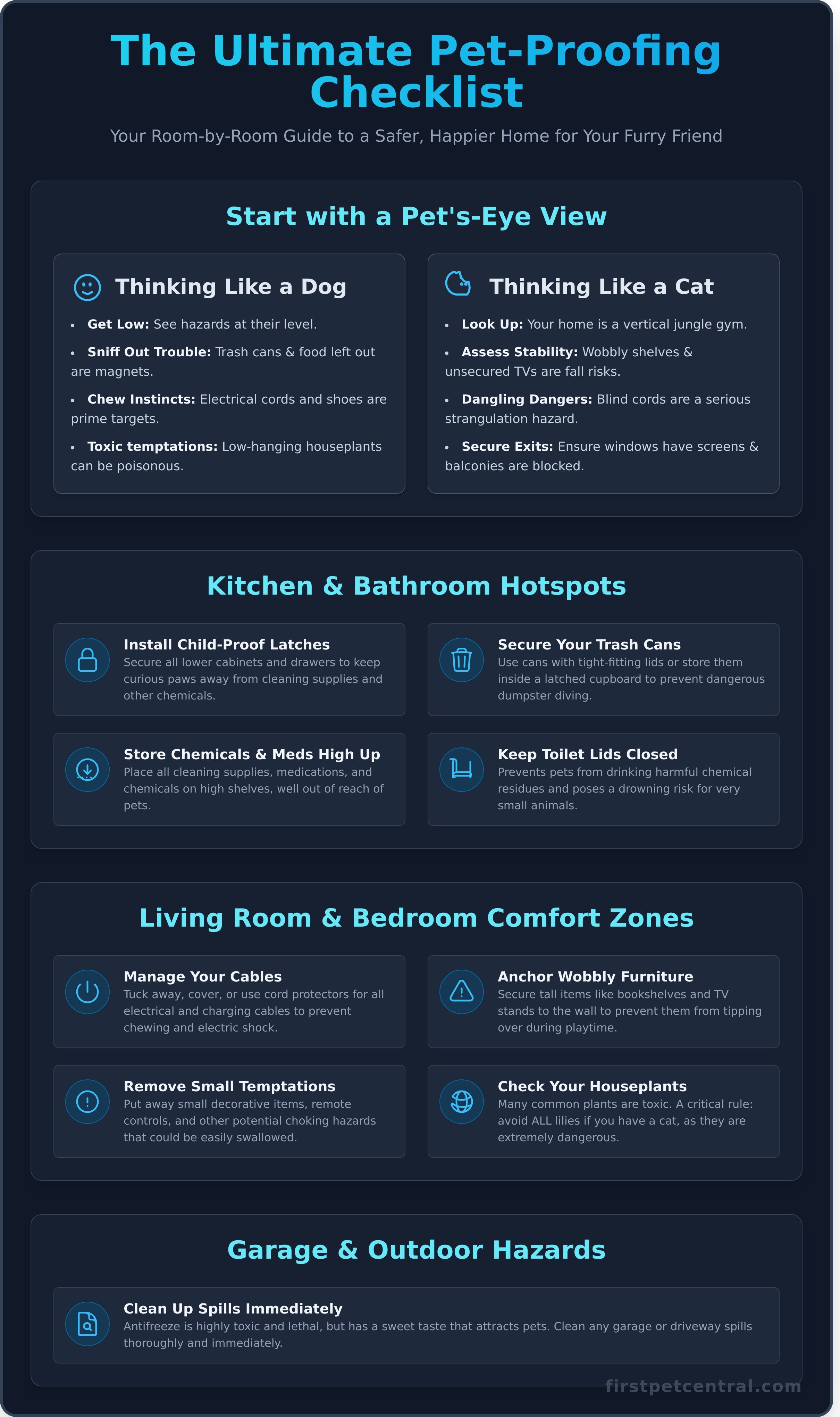
What looks like a phone charger to you is a fantastic chew toy to them. That tall bookshelf? It’s a mountain waiting to be climbed! Understanding this mindset is the secret to successful pet-proofing. To get you started, check out this fantastic visual guide:
Remember, pet-proofing isn't a one-time chore-it's an ongoing act of love. As your tiny fluffball grows into a confident explorer, their curiosity will lead them to new adventures (and new potential mischief!). Learning how to pet proof your home effectively means adapting as they do, ensuring every day is filled with safe and happy discoveries.
Thinking Like a Dog
Get on all fours-seriously! What can you see at puppy level? Look for tempting electrical cords, low-hanging plants (many are toxic!), and shoes left by the door. A dog's powerful sense of smell will lead them straight to the kitchen trash or snacks left on the coffee table. The key is to redirect this powerful chewing instinct toward durable, engaging toys that make them wag with joy.
Thinking Like a Cat
Now, look up! For a kitten, your home is a vertical jungle gym. Scan for wobbly shelves, unsecured TVs, and fragile items on high ledges. Dangling blind cords or strings are irresistible but pose a serious strangulation risk-tie them up high and out of reach. Most importantly, ensure all windows have secure screens and balcony access is blocked to prevent dangerous falls and keep your little adventurer safe.
The Room-by-Room Safety Checklist: Your Action Plan
Ready to turn your home into the ultimate safe haven for your new furry soulmate? The secret to how to pet proof your home without feeling overwhelmed is to tackle it one space at a time. Think of it as a fun family mission! Get everyone involved so they understand the new rules for keeping your little adventurer safe. Start by focusing on the biggest risks first: securing chemicals, removing choking hazards, and managing electrical dangers.
Kitchen & Bathroom Dangers
These rooms are a treasure trove of tempting smells and curious objects. Keep your pet safe and sound by locking down potential hazards. Many common household items, from cleaning supplies to human foods and medications, can be toxic. For a comprehensive overview, the U.S. Food and Drug Administration (FDA) offers a helpful list of Potentially Dangerous Items for Your Pet that every new owner should review. Get started with these simple steps:
- Install child-proof latches on all lower cabinets and drawers. Curiosity won't get the cat (or dog!) into trouble here.
- Secure your trash cans. Use cans with tight-fitting lids or keep them inside a latched cupboard to prevent dumpster diving.
- Store all cleaning supplies, chemicals, and medications on high shelves, far out of reach of paws and curious noses.
- Keep toilet lids closed. This prevents a puppy or kitten from drinking harmful cleaning chemicals or, for tiny pets, a potential drowning risk.
Living Room & Bedroom Comfort Zones
These are your pet’s primary spots for play, cuddles, and naps. Make sure they are cozy and safe! A little bit of prep work ensures every playtime is a happy time. Look at the room from your pet’s eye level to spot dangers you might otherwise miss.
- Manage your cables. Tuck away or cover all electrical cords and charging cables. Cord protectors are a fantastic investment to prevent chewing.
- Anchor wobbly furniture. Secure tall items like bookshelves or TV stands to the wall to prevent them from tipping over during a case of the zoomies.
- Remove small temptations. Put away small decorative items, remote controls, and other potential choking hazards that could be easily swallowed.
- Check your houseplants. Many common plants are toxic to pets. A good rule of thumb is to avoid all lilies if you have a cat, as they are extremely dangerous.
Garage & Outdoor Hazards
Your pet’s world doesn't end at the back door! Whether it's the garage or the yard, their next big adventure needs a safety check. These areas often contain the most dangerous chemicals, so diligence is key to a complete plan for how to pet proof your home.
- Clean up spills immediately. Antifreeze is extremely toxic but has a sweet taste that attracts pets. Wipe up any and all chemical, gasoline, or oil spills.
- Lock it all up. Store lawn chemicals, pesticides, tools, and paints in securely locked cabinets.
- Check your fence line. Walk the perimeter of your yard and repair any gaps, holes, or weak spots where a small pet could escape.
- Scan the yard. Look for and remove any toxic plants, mushrooms, or signs of pests that could harm your pet.
Beyond the Obvious: Hidden Household Dangers for Pets
You’ve covered the cords and secured the cabinets, but a truly safe space for your new furry friend goes deeper. A huge part of learning how to pet proof your home involves spotting the hidden hazards in everyday items. Curious paws and noses can find trouble in the most unexpected places, from a handbag left on the floor to a holiday centerpiece. For a fantastic room-by-room guide, check out American Humane’s Pet-Proofing Your Home checklist. Let's explore some common dangers that every pet parent should know.
Toxic Foods & Plants
Many human snacks are a major no-no for pets. Keep your kitchen counters and pantry secure to protect your new companion from accidental poisoning. Always keep these items out of reach:
- Human Treats: Chocolate, grapes, raisins, onions, garlic, and anything containing the sweetener xylitol are extremely toxic.
- Beverages: A curious lick of an alcoholic drink or your morning coffee can be very dangerous for a small animal.
- Houseplants: Many common plants like lilies, tulips, and aloe vera are toxic. Research and create a list of pet-safe greenery for your home.
Choking & Ingestion Hazards
Puppies and kittens explore the world with their mouths, making small objects a significant risk. Think from their low-to-the-ground perspective. Be sure to secure loose change, batteries, rubber bands, and children’s small toys. Never give your pet cooked bones, which can splinter and cause internal damage. And remember that purses and backpacks are treasure troves of hazards like sugar-free gum (xylitol!) and medications, so hang them up high.
Seasonal & Holiday Safety
Holidays bring new sights, smells, and potential dangers into your home. Remembering these seasonal risks is a crucial part of how to pet proof your home year-round. During winter, secure your Christmas tree so it can’t be knocked over, and keep tinsel away from cats, as it can cause serious intestinal blockages if ingested. In the spring, be aware that Easter lilies are highly toxic to felines. And during summer celebrations, ensure your pet has a safe, quiet space to hide from the scary sounds of fireworks.
Create a Pet Paradise: Safe Alternatives & Enrichment
Learning how to pet proof your home is about more than just hiding cords and locking cabinets. It’s about transforming your space into a true pet paradise! A bored puppy or kitten is often a destructive one, channeling their energy into chewing shoes or scratching furniture. The secret is to replace the "no's" with exciting "yes's" by providing safe, engaging alternatives that make your new friend feel happy, secure, and loved.
Banish Boredom with Engaging Toys
Redirect those natural chewing and hunting instincts toward something safe and fun! Instead of your favorite sneakers, give your puppy durable, pet-safe toys. Keep their brilliant minds buzzing with an interactive puzzle dog toy that rewards their curiosity. For your feline friend, let them stalk and pounce to their heart's content with an exciting automatic feather teaser toy. Pro-tip: Rotate their toys every few days to keep the fun fresh and exciting!
Designate a Cozy Sanctuary
Every pet needs a safe space to call their own. Designate a cozy corner with a comfortable bed where they can retreat, relax, and feel secure. This isn't just a sleeping spot; it's their personal territory. Treat your furry soulmate to a stylish and comfy solid wood pet bed that gives them the royal treatment while blending beautifully with your home decor.
Safe Adventures Outside the Home
Your pet-proofing mission doesn't stop at the front door! For safe travels and exciting adventures, your car needs to be a secure zone, too. Always use a sturdy carrier or a properly fitted safety harness for every trip. To protect your seats from fur and scratches while giving your companion a comfy spot for the ride, a waterproof pet seat protector is a game-changer for worry-free journeys.
By focusing on enrichment, you're not just preventing trouble; you're building a bond. When you know how to pet proof your home with both safety and joy in mind, you create the perfect foundation for a lifetime of happy memories. Explore more pet care essentials at FIRSTPETCENTRAL.com, because your pet deserves the best, every day.
From Pet-Proof to Pet Paradise: Your Journey to a Safer Home
Creating a true haven for your furry family member is an adventure in love and care! By getting down on their level, using our room-by-room checklist, and swapping out dangers for delightful alternatives, you're doing more than just tidying up. Mastering how to pet proof your home is all about unlocking a world where your companion can play, explore, and relax with total freedom, giving you complete peace of mind.
Now that the groundwork is laid, it's time for the fun part! Ready to fill those safe spaces with joy and comfort? Explore our curated essentials designed to keep tails wagging and purrs rumbling. Shop our collection of safe and fun pet essentials today! As a brand trusted by thousands of happy pet parents, we make it worry-free with Free Shipping On All Orders and a 30-Day Money-Back Guarantee.
Go on and build that perfect pet paradise. Your best friend is waiting for all the happy adventures and cozy snuggles to come!
Frequently Asked Questions
How do I stop my puppy from chewing on electrical cords?
Stop your little explorer from dangerous chewing! The best trick is to make cords boring and toys exciting. Use cord concealers or wrap cords in a special pet-safe protector. A spritz of bitter-tasting spray can also work wonders. Most importantly, redirect their attention with a variety of fun and engaging chew toys. Give them a safe, satisfying way to work out that puppy energy and keep them smiling!
What are the most common poisonous house plants for cats and dogs?
Keep your home a green, safe haven for your furry friend! Some of the most common toxic houseplants include lilies (especially for cats!), sago palms, tulips, and oleander. It's best to move these beauties to a room your pet can't access or re-home them. When in doubt, a quick search on the ASPCA's plant list can give you peace of mind and help keep your curious companion healthy and happy.
Is it safe to leave my new pet home alone for the first time?
Leaving your new soulmate alone for the first time can be tough! Start small. Leave them in a secure, cozy space for just 5-10 minutes, then gradually increase the time. Make their special spot a happy place with a comfy bed, fresh water, and a fun puzzle toy to keep them busy. This helps build their confidence and shows them that you'll always come back for more cuddles and adventures.
How can I pet-proof my home if I live in a small apartment?
Wondering how to pet proof your home when you have a small apartment? It's all about smart, vertical thinking! Use wall shelves to keep plants and breakables out of reach. Secure low cabinets with simple child-proof latches. A smaller space can actually be easier to manage, allowing you to create a perfectly cozy and safe zone for your new best friend to explore without getting into mischief. It's a fun challenge!
What human foods are the most dangerous for my dog?
Keep those human snacks to yourself to protect your pup! The most dangerous foods include chocolate, grapes and raisins, onions, garlic, and anything containing the sweetener xylitol (often found in peanut butter). Always store these items in secure cupboards, well out of snout’s reach. A healthy pet is a happy pet, so stick to veterinarian-approved treats to show your love and keep their tail wagging safely.
How do I secure my trash can from a clever pet?
Outsmart your clever trash bandit with a few simple tricks! The best defense is a trash can with a heavy, step-on lid that's too tricky for paws or noses to open. For an extra layer of security, choose a can that can be stored inside a cabinet with a pet-proof latch. This makes the boring old trash can no match for their super-fun interactive toys, keeping them safe and your floors clean. In some regions, like Lithuania, you can find a variety of pet-proof virtuvės reikmenys internetu to solve this common problem.