

How to Stop Puppy Biting: A Playful Guide to Gentle Paws and Happy Smiles
by FIRSTPETCENTRAL on Apr 23, 2026

Last Tuesday, Sarah discovered that her adorable new Golden Retriever was actually a tiny "land shark" when he left a fresh snag in her favorite silk robe. It's a common struggle for new pet parents. According to data from the American Kennel Club, 100% of young dogs use their mouths to explore their world. You need to know how to stop puppy from biting before your furniture and fingers take any more damage. You love your pup, but you definitely don't love the stinging pain of those needle-sharp teeth.
We understand that you want peaceful snuggles, not a wrestling match with a furry stapler. This guide shows you how to use professional bite-inhibition techniques and the magic of interactive play to create a calmer home. You'll discover how to teach your puppy the "gentle" command and use smart redirection strategies to save your skin and your wardrobe. We're going to transform those nippy habits into happy smiles and bite-free cuddle sessions starting right now.
Key Takeaways
- Understand why your little "land shark" uses their mouth to explore and how to guide their natural curiosity.
- Master the yelp technique to teach bite inhibition and learn exactly how to stop puppy from biting by signaling skin sensitivity.
- Swap your hands for fun by using interactive toys that provide the mental stimulation your puppy craves.
- Use the "Reverse Timeout" strategy to set clear boundaries and ensure everyone in the family stays on the same page.
- Comfort your pup through the teething phase with simple, cooling relief for happy smiles and healthy gums.
The "Why" Behind the Teeth: Understanding Puppy Mouthing
Congratulations on your new furry soulmate! While those puppy kisses are sweet, the tiny needle-like teeth can be a bit much. Your puppy isn't being bad when they nip. They are simply navigating a big, exciting world without any hands. For the first several months of life, a dog’s mouth is their primary tool for sensory exploration. By understanding dog behavior, you can see that mouthing is actually a sign of a healthy, curious pup who wants to interact with you.
Think of those teeth as a puppy's version of fingers. They use them to grab, feel, and understand every texture they encounter. Since they lack the fine motor skills humans have, they "feel" your skin to learn about you. Learning how to stop puppy from biting begins with realizing that this behavior is biological, not a character flaw. You aren't raising a tiny terror; you're guiding a baby through a very oral stage of development.
To better understand this concept and see these sharp little teeth in action, watch this helpful video:
The Land Shark Phase: What is Normal?
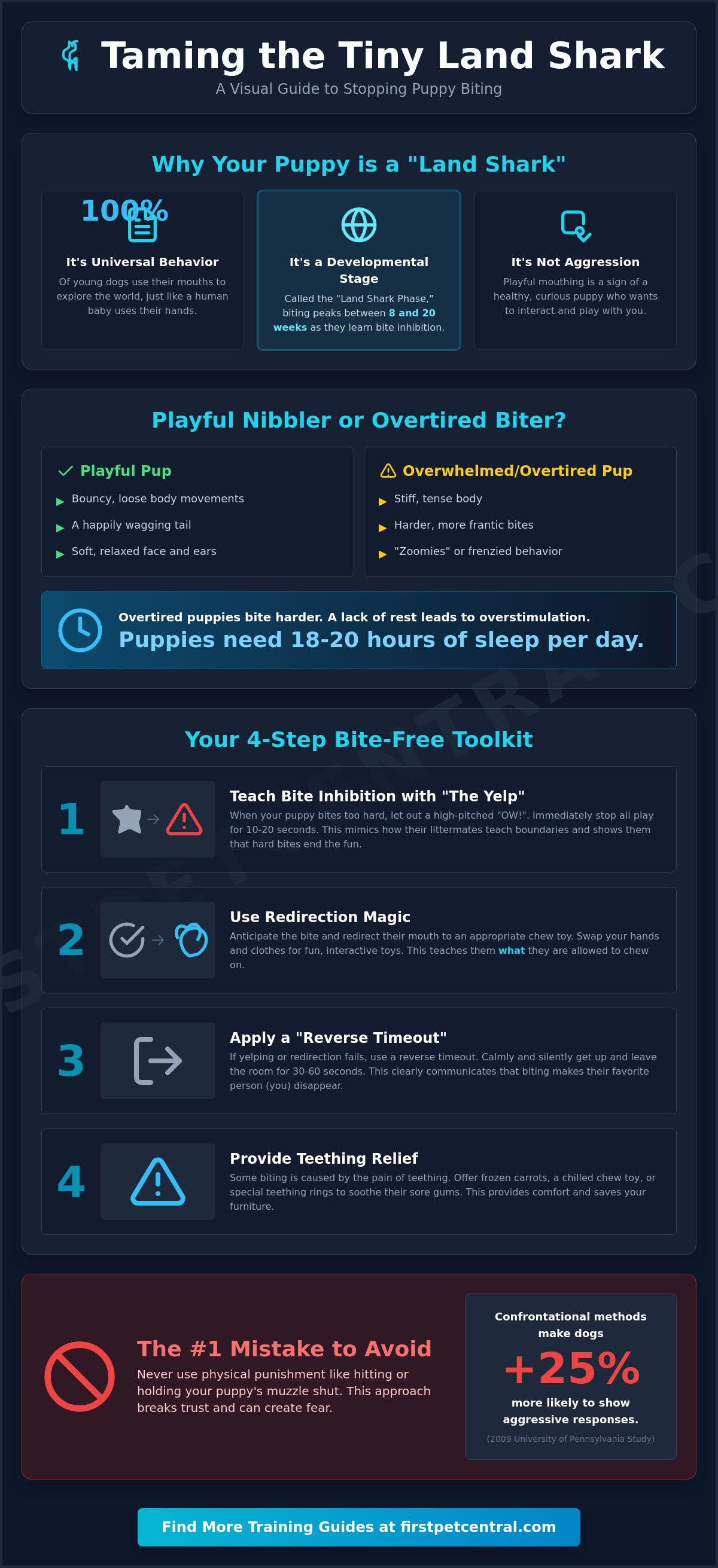
Between 8 and 20 weeks of age, your puppy enters what many owners call the land shark phase. During this 12 week window, biting intensity peaks because they are learning bite inhibition. They use their mouths to initiate games and socialize with their siblings. Mouthing is a vital developmental milestone that shows your puppy is eager to engage with their surroundings. Most of this behavior is just a playful invitation to join in on the fun.
When Play Becomes Overwhelming
Sometimes the nipping gets out of control. This usually happens when your pup is overstimulated or needs a nap. Puppies require 18 to 20 hours of sleep per day, according to 2021 veterinary guidelines. A lack of rest leads to the zoomies, which often results in harder bites. If they find your hands more interesting than their toys, it's time to redirect them. You can keep their curious minds busy with an interactive dog puzzle toy that rewards them for using their brain instead of their teeth.
It's vital to distinguish between normal play and genuine aggression. Playful pups have bouncy movements, wagging tails, and soft faces. Genuine aggression involves stiff bodies and snarling, which is extremely rare in puppies under 6 months old. Understanding how to stop puppy from biting involves recognizing these cues. Most of the time, your pup is just a tired baby who doesn't know how to settle down yet. Stay patient, stay positive, and remember that this phase is temporary.
Bite Inhibition: Teaching Your Puppy "Gentle" Mouth Manners
Puppies explore the world with their mouths. While those tiny needle teeth feel sharp to us, your puppy doesn't realize how thin human skin is compared to their furry littermates. Learning bite inhibition is the most important step in discovering how to stop puppy from biting. It's the process of teaching your dog to control the force of their jaws so they don't cause accidental harm during play.
Teaching this skill early creates a safer environment for everyone. If a dog never learns how sensitive people are, they might bite too hard if they're ever startled or in pain later in life. According to veterinary advice on puppy biting, physical punishment like hitting or holding a muzzle shut often backfires. A 2009 study from the University of Pennsylvania found that dogs trained with confrontational methods are 25% more likely to show aggressive responses. Instead of scolding, focus on rewarding the behavior you want to see.
The Yelp Technique: Does it Work for Every Puppy?
When your puppy bites too hard, let out a high-pitched "Ow!" or "Yip!" just like a sibling would. This sound tells your pup that the fun has stopped because they were too rough. Timing is vital. You must make the sound the exact second those teeth make contact. Immediately go limp and stop playing for about 10 seconds. This teaches them that biting equals the end of the game.
For some high-energy breeds, a loud yelp acts like a squeaky toy and makes them more excited. If your pup starts jumping or biting more after you yelp, try the "silent treatment" instead. Quietly stand up, cross your arms, and look away. If they continue to nip, leave the room for 30 seconds. Always offer immediate praise or a small treat when your puppy pulls back or offers a gentle lick instead.
Building the "Gentle" Command
You can proactively teach your puppy how to use a "soft mouth" during calm moments. Place a treat in your closed fist and let them sniff it. If they nibble or paw at your hand, keep it closed. The moment they stop biting and simply sniff or lick your hand, say "Gentle" and give them the treat. This creates a positive association with soft interactions. You can also use interactive dog puzzle toys to channel that mouthy energy into a rewarding challenge.
- Take It and Leave It: Use these commands to teach your puppy that they only get to mouth objects when you give them permission.
- Encourage Kisses: If your puppy starts to nip, redirect them by saying "Kisses!" and rewarding them for licking your hand.
- The Three Strikes Rule: During play, give your pup two chances to adjust their pressure after a yelp. If they bite a third time, the play session ends for at least 5 minutes.
Consistency is your best friend when learning how to stop puppy from biting effectively. Every family member should use the same sounds and rules to avoid confusing your furry soulmate. With patience and plenty of "gentle" rewards, those nips will soon turn into sweet puppy kisses.
Redirection Magic: Using Interactive Toys to Save Your Hands
The golden rule for every pet parent is simple: never take your hand away without offering a better alternative. When those needle-sharp teeth find your skin, your goal isn't just to stop the pain. You want to teach your furry soulmate what is okay to chew. This swap creates a win-win situation. You protect your fingers, and your pup gets to satisfy their natural urge to explore with their mouth. According to the AKC guide to stopping puppy biting, redirection is one of the most effective ways to manage this developmental stage. It replaces a bad habit with a rewarding one instantly.
Consistency is your best friend during these training sessions. If you're wondering how to stop puppy from biting, look at the quality of your tools. Puppies have incredible jaw strength for their size. Using bite-resistant and durable materials ensures the toy survives the "land shark" phase. This isn't just about safety; it's about engagement. A toy that feels good to chew is more tempting than your sleeve. Turn every interaction into a storybook adventure by keeping a variety of textures nearby. This variety keeps your puppy curious and focused on their gear instead of your ankles. When they choose the toy over your hand, celebrate that small victory with plenty of praise.
Puzzle Toys: Turning Biting Energy into Brain Power
A bored puppy is almost always a biting puppy. When a young dog lacks mental stimulation, they create their own fun, which usually involves nipping at your heels or furniture. Mental exhaustion is often more effective than a long walk for calming a rowdy pet. Using dog puzzle toys can keep your pet engaged for 20 to 30 minutes at a time. These slow-dispensing feeders calm high-energy nippers by forcing them to use their noses and brains to earn treats. It transforms a frantic biting session into a focused, rewarding challenge that leaves them ready for a nap.
High-Energy Play: Flying Saucers and Chase Games
Sometimes your puppy just has too much "zoomie" energy to sit still for a puzzle. Creating distance between your hands and their mouth is a smart strategy for these moments. Games like fetch or chase allow your pup to burn off steam while keeping your skin safe. Try using an interactive flying saucer to keep the fun moving across the yard or living room. This is a key part of learning how to stop puppy from biting during those high-intensity evening hours. This toy bridges the gap between playing together and independent play. It gives them a target that isn't your skin. By the time the game ends, your puppy will be too tired to think about nipping, leading to more peaceful snuggles and happy smiles for everyone.
The "Reverse Timeout" and Environmental Management
Teaching your furry soulmate boundaries is a journey filled with tiny victories and occasional nibbles. Understanding how to stop puppy from biting requires a mix of patience and clever environmental management. Often, the best way to handle a nippy pup isn't to punish them, but to change the environment around them. This starts with the "Reverse Timeout." Instead of putting your puppy in a crate, which should always be their happy place, you are the one who leaves the room. This removes the ultimate prize: your attention.
Consistency is your secret weapon here. If one family member allows "play biting" while another yells, your puppy will feel confused and anxious. Every human in the house must follow the exact same set of rules. You should also "puppy-proof" your living space to set your dog up for success. Remove tempting but "illegal" chew items like expensive leather shoes, loose rug corners, and low-hanging curtains. When your puppy can't find anything "bad" to chew, they'll naturally gravitate toward their own toys.
Mastering the Reverse Timeout
The reverse timeout is a powerful tool in your kit for how to stop puppy from biting without using fear or force. When those sharp milk teeth make contact with your skin, say a calm but firm "Ouch!" and immediately walk behind a baby gate or into another room. Don't run, don't scream, and don't look back. You don't want to turn your exit into a fun game of "chase the human."
Keep the timeout short. Research into canine attention spans suggests that 30 to 60 seconds is the ideal duration. If you stay away too long, your puppy will forget why you left and start looking for a shoe to shred instead. When you re-enter the room, stay calm. Immediately offer a "legal" toy. When they bite the toy instead of your hand, shower them with praise and affection. This cycle reinforces that skin is boring, but toys bring the party back!
Creating a Sanctuary for the "Sleepy Shark"
Most puppy biting happens because the pup is "overtired." Veterinary behaviorists note that puppies under 20 weeks old need 18 to 20 hours of sleep every day. When they miss their naps, they lose emotional control and turn into a "sleepy shark." A designated sleep sanctuary helps regulate their mood and lowers their biting frequency by 40 percent in many cases.
Setting up a cozy winter-warm mattress in a quiet corner encourages deep, restorative rest. When your puppy starts getting "the zoomies" or biting harder than usual, it's usually a sign they need a nap. Guide them to their bed with a small treat. A comfortable, dedicated sleeping spot tells their brain it's time to switch off and recharge.
Give your puppy the gift of deep, restorative sleep with our cozy Deep Sleep Mattress today!
Puppy Teething Relief and Long-Term Success
Your puppy’s mouth goes through a massive transformation in a very short time. Between 12 and 16 weeks of age, those needle-sharp milk teeth begin to fall out, making way for 42 permanent adult teeth. This process is usually complete by the time your pup reaches 7 months. During this window, your furry soulmate isn't just being naughty; they're dealing with genuine soreness. Learning how to stop puppy from biting involves recognizing that much of this behavior is driven by the need to soothe aching gums.
Soothing the Teething Pain
Help your pup find relief with safe, cooling options. A wet washcloth twisted into a rope and frozen for 30 minutes provides a wonderful, numbing texture for inflamed mouths. You can also invest in specialized cooling toys designed to be chilled in the refrigerator. These tools offer a focused outlet for the urge to chew. Teething is a physical discomfort that requires empathy, not just training.
Be careful with what you offer for relief. Avoid giving your puppy hard antlers, dried hooves, or heavy marrow bones. These materials are often too dense for developing mouths and can cause painful fractures in fragile puppy enamel. Stick to flexible rubber or soft cotton materials that give slightly under pressure. Keep the experience positive and pain-free to ensure your puppy stays happy and healthy.
The Path to a Gentle Adult Dog
As your puppy matures, your goal shifts from managing the pain to refining their manners. By the time they hit the 6-month mark, they should understand that teeth never belong on human skin. Transition your training from "gentle mouthing" to a "no teeth allowed" policy. Consistency is your best friend here. If you need more inspiration for keeping those jaws busy, check out our Ultimate Guide to Pet Toys for long-term enrichment ideas that prevent boredom.
Don't forget the power of socialization. Playing with vaccinated, well-behaved older dogs is a natural classroom. An older dog will quickly let a puppy know if a bite is too hard, teaching bite inhibition much faster than a human can. Celebrate the small wins along the way. The first time your puppy chooses a squeaky toy over your ankle is a huge milestone. It shows your bond is growing and they're learning to trust your guidance.
- Daily Exercise: A tired puppy is a well-behaved puppy. Ensure they get at least two short walks a day.
- Consistent Redirection: Always have a toy ready to swap for your hand.
- Quiet Time: Puppies often bite more when they're overtired. Stick to a regular nap schedule.
- Positive Reinforcement: Reward the "calm moments" with treats or praise.
- Safe Spaces: Use crates or playpens when you can't give 100% supervision.
Mastering how to stop puppy from biting takes patience, but the reward is a lifetime of gentle paws and happy smiles. Stay enthusiastic, stay consistent, and enjoy every second of this beautiful adventure with your new best friend.
Ready for a Lifetime of Gentle Snuggles
Your journey to a nip-free home is all about consistency and playful redirection. Focus on teaching bite inhibition so your pup understands their own strength early on. According to the American Kennel Club, the puppy teething phase typically lasts until they are 8 months old, which means you'll need plenty of patience and the right tools. Providing engaging outlets ensures your skin stays safe while your pet explores their world. Mastering how to stop puppy from biting is the first step toward a long, harmonious bond with your furry soulmate.
Our team of dedicated pet enthusiasts designed every item to bring joy and comfort to your home. We use bite-resistant and durable materials because we know a puppy's jaw can exert 230 pounds of pressure. You'll also enjoy free shipping on all essential puppy gear to get your training started right away. You've got the tools and the heart to make this work. Don't give up on those daily training sessions. Keep practicing those gentle paws and look forward to those happy smiles. Because your pet deserves the best, every day.
Banish boredom and save your hands with our Interactive Toy Collection!
Frequently Asked Questions
Is it normal for my puppy to growl while biting my hands?
Yes, growling during play is a completely normal way for your puppy to show they're having a blast. It's usually just a sign of high energy and excitement rather than true anger. A 2017 study in Animal Cognition noted that dogs use specific play growls to communicate non-hostile intent. If their body remains wiggly and loose, they're just enjoying the game. Keep things lighthearted and redirect that energy to a fun tug toy.
Why does my puppy bite harder when I say "no" or yelp?
Your puppy likely bites harder because high-pitched yelps and loud shouts can sound like a squeaky toy, which ramps up their excitement. This reaction often makes them think you're playing back. To learn how to stop puppy from biting, try a calm and boring time out instead of making noise. When you stay quiet, your puppy learns that the fun stops the moment their teeth touch your skin.
At what age do puppies usually stop biting everything?
Most puppies naturally stop the constant mouthing phase by 24 to 28 weeks of age. This timeline aligns with the completion of the teething process when all 42 adult teeth have finally emerged. Before this point, your furry friend uses their mouth to explore 100 percent of their environment. Provide plenty of durable chew options during these months to protect your furniture and keep your puppy's gums feeling great and healthy.
Can I use a squirt bottle or physical correction to stop the biting?
You shouldn't use squirt bottles or physical corrections because these methods often lead to fear and defensive behavior. A study by the University of Pennsylvania found that 15 to 20 percent of owners who used aversive techniques saw an increase in their dog's aggression. Focus on positive reinforcement and redirection instead. This approach builds a lasting bond of trust and ensures your puppy feels safe and happy in their new home.
My puppy is biting my ankles when I walk, how do I stop this "herding" behavior?
Stop walking the very second your puppy nips at your heels to teach them that biting ends the movement they enjoy. This statue technique is effective because it removes the reward of the chase. Herding breeds may show this instinct 3 times more often than other types of dogs. Carry a soft toy to offer as a distraction so your puppy has something appropriate to grab while you walk together.
What are the best types of toys for a teething puppy?
The best toys for a teething puppy are made of soft, non-toxic rubber or chilled fabric that provides gentle relief for inflamed gums. Look for items labeled as puppy specific because they're designed for smaller jaws and softer teeth. Using these interactive tools is a smart way to learn how to stop puppy from biting your fingers. Freeze a wet washcloth for 30 minutes to create a crunchy, cold treat.
When should I be worried that my puppy’s biting is actually aggression?
You should seek professional help if your puppy displays stiff posture, deep lunging, or baring of teeth that occurs outside of play sessions. While 95 percent of puppy biting is developmental, true aggression involves a lack of play bows and a very tense facial expression. Consult a certified behaviorist if you notice these red flags. Early intervention ensures your puppy grows up to be a confident and friendly member of your family.
How much sleep does a puppy need to prevent "cranky biting" episodes?
Puppies require a staggering 18 to 20 hours of sleep per day to prevent the overstimulated behavior that leads to biting. When a puppy gets less than 16 hours of rest, their cortisol levels can spike, making them much more likely to nip. Create a cozy, quiet space for scheduled naps throughout the day. A well-rested puppy is a happy puppy who's ready for gentle play and sweet, cozy snuggles.