
Pet Food & Treats Buying Guide: Fueling Your Furry Soulmate’s Vitality in 2026
by FIRSTPETCENTRAL on Apr 26, 2026

What if the secret to a longer, more playful life for your dog or cat was hidden in the fine print of their dinner label? You likely spend ages comparing brands every time you shop for pet food & treats, yet a 2024 study by the Association for Pet Obesity Prevention found that 59% of dogs are still struggling with weight issues often linked to hidden fillers. It's exhausting to worry if that expensive bag is actually causing the digestive sensitivities or dull coat you see today.
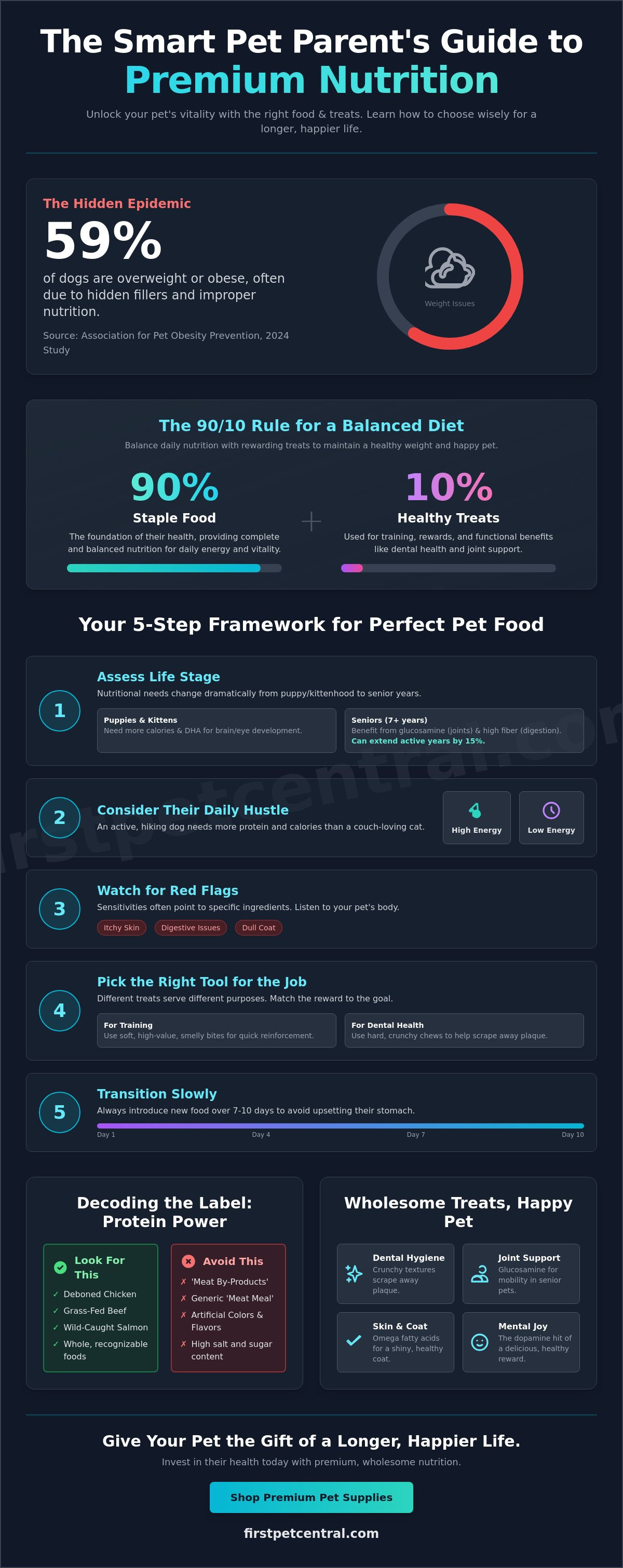
Choosing the perfect nourishment for your furry soulmate doesn't have to be a guessing game. Follow this simple 5-step framework to ensure your pet stays happy and energetic. First, identify your pet's life stage. Puppies and kittens have vastly different caloric requirements than seniors. Second, look at their daily hustle. An active dog hiking every weekend needs more protein than a cat who prefers napping in a sunbeam. Third, watch for red flags like itchy skin or digestive issues. These often signal a need for grain-free or limited-ingredient diets. Fourth, pick the right tool for the job. Use soft, smelly bites for training and hard, crunchy chews, such as authentic yak chews from Prime Pet Food, for dental health. Finally, always transition to new pet food & treats slowly over 7 to 10 days to protect their sensitive tummies.
We understand you want your furry soulmate to enjoy every sunny walk and cozy nap with peak vitality. You deserve to feel confident that every bite supports their health. This guide helps you discover how to choose the perfect balance of premium nutrition and healthy rewards to keep your pet happy, energetic, and thriving. We will walk through the cleanest protein sources for 2026, find the best snacks for sensitive stomachs, and show you how high-value rewards lead to faster training and smaller stools.
Key Takeaways
- Learn how to boost your pet’s daily smiles and energy by choosing premium nutrition packed with bioavailable proteins.
- Master our 5-step framework to match your furry soulmate’s life stage and activity level with the perfect pet food & treats.
- Discover how grain-free and limited-ingredient diets can soothe sensitive stomachs and reduce inflammation for a happier tummy.
- Banish boredom and strengthen your bond by shifting from standard bowl feeding to exciting engagement feeding.
- Find out how to use high-value rewards to reinforce positive behavior and make training sessions a joyful adventure.
Understanding Premium Pet Food & Treats: The Foundation of Pet Happiness
Your pet's vitality starts in their bowl. In 2026, premium nutrition isn't just a marketing label; it's a promise of high bioavailability. This means your furry soulmate actually absorbs the nutrients they eat instead of letting them go to waste. When you choose the right pet food & treats, you'll see the results in their wagging tails, bright eyes, and endless energy. A healthy diet directly fuels those daily 'smiles' and zoomies we love to watch. For a comprehensive overview of pet food history and safety standards, experts look at how manufacturing has shifted from cheap fillers to functional, life-extending ingredients. Today's standards demand wholesome, natural ingredients that ditch synthetic fillers for real, recognizable food.
It's important to distinguish between 'staple food' and 'treats.' Think of staple food as the daily fuel that provides 90 percent of your pet's nutritional requirements. Treats act as the remaining 10 percent, serving as emotional rewards and functional supplements. Balancing these two categories ensures your pet stays lean and excited for every mealtime adventure.
The Role of High-Quality Protein in Vitality
Protein builds strong muscles and a resilient immune system. Always check the first ingredient on the label. Premium collections prioritize whole protein sources like deboned chicken, grass-fed beef, or wild-caught salmon. Many budget brands rely on 'meat by-products,' which are often ground-up leftovers that lack essential amino acids. Crude protein is a laboratory measurement of nitrogen content that estimates total protein levels, but the source of that nitrogen matters more than the final percentage on the bag. High-quality protein ensures your pet stays active and strong as they age.
Why Wholesome Treats Matter for Long-Term Health
Don't let snacks become a 'hidden calorie' trap. Low-quality grocery store treats often contain 20 percent more salt and sugar than premium alternatives. Treat your pet to snacks that double as health supplements. Natural pet food & treats support dental health, create shiny coats, and provide vital mental stimulation. You can even combine these rewards with interactive puzzle toys to keep their minds sharp and bodies moving. Choosing natural options means you're investing in:
- Dental Hygiene: Crunchy textures that help scrape away plaque.
- Skin and Coat: Omega fatty acids that reduce itching and add shine.
- Joint Support: Added glucosamine for senior dogs and cats.
- Mental Joy: The dopamine hit of a delicious, healthy reward.
Upgrade your pet's dining experience today. By focusing on wholesome ingredients over synthetic shortcuts, you're giving your best friend the gift of a longer, happier life.
The 5-Step Framework for Choosing the Right Pet Food & Treats
Choosing the perfect nourishment for your furry soulmate doesn't have to be a guessing game. Follow this simple 5-step framework to ensure your pet stays happy and energetic. First, identify your pet's life stage. Puppies and kittens have vastly different caloric requirements than seniors. Second, look at their daily hustle. An active dog hiking every weekend needs more protein than a cat who prefers napping in a sunbeam. Third, watch for red flags like itchy skin or digestive issues. These often signal a need for grain-free or limited-ingredient diets. Fourth, pick the right tool for the job. Use soft, smelly bites for training and hard, crunchy chews for dental health. Finally, always transition to new pet food & treats slowly over 7 to 10 days to protect their sensitive tummies.
Life Stage Nutrition: From Growth to Graceful Aging
Your pet's nutritional needs shift as they grow. Growing puppies and kittens require high levels of DHA, an omega-3 fatty acid, to support brain and eye development. They also need more calories per pound to fuel their playful adventures. If you're a new pet parent, The Ultimate New Pet Checklist provides a great roadmap for these early stages. Senior pets, usually those over age seven, benefit from glucosamine for joint support and high-fiber recipes to aid digestion. A 2024 study suggests that adjusting caloric intake for seniors can extend their active years by up to 15%.
Decoding the Label: Ingredients to Look For
Reading a label is the best way to ensure quality. Look for real "superfoods" like blueberries for antioxidants, flaxseed for healthy fats, and sweet potatoes for steady energy. High-quality pet food & treats should prioritize Omega-3 and Omega-6 fatty acids to keep that coat shiny and soft. It's also vital to understand FDA pet food regulations, which govern how ingredients are listed and verified for safety. Avoid products containing artificial colors, BHA, or BHT, as these chemical preservatives offer no nutritional value. About 20% of pets show sensitivities to excessive corn or soy fillers; choosing whole meats as the first ingredient prevents many common health hurdles.
Ready to upgrade your pet's snack game? You can explore our curated selection of healthy rewards to find their new favorite flavor.
Navigating Special Diets: Sensitive Stomachs and Weight Control
Don't let a grumbly tummy stop your furry soulmate from enjoying the best nutrition. A common worry for pet parents is that high-quality pet food & treats might be too "rich" for a pet with a sensitive stomach. In reality, premium formulas often use cleaner, simpler ingredients that are much easier to digest than the mystery fillers found in budget brands. These specialized diets focus on reducing gut inflammation, which is the root cause of most digestive distress. By choosing recipes with fewer, higher-quality components, you give your pet's system a much-needed break.
How do you know if your pet is actually struggling with a food sensitivity? Keep an eye out for these specific signs that suggest it's time to switch up their menu:
- Constant paw licking or face rubbing after meals
- Frequent gas, bloating, or "stinky" breath
- Chronic ear infections that won't clear up
- A dull coat or itchy, red skin patches
Grain-Free vs. Grain-Inclusive: What’s Best?
The grain-free debate isn't about grains being inherently "bad." It's about how your pet's body processes specific carbohydrates. For many dogs and cats, proteins in grains like wheat or soy can trigger an inflammatory response. Limited-ingredient diets help by removing these common allergens, allowing the digestive tract to heal. However, grains aren't the enemy for every pet. High-fiber options like oatmeal or brown rice provide excellent energy for active animals. When Selecting the Right Pet Food, base your choice on your pet's unique history. If they have soft stools, a grain-free recipe might be the ticket to a happier tummy.
Managing Weight Without Sacrificing Flavor
Recent veterinary data suggests that by 2026, nearly 60% of household pets will require some form of weight management. You don't have to put your friend on a boring diet to keep them healthy. Modern weight-control pet food & treats use high-protein levels to maintain muscle while cutting back on unnecessary fats. Look for recipes enriched with L-carnitine. This powerful nutrient helps the body metabolize fat more efficiently, turning those extra calories into energy for play and adventure.
Keep mealtime engaging by using a slow-feeding bowl. This simple tool prevents your pet from inhaling their food, making them feel fuller for longer. You can also explore our guide to Level Up Mealtime for expert portion control tips. Staying lean ensures your pet enjoys a life full of smiles and cozy snuggles without the joint strain caused by extra weight.
Interactive Feeding: Using Treats for Training and Enrichment
Stop dumping kibble into a static bowl and walking away. Your furry soulmate craves more than just calories; they crave a challenge. The 2026 trend in pet care is "engagement feeding," a method that turns every meal into a rewarding game. This shift from bowl feeding to interactive play banishes boredom and mimics the natural foraging instincts of cats and dogs. When you integrate pet food & treats into active play, you transform a routine task into a highlight of their day.
Engagement feeding keeps your pet's mind sharp. It prevents the destructive behaviors that often stem from a lack of mental stimulation. By making your pet "work" for their food, you provide an outlet for their energy that a simple walk can't match. It's a simple way to spark joy and keep those tails wagging or purrs vibrating.
The Power of High-Value Rewards
Training success depends on the quality of your rewards. High-value treats are usually defined by three traits: a strong aroma, a soft texture, and premium animal protein. These snacks are the "jackpot" that reinforces positive behavior during difficult training sessions. If your dog is distracted by a squirrel, a piece of dry biscuit won't cut it. You need something that smells irresistible to regain their focus.
Don't worry about the calorie count during long sessions. Use "treat hacking" to keep your pet healthy. Break larger, soft treats into tiny, pea-sized bits. Your pet cares more about the frequency of the reward than the size of the piece. You can keep the motivation high for a 20 minute session without overfeeding. Try loading these small rewards into an Interactive Puzzle Dog Toy Flying Saucer to combine physical movement with tasty incentives.
Slow Feeders and Puzzle Games
Fast eating is a common problem that leads to poor digestion and serious health risks. A 2024 study by the Association for Pet Obesity Prevention found that rapid eating can contribute to Gastric Dilatation-Volvulus (GDV), or bloat, which is a life-threatening emergency. Slow-dispensing bowls and puzzles are the solution. They force your pet to navigate obstacles to reach their kibble, which naturally slows their pace.
- Mental Sharpness: Puzzles require problem-solving skills that keep aging brains young.
- Digestive Health: Slower eating reduces the amount of air swallowed, preventing gas and discomfort.
- Hunting Instincts: Hiding kibble in puzzles mimics the "search and find" behavior cats and dogs would use in the wild.
You can easily upgrade your pet's dining experience. Use a Pet Slow Food Bowl to ensure every meal is safe and engaging. This simple change helps your pet feel fuller for longer while providing the mental workout they deserve. Combining the right pet food & treats with these smart tools ensures your companion stays fit, focused, and happy.
Shop the Collection: Premium Picks from FirstPet Central
Every wagging tail and happy purr starts with what's in the bowl. We've built our collection to take the guesswork out of nutrition. You're looking for smart, reliable, and affordable options that don't compromise on quality. Our curated pet food & treats selection focuses on natural, wholesome ingredients that support everything from gut health to mental sharpness. We believe your pet deserves the best every day. That's why we only stock items we'd give our own furry family members.
Shopping at FirstPet Central means joining a community of enthusiasts who care about longevity. We know you're busy. You need a one-stop shop that delivers on the promise of better health without the confusing labels. Our 2026 collection reflects the latest in pet science, ensuring that every bite contributes to a longer, happier life. We've vetted every brand to ensure they meet our high standards for safety and transparency. You can shop with confidence, knowing your pet's vitality is our top priority.
Our Top Formulas for Sensitive Souls
Does your pet struggle with itchy skin or a grumbly tummy? You aren't alone. About 15% of dogs show signs of food sensitivities. We've gathered grain-free and sensitive stomach options that use limited ingredients to keep things simple. These recipes prioritize high-protein sources to fuel 2026-level vitality. Plus, the added Omega fatty acids mean your furry soulmate will show off a shiny coat that reflects their inner health. It's about more than just a full belly; it's about helping them feel their best from the inside out. Pair these meals with a slow food bowl to prevent bloating and improve digestion during mealtime adventures.
Training-Ready Treats for Every Breed
Training should be a celebration of love, not a source of junk calories. Our treat lineup features wholesome ingredients like real sweet potato, salmon, and lean chicken. These are guilt-free nutrition boosters that make learning new tricks a blast. Whether you're working on "stay" or "high-five," these rewards keep your pet engaged without the fillers. For an extra challenge, try hiding these tasty morsels in an interactive puzzle toy to boost their IQ while they snack. It's the perfect way to banish boredom and reward good behavior with a healthy crunch. Our pet food & treats are designed to make every moment together special.
Ready to upgrade your pet's pantry with the very best? Don't wait for the next growth spurt or energy slump. Give them the fuel they need to thrive right now. Browse the full Pet Food & Treats Collection here!
Give Your Furry Soulmate the Gift of Vitality
Your pet’s health starts with what goes into their bowl every single day. By focusing on natural, wholesome ingredients, you're directly supporting their digestive health and ensuring that coat stays shiny and soft. Research from the 2024 Association for Pet Obesity Prevention report shows that 61% of cats and 59% of dogs are currently classified as overweight; choosing a diet tailored to specific life stages helps manage these health risks effectively. Whether you’re navigating sensitive stomachs or using interactive feeding for training, the right choices today build a foundation for years of happy adventures together. We've carefully curated a selection of pet food & treats designed to meet the unique needs of every breed and age group. Every meal is a chance to show your best friend how much you care. It's time to upgrade their dining experience with recipes that prioritize real nutrition over fillers. Fuel your pet's vitality with our premium Pet Food & Treats!
Your furry companion deserves the best every single day. Let's work together to make their 2026 chapter the healthiest and happiest one yet.
Frequently Asked Questions
How do I know if my pet needs a grain-free diet?
You’ll know your pet needs a grain-free diet if they show persistent signs of grain intolerance like itchy skin, chronic ear infections, or loose stools. Consult your vet to rule out other issues first. While only 1% of dogs have true grain allergies according to the American Kennel Club, some pets thrive on these recipes. Look for alternative carbs like sweet potatoes to keep your furry soulmate’s energy high and their tummy happy.
Can I use regular kibble as training treats?
You can definitely use regular kibble as training treats to keep your pet's weight stable and their mind sharp. This trick works wonders for food-motivated breeds. Just subtract the amount used for training from their main meal. It ensures they don't exceed their daily caloric intake while still rewarding good behavior. It's a smart, budget-friendly way to keep training sessions fun and productive for your clever companion.
What are the signs of a food allergy in dogs and cats?
Common signs of a food allergy include chronic ear infections, obsessive paw licking, and vomiting. Research from the BMC Veterinary Research journal indicates that 10% of all canine allergies are food-based. If your cat or dog scratches constantly after meals, it’s time to investigate. Switch to a limited-ingredient diet to identify the culprit. Keep your pet’s comfort a priority by acting fast on these symptoms to restore their joyful smiles.
How many treats can I safely give my pet per day?
Treats should never make up more than 10% of your pet's total daily calories. This guideline, supported by the Association for Pet Obesity Prevention, prevents weight gain and nutritional imbalances. If your dog needs 1,000 calories, keep your pet food & treats in the snack category under 100 calories. Use a measuring cup to stay precise. Your pet deserves a healthy life, so track those extra bites carefully to ensure long-term vitality.
Is wet food better than dry food for my cat's hydration?
Wet food is significantly better for hydration because it typically contains 75% to 80% water compared to 10% in dry kibble. Cats have a low thirst drive, so they rely on their meals for moisture. Providing wet options helps prevent urinary tract issues and kidney disease. It’s a simple way to upgrade your pet’s dining experience. Mix a little into their dry food for a hydration boost that keeps them feeling refreshed.
What should I look for on a pet food ingredient label in 2026?
In 2026, look for the updated AAFCO Pet Food Model Regulations labels that provide clearer nutritional facts and calorie counts. Ensure the first ingredient is a specific whole protein like deboned chicken rather than a vague meat meal. Check for best by dates that are at least 12 months away for maximum freshness. Avoid artificial dyes like Red 40 or Blue 2. These details ensure you're buying the best pet food & treats available.
How do I transition my pet to a new brand of food without making them sick?
Transition your pet to a new brand by using a 7-day mixing schedule to avoid stomach upset. Start with 25% new food and 75% old food for the first 2 days. Increase the new food to 50% on days 3 and 4. By day 7, your pet should be eating 100% of the new formula. This slow pace gives their digestive system time to adapt. It keeps their tummy happy and their tail wagging throughout the adventure.
Are natural treats really better than grocery store brands?
Natural treats are generally better because they avoid the synthetic preservatives and fillers found in 30% of mass-market grocery brands. Look for single-ingredient options like freeze-dried liver or sweet potato chews. These choices are easier on your pet's digestion and provide more bioavailable nutrients. High-quality treats mean fewer calories and more health benefits. Treat your pet to the purity of natural ingredients for a long, vibrant life filled with cozy moments.