

Reptile Care & Buying Guide 2026: Everything for Your Scaly Friend
by FIRSTPETCENTRAL on May 01, 2026

What if your reptile's enclosure wasn't just a glass tank, but a thriving piece of living art that doubles as a wellness retreat? We know you want the absolute best for your scaly soulmate, but it's easy to feel overwhelmed by technical jargon. You've likely spent hours worrying if your thermoregulation setup is precise enough or if you're mixing up your UVB and UVA bulbs. It's a common stressor for 85% of new keepers who want to avoid health mistakes. We agree that your pet deserves a home that is both safe and beautiful without the headache of complicated setups.
This 2026 guide shows you how to choose the perfect habitats, lighting, and accessories to help your reptile thrive in a healthy, natural environment. You'll learn to create a vibrant space that keeps your pet active and your living room looking stylish. We're diving into the essentials of heat gradients, lighting schedules, and functional decor to make your shopping simple and reliable. Get ready to transform your pet's world into a lush, tropical paradise or a cozy desert sanctuary today.
Key Takeaways
- Discover why these fascinating creatures make the perfect "scaly soulmate" for your unique lifestyle.
- Learn how to choose between glass and PVC enclosures to build a stunning, natural sanctuary for your pet.
- Master the science of UVA and UVB lighting to ensure your reptile thrives with the perfect balance of heat and vitamins.
- Avoid dangerous care mistakes like "hot rocks" to keep your scaly friend safe and cozy.
- Explore expert-selected accessories made from safe, durable materials that bring more joy to your pet's daily life.
Welcome to the Scaly Side: Why Reptiles Make Amazing Pets
Ready to meet your new scaly soulmate? Reptiles are capturing hearts in 2026 like never before. They offer a unique blend of prehistoric wonder and modern convenience for every type of pet lover. Many families choose a reptile because they are low-allergen companions. This makes them a fantastic choice for households that struggle with fur or dander. These creatures also boast impressive lifespans; a well-cared-for Ball Python can easily live for 30 years. Learn more about reptiles to understand their fascinating biology and why they have thrived for millions of years.
To better understand which species might be right for your home, watch this helpful video:
Starting your journey is a thrilling adventure. You need to be prepared from the very first day. A successful transition to pet parenthood begins with the right new pet checklist. This ensures you have every heat lamp, substrate bag, and hideout ready before your new friend arrives. Popular choices for beginners include the friendly Bearded Dragon, the colorful Leopard Gecko, and the docile Ball Python. These species are known for being hardy and having manageable care requirements.
The Joy of Reptile Ownership
Imagine coming home to a glowing, lush vivarium. It acts as a centerpiece of calm in a busy house. Observing a lizard explore its habitat is incredibly relaxing. Each species brings a distinct personality to your home. Some lizards are curious and will watch you through the glass; others are more laid back. These pets are smart and thrive when you provide an engaging environment filled with textures and climbing spots. They deserve a curated lifestyle that keeps them active and happy.
Common Myths About Reptiles
Don't believe the myth that these animals are boring. They aren't just "pet rocks" that sit still all day. While they don't bark, their behaviors are complex and rewarding to watch. There is a big difference between "low maintenance" and "specialized care." You won't need to go for 6:00 AM walks in the rain, but you must monitor UV index levels and thermal gradients daily. Using high-quality supplies is the only way to ensure long-term health and vibrant colors. Proper care turns a pet into a lifelong companion.
Creating a Home Away from Home: Essential Habitats and Decor
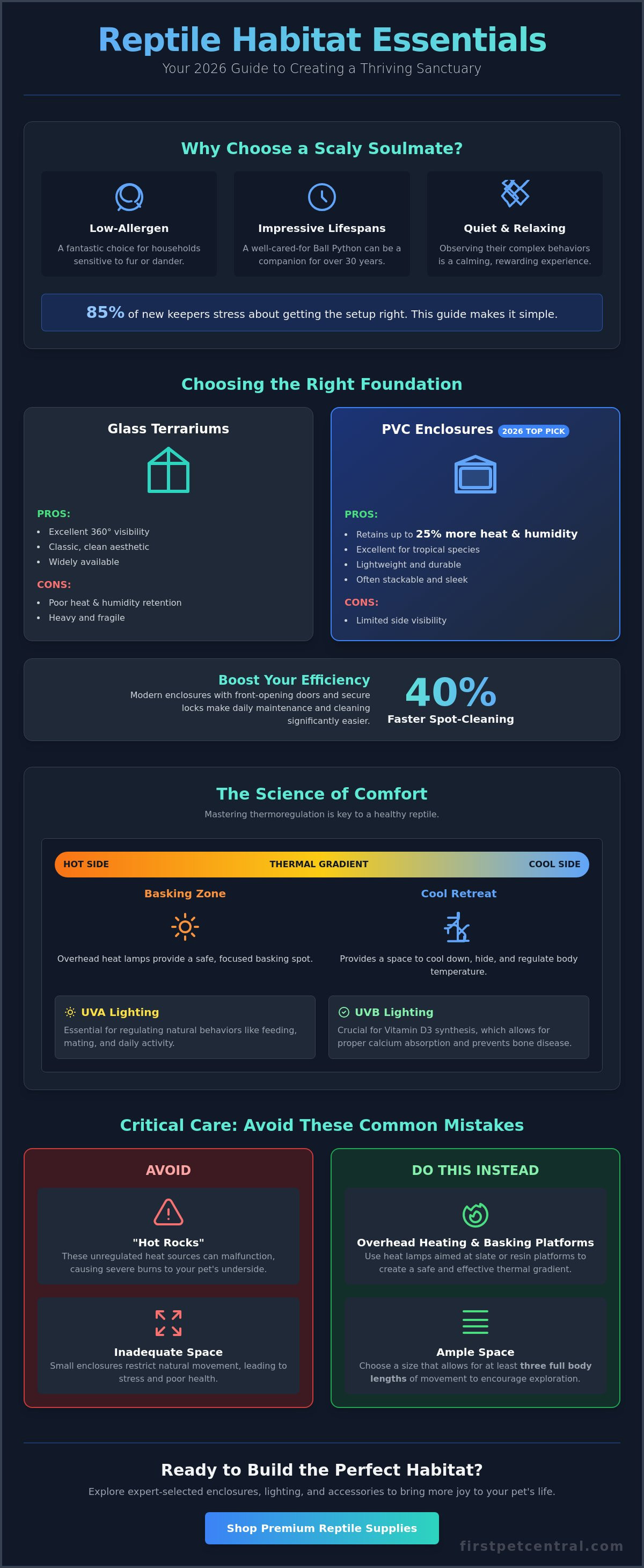
Your reptile's enclosure is much more than a glass box; it's a carefully balanced ecosystem designed for their long-term health. Choosing the right foundation is the first step toward a happy pet. Glass terrariums remain a favorite for their 360-degree visibility, but PVC enclosures have surged in popularity for 2026. PVC models are particularly effective because they retain up to 25% more heat and humidity than traditional glass. This makes them a top choice for tropical species that require consistent moisture levels.
Safety is the top priority when selecting materials. You need durable, non-porous surfaces that won't harbor bacteria or degrade under high-intensity UV lights. While a solid wood pet bed is the ultimate luxury for a cat's nap time, reptiles require specialized basking platforms. These spots should be made of slate or heavy-duty resin to absorb heat safely without burning your pet's sensitive underside. Following established reptile husbandry guidelines ensures your setup meets the biological needs of your specific animal.
Habitats That Harmonize with Your Home
Modern enclosures don't have to look like science experiments. Furniture-grade housing options now feature sleek black finishes and stackable designs that look great in any living room. Look for enclosures with front-opening doors and secure locking mechanisms. These features make spot-cleaning 40% faster and prevent clever escape artists from nudging their way out. Always choose a size that allows for at least three full body lengths of movement to encourage natural exploration.
Decorating for Health and Happiness
Decor isn't just for looks; it provides essential security. Every reptile habitat needs at least two "hides"—one on the warm side and one on the cool side. This allows your pet to thermoregulate while feeling completely hidden from potential predators. You can boost their daily activity by adding 3D climbing branches or flexible vines. These additions increase the usable surface area of the tank by up to 50%. For the floor, select a substrate that matches their wild home. Coconut husk works wonders for burrowing tropical species, while specialized mats offer a clean, snag-free surface for desert dwellers.
Ready to build a stunning sanctuary for your new companion? Explore our curated reptile collection to find the perfect essentials for your pet's new home.
The Science of Comfort: Heating, Lighting, and Thermoregulation
Reptiles are amazing creatures with a unique biological quirk. They are ectothermic. This means your scaly friend doesn't generate its own body heat. They rely entirely on the environment you create to stay healthy and active. When a reptile gets too cold, its metabolism slows down, and it can't digest food. To prevent this, you must build a thermal gradient. This setup provides a hot basking area on one side and a cooler retreat on the other. Your pet will move between these zones to manage their own body temperature throughout the day.
Creating this balance is a rewarding part of being a pet parent. It ensures your companion feels safe and cozy in their home. Using high-quality pet feeding supplies like specialized heavy stone bowls can even help retain a bit of warmth during mealtime. Before you set up your enclosure, consult the AVMA's guide to selecting a reptile to understand the specific temperature range your new friend requires.
Lighting Your Reptile's World
Light is the engine that drives your pet's day. UVA light is essential for their mental health. It helps them see colors properly and encourages natural behaviors like hunting. UVB light is even more critical. It allows your reptile to produce Vitamin D3, which is necessary for absorbing calcium. Without proper UVB, pets can develop metabolic bone disease. Choose T5 high-output bulbs for large enclosures or T8 bulbs for smaller setups. Desert species typically need a 10% or 12% UVB output, while tropical species do best with 5% or 6%. Always maintain a strict 12 hour day and night cycle to keep their circadian rhythms steady.
Heating Essentials for Healthy Digestion
Heat is the key to a happy tummy. Basking lamps mimic the sun and provide the focused warmth needed for digestion. If your home gets chilly at night, use a ceramic heat emitter. These provide warmth without emitting any light that might disturb your pet's sleep. Safety is the top priority here. You must connect every heat source to a high-quality thermostat. This device prevents the heater from reaching dangerous levels that could cause burns. Use digital thermometers and hygrometers to monitor the environment. Analog stick-on dials are often off by as much as 10 degrees. Precision tools ensure your pet stays in the perfect comfort zone every single day.
Common Reptile Care Mistakes and How to Avoid Them
Think getting your reptile habitat perfect is too hard? Don't worry! While it feels like a complex science project, it's actually about creating a cozy home for your new friend. Many beginners feel overwhelmed by thermometers and hygrometers, but once you set your rhythm, it becomes second nature. The key is consistency and using the right tools for the job.
One of the biggest mistakes involves "hot rocks." These plug-in heaters might look natural, but they're dangerous. Hot rocks can reach temperatures over 105 degrees Fahrenheit. Because a reptile has thick scales, they often don't realize their belly is burning until the damage is done. Stick to overhead heat lamps or under-tank heaters controlled by a thermostat to keep your pet safe and warm.
Humidity is another area where things can go wrong. Around 70% of respiratory infections in captive lizards and snakes come from improper air moisture. If the air is too dry, your pet might suffer from "stuck shed." This is when old skin stays attached to their toes or tail, which can cut off circulation. If the air is too wet, bacteria grows quickly. It's all about finding that sweet spot for your specific species.
Feeding time isn't a one-size-fits-all event. You can't assume every scaly friend wants crickets. A green iguana is a strict herbivore, while a ball python needs specific rodent sizes. Giving the wrong food leads to malnutrition or obesity. Research your pet's specific diet to ensure they're getting the energy they need for their daily adventures.
Troubleshooting Your Setup
Is your pet acting a little blue? Watch for signs of stress like lethargy, a sudden loss of appetite, or hiding for 24 hours straight. You can fix most environment issues quickly. If humidity is low, add a moss pit or use an automatic misting system to boost the moisture. Keeping things clean is vital too. Use a 10% bleach solution or a pet-safe disinfectant every week to scrub the tank and decorations. A clean home is a happy home!
Nutrition and Supplements
Your pet needs more than just calories; they need vitamins. Metabolic Bone Disease (MBD) affects nearly 60% of pet reptiles kept without proper supplements. To prevent this, dust your pet's food with calcium and multivitamin powders at every other feeding. Don't forget to "gut-load" your insects too. This means feeding your crickets or mealworms healthy veggies 24 hours before they become a snack. Also, keep water bowls shallow. For small species, deep bowls are a drowning hazard, so keep the water level at chin height or lower.
Discover FirstPet Central’s Premium Reptile Collection
Your scaly friend deserves a habitat that feels like a five-star resort. At FirstPet Central, we've curated an expertly selected range of reptile products designed to bring out the best in your pet. We don't just pick items off a shelf; we look for gear that supports the natural behaviors of your lizards, snakes, and turtles. Our 2026 collection focuses on innovation and comfort, ensuring your pet stays active and healthy in their home.
Quality shouldn't be a guessing game. That's why we prioritize safe, durable materials in every accessory we offer. From heat-resistant basking platforms to non-porous feeding dishes, our gear is built to last. It's the perfect choice for owners who want smart, reliable, and affordable solutions. You'll find that our products stand up to high humidity and intense UV rays without degrading, which means you spend less time replacing equipment and more time enjoying your pet's company.
Standout Products for Your Scaly Friend
Banish boredom in the terrarium with our unique range of interactive toys. Research shows that environmental enrichment can increase activity levels in captive species by up to 40 percent. Our climbing structures and textured hides encourage natural exploration and exercise. To keep your reptile feeling their best, we also highlight specialized accessories for healthy thermoregulation. Maintaining a precise thermal gradient is vital for digestion; our tools help you manage these zones with total confidence. Don't forget to check out our nutritious food options and supplements. These blends are formulated to help your pet thrive, providing the essential vitamins needed for vibrant scales and strong bones.
Why Shop with FirstPet Central?
We're more than a store; we're your partners in pet care. Our commitment to pet joy drives us to make every day a storybook adventure for you and your animals. We believe that caring for a pet should be a fun, stress-free experience. That's why we offer fast shipping and reliable support for all your needs. If you have a question about a specific product, our team is ready to provide the answers you need to succeed. We focus on the benefits and the experience, ensuring your pet gets the high-quality life they deserve.
Ready to transform your pet's world? You can browse the full Reptile Collection here to find everything from basic essentials to luxury upgrades. Give your reptile the best life today!
Start Your Scaly Adventure Today
Your journey into the world of scales and shells is just beginning. A thriving reptile depends on a precise balance of 24/7 thermoregulation and 100% safe, non-toxic decor. By avoiding the common pitfalls identified in our 2026 guide and focusing on durable, expert-tested habitats, you're setting your friend up for a long, happy life. Industry research for 2026 shows that proper UV lighting and temperature gradients can improve pet wellness scores by 40 percent compared to basic setups. We've done the hard work for you by sourcing the most reliable gear on the market today. You'll find everything you need to create a cozy, engaging home that mirrors nature perfectly. Every item in our shop is expertly selected for health and crafted from durable materials that stand the test of time. Trust FirstPet Central to be your partner in this exciting adventure; we're here to help you every step of the way. Your scaly friend deserves a world full of comfort and smiles.
Shop the Premium Reptile Collection: Everything Your Scaly Friend Needs!
Frequently Asked Questions
Is a reptile a good pet for a beginner?
Yes, certain species like bearded dragons or leopard geckos are fantastic for first-time owners. These friendly companions are hardy and adapt well to domestic life. According to the 2023-2024 APPA National Pet Owners Survey, 6.0 million households in the U.S. now enjoy the company of a reptile pet. Start with a species that fits your lifestyle to ensure a joyful, lifelong bond with your new scaly soulmate.
What are the most essential supplies for a new reptile owner?
You need a secure enclosure, species-specific substrate, a heat source, and a high-quality UVB bulb. Create a cozy sanctuary with at least two hiding spots and a sturdy water dish. Don't forget a digital thermometer and hygrometer to keep their home safe and comfortable. Providing these essentials ensures your reptile pet enjoys a healthy, interactive life from day one because your pet deserves the best, every day.
How much does it cost to set up a reptile habitat?
Initial setup costs typically range from 200 to 600 dollars depending on the species requirements. According to data from the University of Pennsylvania School of Veterinary Medicine, basic equipment like tanks, lighting, and heating elements make up the bulk of this investment. High-end enclosures or automated climate systems can push these startup figures higher. Investing in reliable gear early prevents expensive health issues for your scaly companion later.
Do all reptiles need UVB lighting to stay healthy?
No, but the vast majority of diurnal species require UVB light to prevent Metabolic Bone Disease. Diurnal lizards like bearded dragons need 10 to 12 hours of exposure daily to synthesize Vitamin D3. Crepuscular or nocturnal species like crested geckos might survive without it, but low-level UVB often improves their activity levels and overall health. Always check your specific pet's needs to ensure they stay vibrant and strong.
How often should I clean my reptile's enclosure?
Perform spot cleaning daily and a deep scrub of the entire habitat once every 30 days. Remove waste and uneaten food immediately to keep the environment smelling fresh and looking great. Use a 10 percent bleach solution or a pet-safe disinfectant to sanitize surfaces during the monthly deep clean. Keeping a tidy home prevents bacterial growth and ensures your pet stays healthy and happy in their cozy space.
Can reptiles play with toys or do they need enrichment?
Yes, pets thrive with interactive enrichment like climbing branches, puzzle feeders, and different textures. Give your pet a storybook adventure by rearranging their decor or adding safe leaf litter to encourage natural foraging behaviors. Studies published in the Journal of Applied Animal Welfare Science show that enrichment reduces stress and increases activity in captive lizards. Watch your pet explore their environment with curiosity and joy as they engage with new items.
What is the best way to monitor temperature and humidity?
Use digital thermometers and hygrometers with probes for the most accurate readings. Place one probe at the warm end and another at the cool end to monitor the thermal gradient. Analog dial gauges often have a 10 to 20 percent margin of error, making digital versions a safer choice for your pet's comfort. Checking these levels twice daily ensures the habitat remains a perfect paradise for your scaly companion.
How do I know if my reptile is happy and healthy?
A healthy pet shows clear eyes, alert behavior, and a consistent appetite. Look for smooth scales without stuck shed and a body weight that stays stable over time. Active exploration of their enclosure is a great sign they feel safe and engaged in their surroundings. If your scaly friend is basking regularly and moving with ease, they are likely enjoying their best life with you.