
Slow Feeder Dog Bowl: The Ultimate Guide to Healthier Mealtimes
by FIRSTPETCENTRAL on Feb 09, 2026

Does your pup’s dinner disappear in a flash? That frantic gulping, followed by the worry of an upset tummy or even the scary risk of bloat, can turn mealtime into a stressful event. It’s a common problem for loving pet parents, but what if you could transform that 30-second food frenzy into a fun, engaging, and healthy activity? It’s easier than you think! The secret to safer, happier mealtimes is a slow feeder dog bowl, a simple tool designed to make your dog pause, play, and enjoy their food at a healthier pace.
In this ultimate guide, we're diving into everything you need to know to protect your pup and bring some fun back to their food. Get ready to explore the amazing benefits, learn how to pick the perfect material and design, and feel confident you’re choosing a safe, durable, and stimulating bowl for your furry soulmate. Let’s turn frantic feeding into a fantastic challenge and say goodbye to those post-meal worries for good!
Key Takeaways
- Discover the tell-tale signs that your dog is eating too fast and why this common habit can be a serious health risk.
- A slow feeder dog bowl does more than just stop gulping-it's a vet-recommended tool to improve digestion, prevent bloat, and provide a fun mental workout.
- Find the paw-fect match for your pup by learning the four key factors to consider, from material and size to the right puzzle difficulty.
- Turn every meal into an adventure! Explore fun alternatives beyond the bowl that provide the same slow-feeding benefits with an extra dose of enrichment.
What is a Slow Feeder Dog Bowl & Does Your Pup Need One?
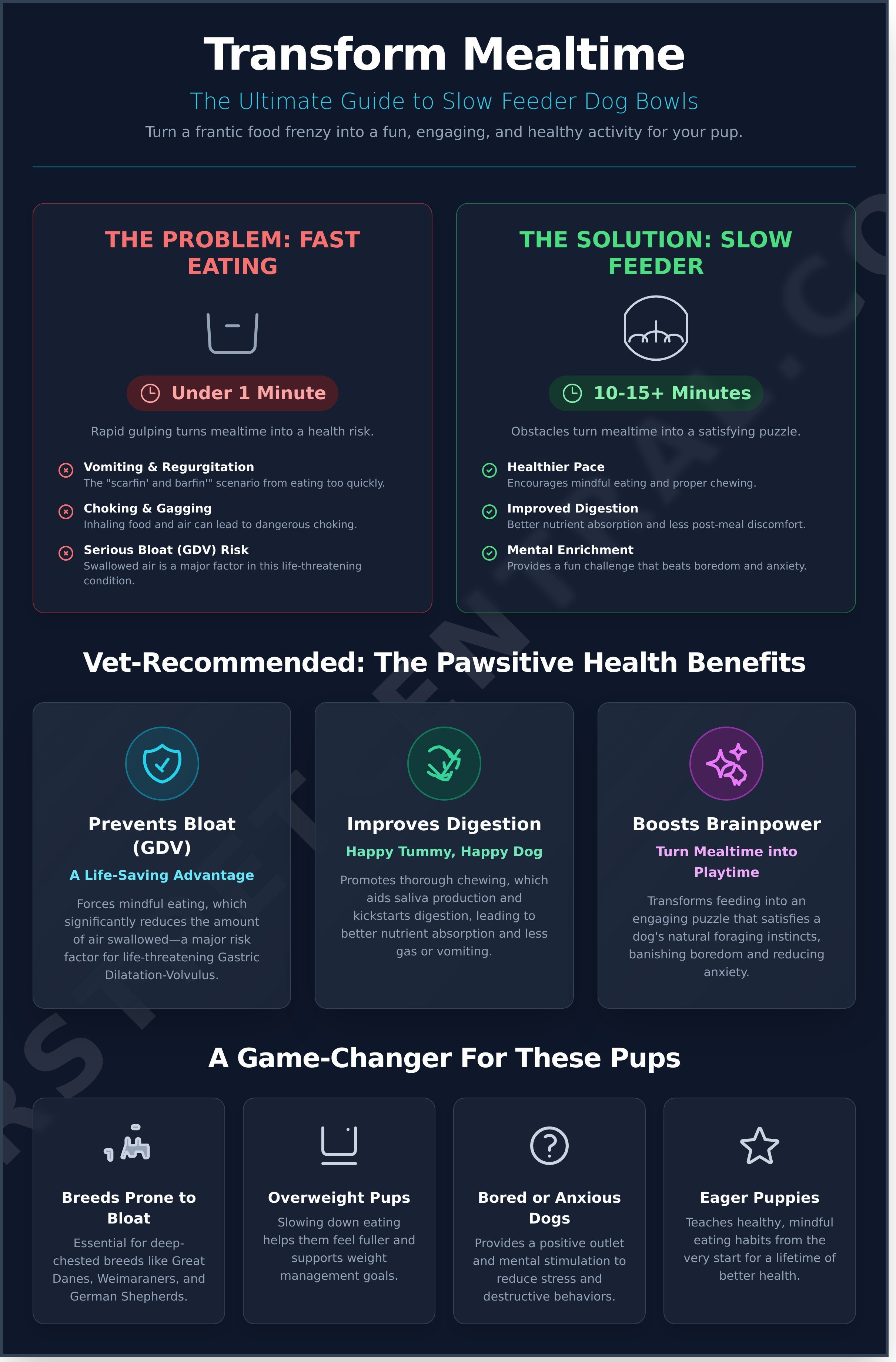
Is your dog’s dinner gone in a flash? If mealtime looks more like a magic trick than a meal, you’re not alone. Enter the slow feeder dog bowl-a brilliant solution that’s part food dish, part puzzle! Unlike a standard bowl that allows for rapid gulping, a slow feeder features fun patterns and obstacles that encourage your pup to eat at a healthier, more natural pace. It's designed to turn a frantic 2-minute feast into a fun and engaging 15-minute game.
See the amazing difference it can make in real-time:
This simple swap does more than just slow them down; it helps prevent the all-too-common "scarfin' and barfin'" scenario. By making your dog work a little for their food, you’re supporting better digestion and turning mealtime into a source of mental enrichment.
Spotting a Speedy Eater
Not sure if your pup is a speed demon? These tell-tale signs are hard to miss. If you notice any of these behaviors, it's a clear signal that it's time to upgrade their dining experience.
- Vomiting or Regurgitation: Finding undigested food on the floor shortly after a meal.
- Gagging or Coughing: Choking sounds during meals as they inhale food and air.
- Bloating and Gas: A swollen belly or excessive gassiness after eating.
- Food Guarding: Acting overly possessive of their bowl or trying to steal from others.
Who Benefits Most from a Slow Feeder?
While any fast eater can benefit, a slow feeder dog bowl is a game-changer for certain pups. Promoting healthier eating habits is a cornerstone of proper canine nutrition, and this simple tool can make a world of difference for these furry friends:
- Breeds Prone to Bloat: Such as Great Danes, Weimaraners, and German Shepherds.
- Overweight Pups: Helping them feel fuller and supporting weight management goals.
- Bored or Anxious Dogs: Providing much-needed mental stimulation and a fun challenge.
- Eager Puppies: Teaching them healthy, mindful eating habits from the very start.
The Pawsitive Health Benefits: Why Vets Recommend Slow Feeders
Think a fast-eating pup is just a quirky habit? Think again! Swapping their regular dish for a slow feeder dog bowl is one of the easiest and most impactful upgrades you can make for their long-term health and happiness. It’s not just about slowing them down; it’s about protecting their physical health, promoting better digestion, and even giving their brain a fun workout. Let’s dig into the vet-approved benefits that can keep your furry friend safe, sound, and smiling.
Preventing Bloat (GDV): A Life-Saving Advantage
Bloat, or Gastric Dilatation-Volvulus (GDV), is a dog parent's worst nightmare. It’s a life-threatening emergency where the stomach fills with gas and twists on itself. A major risk factor? Gulping down food and swallowing huge amounts of air in the process. A slow feeder makes this nearly impossible by creating fun obstacles that force your dog to eat mindfully. This simple switch is a powerful, proactive step in preventing a terrifying and costly emergency vet visit.
Improving Digestion and Nutrient Absorption
Happy tummy, happy dog! When dogs eat slowly, they chew their food more thoroughly. This simple action stimulates saliva, which contains natural enzymes that kickstart digestion before the food even hits their stomach. Better digestion means less gas, discomfort, and post-meal vomiting. More importantly, it helps their body absorb all the healthy nutrients from their food. Making mealtime mindful is a key part of holistic wellness, a principle supported by expert advice on canine feeding from top veterinary institutions.
Boosting Brainpower and Beating Boredom
Turn mealtime into playtime! A slow feeder transforms a 30-second food frenzy into an engaging puzzle. This fun challenge satisfies your dog's natural instinct to forage and work for their meal, which is incredibly rewarding for them. It's the perfect way to:
- Banish boredom and reduce anxiety
- Channel their energy into a positive activity
- Provide essential mental stimulation
How to Choose the Paw-fect Slow Feeder Bowl for Your Dog
Ready to turn mealtime into a fun and healthy adventure? Not all slow feeders are created equal! Finding the right one is about matching the bowl to your dog’s unique personality and needs. Let’s break down the four key factors to help you pick a winner and feel confident in your choice.
Material Matters: Plastic, Steel, Ceramic, or Silicone?
The foundation of a great slow feeder dog bowl is its material. Each one offers different benefits for you and your pup.
- Plastic: These are affordable, lightweight, and come in countless fun designs. Pro: Widely available and budget-friendly. Con: Can get scratched, creating places for bacteria to hide. Always choose a high-quality, BPA-free option.
- Stainless Steel: The super-durable, hygienic champion. Pro: Extremely tough, rust-resistant, and dishwasher-safe for easy cleaning. Con: Fewer intricate puzzle designs are available compared to plastic.
- Ceramic: Heavy, stable, and stylish. Pro: Won't slide around the floor, making it great for enthusiastic eaters. Con: Can chip or crack if dropped, and any cracks can harbor bacteria.
- Silicone/Rubber: Flexible, foldable, and perfect for pets on the go. Pro: Ideal for travel and often dishwasher-safe. Con: Not a great match for heavy chewers, so check for durability.
Size and Puzzle Difficulty
Think Goldilocks-you want a bowl that’s just right. Match the bowl’s size to your dog's typical meal portion, not just the size of their head, to ensure they get their full serving. When it comes to the puzzle:
- Start simple! If your dog is new to slow feeders, choose a bowl with lower ridges and a simpler pattern to build their confidence and avoid frustration.
- Challenge your clever pup. For brainy dogs who master puzzles quickly, a more complex maze will provide excellent mental stimulation.
- Consider snout shape. Flat-faced breeds like Pugs and French Bulldogs need shallower, wider designs that won’t squish their noses.
The Clean-Up Factor
A fantastic slow feeder is one you'll actually use every day, and that means cleaning can't be a chore. Keep it simple! Look for dishwasher-safe materials like stainless steel and silicone to make sanitizing a breeze. Simpler maze patterns are much easier to hand-wash, as they have fewer nooks and crannies where food can get stuck. A quick inspection before buying can save you a lot of scrubbing later.
Beyond the Bowl: Fun Alternatives for Slow Feeding
Ready to turn mealtime into an adventure? While a slow feeder dog bowl is a fantastic tool for healthier eating habits, it's not the only way to add enrichment to your dog's day. Different foods and moods call for different solutions! Expanding your toolkit with these fun alternatives helps keep your furry friend mentally sharp, happy, and engaged, transforming a simple meal into a rewarding experience.
Lick Mats for Wet Food and Treats
A lick mat is a flat, textured mat perfect for spreading soft foods like plain yogurt, peanut butter, or your dog's favorite wet food. The repetitive act of licking is incredibly soothing for anxious pups, helping to release calming endorphins. For a refreshing treat that lasts even longer, simply pop a loaded lick mat in the freezer!
Snuffle Mats: A Foraging Fiesta
Unleash your dog's inner detective! A snuffle mat is made of soft fabric strips where you can hide dry kibble or treats. This taps directly into your dog's powerful sense of smell and natural foraging instincts, turning a meal into an exciting game of hide-and-seek. It’s a perfect rainy-day activity to burn off mental energy when a long walk isn't an option.
Interactive Puzzle Feeders
Boost your dog’s brainpower with a puzzle feeder! These engaging toys require your dog to slide, nudge, or lift pieces to reveal a tasty reward. They are an amazing way to build confidence and sharpen problem-solving skills, preventing boredom and destructive behaviors. Just like a slow feeder dog bowl, these toys make your dog work for their food in a fun, healthy way.
- Builds Confidence: Every solved puzzle is a small victory for your pup.
- Busts Boredom: Keeps their mind active and engaged for a happier dog.
- Strengthens Your Bond: Work on puzzles together for quality time.
Ready to challenge your clever companion? Explore our fun interactive puzzle toys to keep your dog engaged and learning!
Making the Switch: How to Introduce a Slow Feeder
Ready to turn mealtime into a fun-filled game? Fantastic! Introducing a new slow feeder dog bowl should be an exciting adventure for your pup, not a frustrating chore. Some dogs dive right in, while others might be a little hesitant about change. That's perfectly okay! The key is to set them up for success with a positive, patient approach. Remember, the goal is fun and healthy engagement. With a few simple steps, your furry friend will be a pro at their new dining game in no time.
Step 1: Start Easy
First impressions are everything! Begin with a bowl that has a simple, wide-patterned maze rather than a complex one. This ensures an easy win for your pup, building their confidence from the start. To make it absolutely irresistible, smear a tiny bit of dog-safe peanut butter or wet food in the grooves. Place the bowl on the floor and let your dog sniff and explore it on their own terms, without any pressure. This helps them see the new object as a source of delicious treats, not a confusing obstacle.
Step 2: Mix It Up
Avoid going cold turkey, which can cause anxiety. For the first few meals, create a "best of both worlds" scenario. Put half of their regular kibble in their old, familiar bowl so they can eat without stress. Then, place the other half-perhaps mixed with some extra-tasty, high-value treats-into the new slow feeder. This clever trick prevents them from getting frustrated and giving up, building a powerful and positive association with the new puzzle.
Step 3: Supervise and Praise
Be your dog's biggest cheerleader! Stay nearby for the first few sessions to offer gentle encouragement and make sure they're not getting stuck. When they successfully retrieve a piece of kibble, praise them with an excited "Good job!" Your positive energy is contagious and reinforces that they're solving the puzzle correctly. Once they’ve mastered the challenge and eat confidently from their slow feeder dog bowl, you can transition fully and enjoy the benefits of healthier, mindful eating.
Ready to start this fun journey? Check out our durable and easy-to-clean Slow Food Bowl and begin the mealtime adventure!
Make Every Meal a Pawsitive Experience
Turning mealtime into a fun challenge is one of the best things you can do for your furry friend. As we've seen, these special bowls do more than just slow down speedy eaters; they prevent dangerous bloating, turn feeding into an engaging puzzle, and boost your dog's overall digestive health. Making the switch to a slow feeder dog bowl is a simple yet powerful way to upgrade your pup's daily routine from basic to brilliant.
Ready to banish boredom and make dinner the best part of the day? Explore our collection of smart pet feeding supplies today! We're trusted by thousands of happy pet parents just like you. Plus, with Free Shipping On All Orders and a 30-Day Money-Back Guarantee, you can shop with total confidence.
Go on, give your best friend the gift of a healthier, happier tummy. It's an easy step towards ensuring they get the best, every single day.
Frequently Asked Questions
Are slow feeder bowls frustrating or cruel for dogs?
Not at all! Think of it less as a frustration and more as a fun, engaging game. A slow feeder bowl turns mealtime into a stimulating puzzle, tapping into your dog's natural foraging instincts. This mental workout prevents boredom and makes eating a rewarding adventure. It’s a simple switch that adds a dash of healthy fun to their daily routine, keeping their mind and body happy!
How often should I clean a slow feeder dog bowl?
To keep your furry friend healthy and their bowl sparkling, it's best to clean their slow feeder after every meal. Those fun nooks and crannies can trap food particles and bacteria, so a daily wash is key! A quick scrub with warm, soapy water is usually all it takes. For a deeper, hands-free clean, check if your bowl is dishwasher-safe-many are designed for easy, top-rack washing.
Can puppies and senior dogs use slow feeders?
Absolutely! Slow feeders are fantastic for dogs of all ages. For energetic puppies, they help establish healthy eating habits from the start and provide much-needed mental stimulation. For our beloved seniors, they can aid digestion and make mealtime more engaging without being too physically demanding. Just be sure to choose a design with a pattern that matches their size and ability for the best experience.
What's the difference between a slow feeder and a puzzle feeder?
Great question! While both are super engaging, their main goals differ slightly. A slow feeder dog bowl is designed specifically to slow down eating during a full meal, which improves digestion and helps prevent bloat. A puzzle feeder is typically a treat-dispensing toy, designed for mental stimulation and play in shorter bursts. Think of a slow feeder for dinner and a puzzle feeder for a fun afternoon challenge!
Can I use a slow feeder for wet food or raw diets?
You sure can! Many slow feeders work wonderfully with wet, raw, or fresh food. The key is to choose a bowl with wider, shallower patterns instead of deep, narrow crevices. This makes it easier for your pup to enjoy every last bite and makes cleanup a breeze for you. Materials like silicone or smooth, non-porous plastic are perfect choices for messier meals.
Will a slow feeder help my dog lose weight?
A slow feeder can be a fantastic tool in your dog's weight management plan! By making your dog take longer to eat, it helps their brain register that they are full, which can prevent overeating. This improved digestion and feeling of satiety supports healthy weight goals. While it’s not a substitute for proper portion control and exercise, it’s a wonderful, supportive step toward a healthier lifestyle for your best friend.