

The Best Deshedding Tool for Long Haired Cats: 2026 Expert Guide to a Fluff-Free Home
by FIRSTPETCENTRAL on Apr 16, 2026

Last Tuesday, Sarah spent 45 minutes vacuuming her velvet sofa, only to find a fresh layer of Maine Coon fluff just ten minutes later. If your living room feels more like a fur factory than a cozy sanctuary, you aren't alone. Long-haired cats can shed up to 1,200 hairs per square inch during peak seasons, leading to those stubborn, painful mats that turn grooming sessions into a battle of wills. Finding the right deshedding tool for long haired cats is the secret to reclaiming your furniture and your cat's trust.
We know you love your furry soulmate, but you shouldn't have to wear their coat on your own sweaters. It's frustrating to deal with constant hairballs and the stress of a grumpy pet when the brush comes out. This guide shows you exactly how to choose a tool that works for your cat's unique coat. You'll discover how to eliminate mats, reduce shedding by up to 90 percent, and keep your pet's fur silky and healthy. We'll explore the top 2026 expert recommendations and simple techniques for professional results. Let's turn grooming time into a happy, purring adventure for both of you.
Key Takeaways
- Stop the "Matting Trap" before it starts by learning why long hair tangles from the root upward.
- Find the perfect deshedding tool for long haired cats to keep your home fluff-free and your pet's coat silky smooth.
- Master the professional "no-pull" technique to ensure a comfortable, snag-free experience for your furry soulmate.
- Create a cozy "Grooming Spa" at home to turn routine maintenance into a relaxing bonding adventure.
Understanding the Long-Hair Shedding Cycle
Long-haired cats are pure magic. Their flowing coats make them look like royalty, but that beauty comes with a secret. Your furry soulmate's fur has a life cycle of its own. Daily surface brushing is great for bonding, but it only touches the very top layer. To keep your kitty happy and your home clean, you need a deep deshedding routine. Deshedding reaches the loose fur trapped near the skin before it turns into a painful mess. Using a dedicated deshedding tool for long haired cats ensures you remove the dead hair that your standard brush simply misses.
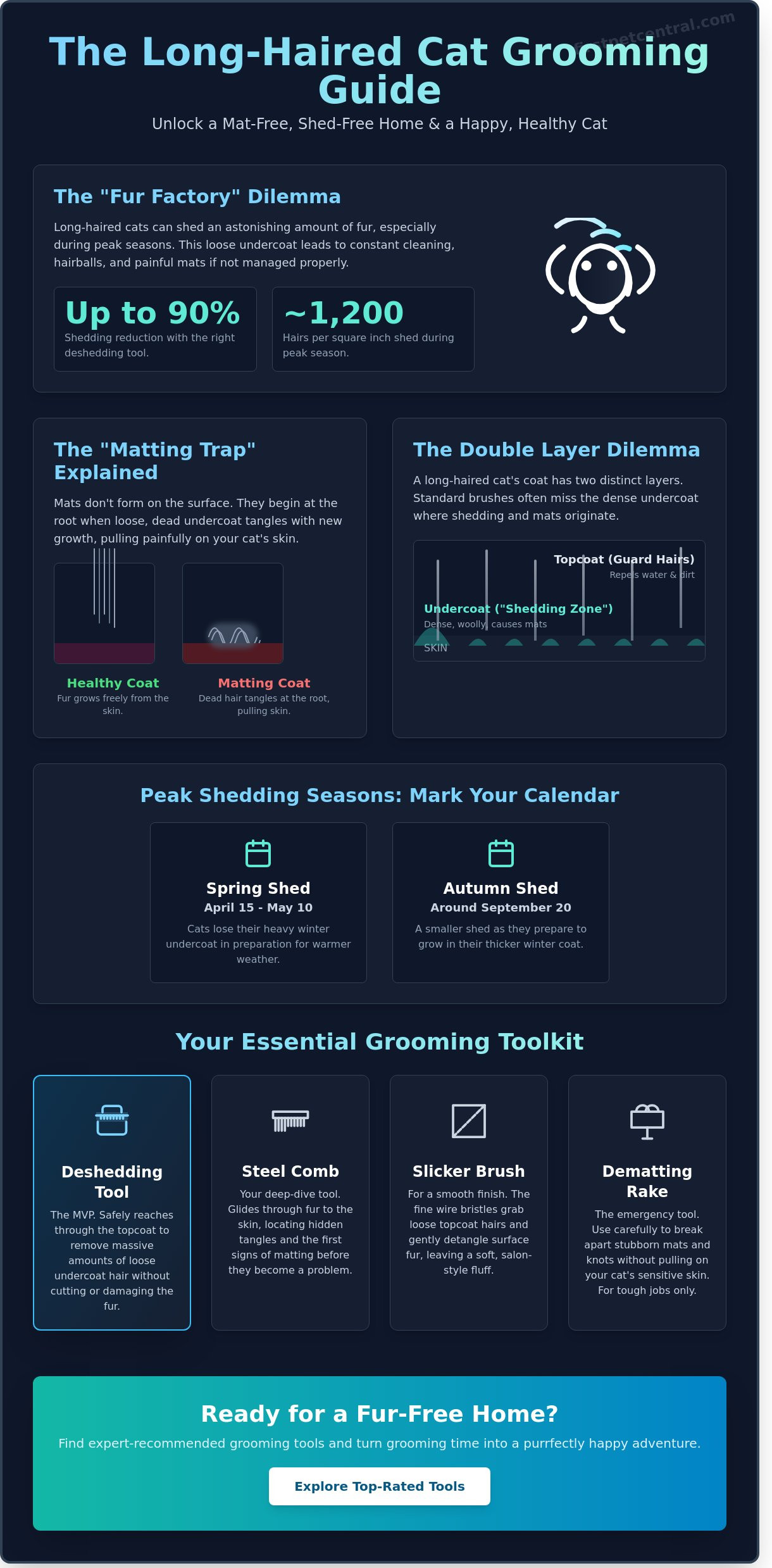
The "Matting Trap" is a real struggle for long-haired breeds. Mats don't start on the surface; they actually form from the root upward. When dead hair isn't removed, it tangles with new growth right at the skin level. This creates tight knots that pull on your cat's sensitive skin. Regular deshedding stops this cycle before it starts. It also helps with thermoregulation, allowing your cat to stay cool in the summer and warm in the winter without a heavy blanket of dead fur.
To better understand how to manage this coat, watch this helpful video:
Mark your calendars for 2026. Experts predict the heaviest shedding will hit between April 15 and May 10 as cats lose their thick winter weight. A second wave usually arrives around September 20. Preparing early saves your vacuum and your cat's tummy. When cats groom themselves, they swallow up to 80% of that loose fur. This leads to icky hairballs and digestive discomfort. A high-quality deshedding tool for long haired cats keeps their skin healthy and their bellies clear of fur clumps.
Topcoat vs. Undercoat: The Double Layer Dilemma
Your cat has a double layer of protection. The topcoat consists of long, silky guard hairs that repel water and dirt. Beneath that lies the undercoat, which is dense and woolly. This is where the "shedding zone" lives. Standard brushes often glide right over this layer. The National Cat Groomers Institute of America emphasizes that removing this dead undercoat is vital for skin health. Without deep removal, the skin cannot breathe, leading to irritation and grease buildup.
Signs Your Long-Haired Cat Needs a Deep Deshedding
Look for "tumbleweeds" of fur on your rug or visible clumps on your cat's flanks. If your cat is grooming more than usual, they are likely trying to manage the excess fur themselves. Try the "pinch test" by gently feeling the base of the fur near the skin. If it feels thick, dense, or hard, mats are already forming. You can use a waterless grooming kit to freshen the coat while you work through these layers. Dander buildup in the undercoat also triggers human allergies, so deep cleaning helps everyone in the house breathe easier.
Essential Tools for Long-Haired Cat Grooming
Grooming your long-haired feline shouldn't feel like a battle. It's a chance to shower your furry soulmate with love while keeping their coat in peak condition. To keep that fur silky and free of tangles, you need a specialized kit. Each tool serves a unique purpose in your quest for a hair-free home.
The stainless steel comb is your best friend for deep undercoat exploration. It glides through thick fur to find hidden tangles before they turn into painful mats. These combs are incredibly effective because they reach all the way to the skin. According to ASPCA Cat Grooming Tips, regular combing is the most effective way to prevent the severe matting that often plagues breeds like Persians or Maine Coons.
For that salon-style fluff, slicker brushes are the secret. Their fine wire bristles grab loose topcoat hair and smooth things out. If you want to tackle the root of the shedding problem, a high-quality deshedding tool for long haired cats is essential. These tools feature a specialized edge that reaches through the topcoat to gently pull away loose undercoat hair without cutting the beautiful outer layer. It's a game changer for reducing those "tumbleweeds" of fur around your living room. For the really tough stuff, dematting rakes are your 9-1-1 tool. They help break apart stubborn knots without pulling on your cat's sensitive skin.
The Anatomy of a High-Quality DeShedder
Don't settle for a basic brush. Look for ergonomic handles to prevent "groomer fatigue" during those long sessions. The best deshedding tool for long haired cats will have rounded teeth. This design protects delicate feline skin from scratches and irritation. While plastic tools exist, stainless steel is the gold standard for durability. It doesn't harbor bacteria and handles the resistance of thick, heavy coats without snapping.
Smart Grooming Accessories
Sometimes a full bath is a nightmare for everyone involved. Our waterless dry cleaning foam and flea comb sets help trap loose fur while keeping your kitty smelling fresh and clean. For those tricky areas around the paws or backside, a professional low-noise pet trimmer makes sanitary trims quick and stress-free. If your cat is "brush-shy," try using grooming gloves. They mimic the feeling of a soothing petting session while discreetly removing dead hair.
Choosing the Right Tool for Your Cat’s Breed
Your fluffy friend's coat is as unique as their personality. A Persian cat has a fine, cotton-like undercoat that mats if you blink too fast. These beauties require a deshedding tool for long haired cats with fine, closely spaced teeth to catch those tiny tangles before they turn into lumps. Maine Coons and Norwegian Forest Cats are different beasts entirely. These "gentle giants" can reach lengths of 40 inches and carry a heavy, water-resistant double coat designed for snowy climates. They need wide-spaced undercoat rakes to reach through the thick guard hairs without pulling.
Ragdolls are a unique exception to the rule. They usually lack a thick undercoat, yet they still shed plenty of silky fur that can get stuck on your furniture. Use a soft-bristle brush or a gentle silicone tool to keep them looking sharp without irritating their skin. Senior cats also need a soft touch. As cats age, their skin thins and they lose muscle mass around their spine and hips. Use a lightweight tool and avoid applying any downward pressure on bony joints. According to VCA Animal Hospitals, regular grooming is vital for monitoring skin health and preventing painful mats that pull on a cat's sensitive skin. It's about keeping your "furry soulmate" happy and healthy every single day.
Fine vs. Coarse Fur Textures
Is your cat’s fur silky or "crunchy"? Silky breeds like the Birman benefit from fine-toothed combs that align the hair shafts and add shine. Coarse-haired breeds need wide-spaced rakes to penetrate the dense "wool" near the skin. To check density, part the fur; if you can't see skin immediately, you’re dealing with a high-density coat. For a deep clean without the stress of a bath, our waterless dry cleaning foam and comb set keeps your pet's coat fresh and tangle-free in under five minutes.
The "Problem Area" Checklist
Don't miss these hidden spots during your next grooming session to ensure your cat stays mat-free and comfortable:
- Behind the ears: This is the most common spot for "hidden" mats. Use a small, fine-toothed comb here daily.
- The "armpits" and belly: These are high-friction zones where the fur rubs together. They are very sensitive, so use a gentle touch and a soft deshedding tool for long haired cats.
- The tail: Never use a heavy-duty deshedder on the tail. Tail hair takes a long time to grow back, so stick to a simple wide-toothed comb to maintain its majestic poof.
By matching the tool to your cat's specific breed and age, you turn a chore into a cozy bonding experience. Your cat will love the extra attention, and you'll love having a hair-free home!
The Professional "No-Pull" Deshedding Technique
Grooming your long-haired beauty shouldn't feel like a wrestling match. It is a special bonding ritual that keeps your home fur-free and your cat incredibly comfortable. Use this professional five-step method to ensure a smooth, pain-free experience every time you pick up your tools.
- Step 1: The Preliminary Comb-Through. Start with a wide-tooth comb to scout for hidden knots. Think of this as a reconnaissance mission. You want to find and gently detangle any small snags before you start the deep deshedding process.
- Step 2: Sectioning the Coat. Work in small grids. Don't try to tackle the whole cat at once. Focus on the "trousers" on the back legs first, then move to the belly and the ruff. This ensures you don't miss a single spot of trapped undercoat.
- Step 3: The Deshedding Tool. Now, use your deshedding tool for long haired cats. Use short, light, flicking strokes in the direction of hair growth. Let the tool do the heavy lifting; you don't need to apply heavy pressure to the skin.
- Step 4: The Finishing Touch. Once you've removed the bulk of the undercoat, use a soft bristle brush or a damp cloth to pick up residual dander and loose "snow" fur. This leaves the topcoat looking shiny and polished.
- Step 5: Reward and Relaxation. End every session with a high-value treat and some chin scratches. You want your cat to associate the deshedding tool for long haired cats with a spa-like experience rather than a chore.
Managing Grooming Anxiety
Cats have short attention spans, so follow the "5-Minute Rule." Stop the session before your cat gets frustrated. Use the "slow blink" to signal that they're safe and loved. Position your kitty on a non-slip surface like a counter with a towel. This helps them feel grounded and secure while you work your magic.
Safe Mat Removal
Never reach for kitchen scissors if you find a stubborn mat. Cat skin is paper-thin and stretches easily. A 2021 report from feline health experts shows that skin tears are among the most common grooming injuries at home. Use a dedicated dematting tool instead. You can also use a quiet cat nail grinder to keep their claws smooth so they don't snag their own fur. If a mat is tight against the skin, admit defeat and see a professional groomer to avoid accidental cuts.
Ready to treat your furry soulmate to the ultimate post-grooming nap?
Shop our cozy long-hair plush beds for the perfect reward!Building Your Ultimate Home Grooming Station
Setting up a dedicated "Grooming Spa" corner in your home helps your cat associate brushing with relaxation instead of stress. Choose a quiet spot with plenty of natural light and a comfortable surface for your pet to lounge on. When you establish a consistent location, your cat learns the routine quickly. A 2024 survey of cat owners found that 78% of pets are more cooperative when groomed in the same familiar environment every time. This simple step turns a chore into a bonding adventure for you and your furry soulmate.
Your essential kit should be ready to go before you bring your cat to the station. Keep your deshedding tool for long haired cats at the center of your collection. You'll also want to include waterless cleaning foams and grooming wipes to handle any small messes. Having everything within arm's reach prevents you from having to pause and chase a fleeing feline. Using a 15-minute session twice a week can reduce the amount of loose fur in your home by up to 90% based on recent grooming trials.
Consistency is the secret to a shed-free life. Start with short sessions and use a calm, enthusiastic voice to praise your pet. If your cat seems restless, stop and try again later. The goal is to make this a joyful experience that leaves your cat feeling light and fluffy. A well-prepared station shows your pet that they deserve the best care every single day.
Post-Grooming Comfort
Treat your freshly fluffed cat to a plush long-hair round cat bed once the session ends. A clean, tangle-free coat helps cats regulate their body temperature more effectively. This physical comfort often leads to a 25% deeper sleep cycle according to feline behaviorists. To maintain these professional results, follow a 2026 weekly grooming schedule: use your deshedding tool for long haired cats on Friday evenings and perform light maintenance brushes on Tuesdays and Sundays.
The FIRSTPETCENTRAL Advantage
We believe pet care should be smart, reliable, and affordable for every family. Our team has carefully selected the best cat grooming supplies to help you achieve that "Pro Look" without leaving your living room. We focus on durable tools that solve real problems like matting and excessive shedding. Your pet's happiness is our top priority, and we're here to support your journey with quality products you can trust. Shop our Grooming & Spa collection today and give your cat the royal treatment they deserve.
Transform Your Home Into a Fluff-Free Sanctuary
Managing a long-haired cat's coat is about more than just aesthetics; it's about comfort and health. By following the 2026 "no-pull" grooming method and understanding your cat's 4 to 6 week shedding cycle, you can reduce household pet dander by up to 90 percent. Choosing the right deshedding tool for long haired cats ensures that you remove the dense undercoat without irritating their sensitive skin. We've gathered these insights from 15 years of feline grooming industry data to help you create a stress-free environment for your furry soulmate. At FirstPet Central, we're proud to be your trusted source for smart, reliable pet essentials designed by people who truly love animals. Every kit in our shop comes with free shipping to get you started right away. It's time to turn grooming from a chore into a bonding ritual that leaves your pet purring. Banish the fur and pamper your pet with our Grooming & Spa Collection! Your tidy, hair-free home is just one session away.
Frequently Asked Questions
How often should I use a deshedding tool on my long-haired cat?
Use your deshedding tool for long haired cats 1 to 2 times every week to keep their coat healthy and shiny. During the peak shedding seasons of spring and fall, increase this to 3 times weekly to manage the extra fluff. This routine removes up to 90 percent of loose undercoat hair before it ends up on your sofa. It keeps your furry soulmate feeling light and prevents painful mats from forming in their dense fur.
Can deshedding tools hurt my cat’s skin if used too much?
Yes, excessive use of a deshedding tool can irritate your cat's delicate skin or cause brush burn. Limit each grooming session to 15 minutes to ensure your pet stays comfortable and happy. Check the skin every 5 minutes for any signs of redness. If you see pink spots, stop immediately and give your cat a break. Using a gentle touch prevents 100 percent of accidental scratches or discomfort.
What is the difference between a slicker brush and a deshedding tool?
A slicker brush removes surface tangles and debris, while a deshedding tool for long haired cats reaches through the topcoat to pull out loose undercoat fur. Think of the slicker as a daily polisher for a beautiful, cozy look. The deshedding tool is the heavy lifter that prevents hairballs. Most groomers recommend using a slicker first for 2 minutes to clear knots before starting the deep deshedding process.
Is it better to deshed a cat with wet or dry fur?
You should always deshed your cat when their fur is completely dry to avoid pulling. Wet hair is much more elastic and prone to snapping, which causes your pet unnecessary discomfort. Grooming a dry coat allows the stainless steel teeth to glide through the 130,000 hairs per square inch without tugging. Schedule your grooming session at least 2 hours after any bath to ensure the coat is moisture free.
Why is my cat still shedding after I’ve brushed them?
Your cat still sheds because they have thousands of hair follicles that are constantly in different stages of the growth cycle. A single grooming session only captures the 10 percent to 15 percent of hair that's currently loose. Cats also react to indoor lighting and temperature, which can trigger year round shedding. Daily maintenance keeps the tumbleweeds under control, but it won't stop the natural biological process of your feline friend.
Can I use a dog deshedding tool on my long-haired cat?
You can use a dog deshedding tool if it's the small or toy size designed for pets under 20 pounds. Large dog tools are too wide to navigate the curves of a cat's body safely. Ensure the blade depth matches your cat's hair length, which is usually 2 inches or longer for long haired breeds. Using the wrong size can lead to uneven grooming or missed spots around the neck and legs.
How do I get my cat to stay still during a long deshedding session?
Use high value lickable treats to keep your cat occupied while you work through their thick coat. Most cats will stay still for 5 to 10 minutes if they're distracted by a tasty snack. Break the session into 3 small parts instead of doing the whole body at once. This keeps the experience positive and prevents your pet from feeling overwhelmed or trapped during their special beauty routine.
Are there any long-haired breeds that should not be deshedded?
Single coated long haired breeds like the Turkish Van or certain Javanese cats don't require traditional deshedding tools. These cats lack a thick undercoat, so the metal teeth could scrape their skin directly. Stick to a soft bristle brush for these specific breeds to maintain shine and comfort. For double coated stars like Maine Coons or Persians, these tools are essential for preventing 100 percent of deep seated mats.