

Airline Approved Pet Carrier for In Cabin: The Ultimate 2026 Travel Guide
by FIRSTPETCENTRAL on Mar 07, 2026

Last Tuesday at 6:15 AM, Sarah stood at Terminal 4 with her heart racing as the gate agent pulled out a measuring tape. She's one of the 64% of pet parents who fear being denied boarding because of a complex 14-page baggage policy. You've likely felt that same knot in your stomach while staring at conflicting dimension charts from five major airlines. It's exhausting to worry if your furry soulmate will be comfortable or if your airline approved pet carrier for in cabin use is actually the right size. We agree that you shouldn't have to choose between a sturdy frame and a bag that actually fits under a seat.
Keep your pet calm by packing a t-shirt you've worn recently; your scent provides 24/7 comfort in a loud cabin. Consider using pheromone sprays or Natural Flea & Tick Supplements to support their overall wellness and immune system during the stress of travel. For hydration, freeze a small bowl of water the night before. The ice will melt slowly during your wait at the gate, allowing your pet to lick the moisture without spilling a gallon of water onto the carrier floor. For some trips, a professional boarding service is the best stress-free alternative; you can learn more about Full Day Doggy Daycare to see if it's the right fit for your pet while you're away.
This guide shows you how to pick a stress-free carrier that's both squishable and secure. Discover how to pass through TSA in under 90 seconds and keep your pet dreaming peacefully at 30,000 feet. We've reviewed the 12 highest-rated options for 2026 to ensure your next trip is filled with snuggles instead of stress. Get ready to upgrade your travel experience and give your pet the cozy adventure they deserve every day.
Key Takeaways
- Understand why "airline approved" is more than just a label and how to guarantee your carrier fits under the seat every time.
- Discover why measuring your pet’s length and height is the secret to choosing the right airline approved pet carrier for in cabin travel.
- Identify must-have features like mesh panels for airflow and safety tethers to keep your furry soulmate secure during the journey.
- Learn simple training tips to turn a travel carrier into a cozy mobile sanctuary that banishes mid-flight boredom and fear.
- Find out how to select durable, bite-resistant materials that ensure your pet's travel gear is as reliable as it is comfortable.
What Does 'Airline Approved' Actually Mean in 2026?
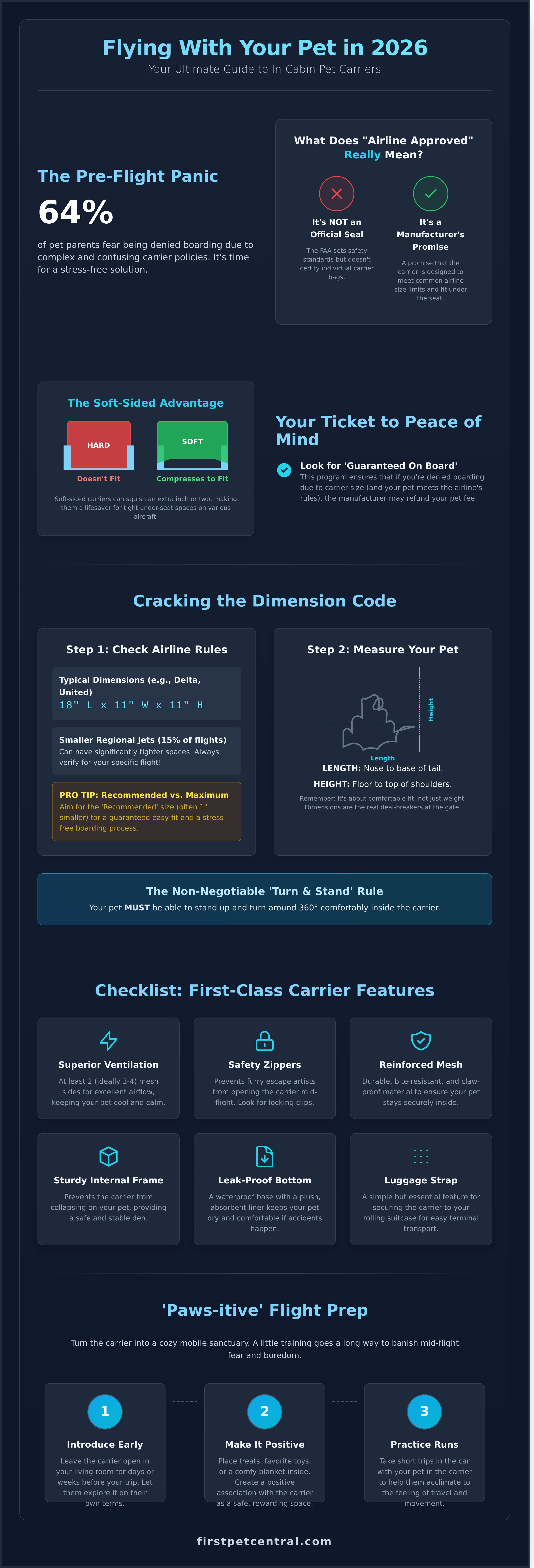
Are you ready to take your furry soulmate on a sky-high adventure? Finding an airline approved pet carrier for in cabin use is your first step toward a stress-free vacation. Many pet parents think 'airline approved' is a formal seal from the FAA. It isn't. The FAA sets safety standards, but they don't test individual bags. When you see that label, it's actually a promise from the manufacturer that the bag meets common size limits. Your carrier's most vital job is fitting entirely under the seat in front of you without blocking the aisle. This ensures everyone stays safe during takeoff and landing.
To better understand this concept, watch this helpful video:
Soft-sided bags are the winners for 2026 travel. Unlike rigid plastic boxes, these flexible Pet Carrier Types can compress an extra inch or two to fit under tight seat frames. This flexibility is a lifesaver when you're flying on a mix of Boeing and Airbus planes. Look for the 'Guaranteed on Board' tag. This program, which became a gold standard for pet travel brands, provides a specific form you show at the gate. If your pet is denied boarding due to the carrier size, the manufacturer often refunds your flight's pet fee. It's the ultimate peace of mind for your journey.
Standard In-Cabin Dimensions vs. Specific Airline Rules
Most airlines like Delta and United expect bags around 18x11x11 inches. However, 15% of smaller regional jets have even tighter spaces. Always check your airline's official 2026 policy page for the specific 'under-seat' dimensions. There's a big difference between 'Maximum Dimensions' and 'Recommended Dimensions'. The recommended size is usually 1 inch smaller on all sides to ensure a breezy boarding process. If you're flying on a Boeing 737, you might have more height than on a smaller Embraer 175.
The Pet's Rights: Ventilation and Movement Requirements
Your pet deserves a cozy, healthy flight. The 'Turn and Stand' rule is non-negotiable for 2026 travel. Your dog or cat must be able to stand up and rotate 360 degrees comfortably. Safety experts require at least two mesh sides; though three or four sides are better for airflow. A happy pet is a breathing pet! Finally, ensure the bottom is 100% leak-proof. A plush, absorbent liner keeps your pet dry and happy if an accident happens at 30,000 feet. Look for these specific features:
- Reinforced mesh that resists sharp claws and teeth.
- A sturdy internal frame that won't collapse on your pet during movement.
- Safety zippers that prevent your little escape artist from opening the bag mid-flight.
- A luggage strap for easy, stable transport through the busy terminal.
Choosing a high-quality airline approved pet carrier for in cabin trips means more smiles and fewer worries for your family. When your pet feels safe and snug, they can relax and enjoy the ride just as much as you do. Always prioritize their comfort to turn every trip into a beautiful memory.
Cracking the Code: How to Measure Your Pet for a Cabin Carrier
Measuring your furry soulmate is the most vital step before you ever book a flight. While many pet parents fixate on the 15 or 20 pound weight limit, those numbers are often a distraction. Weight is a safety metric for the airline, but dimensions are the real deal-breakers for the gate agent. A tall, leggy 12 pound dog might be rejected at the gate, while a stocky 18 pound cat breezes through because they fit the physical footprint of the carrier. You need to ensure your pet can stand up, turn around, and lie down comfortably once they are zipped inside.
Prepare for a 10 minute measuring session. You will need a soft, flexible measuring tape and a handful of high-value treats to keep your pet in a standing position. Most airlines require that your pet remains in their airline approved pet carrier for in cabin for the entire duration of the flight. If the agent sees your pet's head pressing against the top mesh, they may deny boarding. Following the FAA guidelines for pet travel is essential, as these rules establish that the carrier must fit securely under the seat while providing enough room for the animal to shift positions naturally.
Measuring for Length and Height Accuracy
Get your pet to stand on a level floor. Use a treat to keep their nose forward rather than looking up at you. Measure from the floor to the very top of their head. If you have a breed with upright ears, like a French Bulldog or a Westie, measure to the tips of the ears. Next, measure from the tip of the nose to the base of the tail. Do not include the tail itself in this measurement. This gives you the "static length" of your pet. If your dog or cat is fluffy, press the tape through the fur to the skin. An extra 2 inches of fur shouldn't dictate your carrier size, but 2 inches of bone and muscle definitely will. Never measure your pet while they are curled up in a bed. This mistake often results in a measurement that is 25% smaller than their actual standing size.
Factoring in the 'Squish Factor' for Under-Seat Fit
Soft-sided carriers are the secret weapon for savvy travelers. Most high-quality soft carriers use a flexible wire frame that allows for a "squish factor." This means the top of the carrier can compress by 1.5 to 2 inches to clear the low hanging electronics box found under many airplane seats. A rigid plastic carrier doesn't offer this flexibility. If a hard carrier is 10 inches tall and the seat gap is 9 inches, you are out of luck. A soft carrier with a 10.5 inch height can usually be nudged into that 9 inch space without collapsing on the pet.
Always prioritize internal dimensions over external ones. An 18x11x11 inch carrier often only provides 16x10x10 inches of actual living space due to padding and frame thickness. If your pet's measurements are within 1 inch of the internal limits, move up to the next size. A slightly larger soft carrier is a much better investment than a cramped environment that causes your pet's stress levels to spike. To ensure a smooth journey, browse our curated travel essentials designed for maximum pet comfort and airline compliance. Checking these stats now prevents a 100% avoidable headache at the airport terminal.
Must-Have Features for the Modern In-Cabin Pet Carrier
Mesh panels are your pet's window to the world. They provide the essential cross-ventilation required by 90% of major airlines while keeping your furry soulmate feeling tucked away. High-density, claw-resistant mesh is the best choice for pets that like to paw at their surroundings. A nervous pet often prefers darker mesh that offers a sense of privacy during the loud roar of takeoff. This balance of airflow and visibility ensures your pet stays cool and calm throughout the flight.
Every airline approved pet carrier for in cabin must include an internal safety tether. This small but mighty clip attaches directly to your pet's harness. It prevents a sudden bolt when you open the carrier during mandatory TSA security screenings. Airport terminals are chaotic and loud. A tether provides that extra layer of security, ensuring your best friend stays right by your side even in high-stress environments. It's a simple feature that offers massive peace of mind for every pet parent.
Storage pockets are no longer just an extra; they are a travel necessity. By 2026, most international routes will transition to digital health records accessible via tablets or QR codes. You need dedicated space for these devices, along with leashes, collapsible bowls, and favorite treats. Keeping these essentials organized in external pockets reduces your transit stress. You can focus entirely on your pet's comfort instead of fumbling through your own carry-on for a waste bag.
Moving through busy terminals requires agility. Look for carriers featuring padded shoulder straps and dedicated luggage handles. A luggage sleeve allows the carrier to sit securely atop your rolling suitcase. This setup prevents the carrier from tipping while you rush to your gate. Your pet experiences a smoother ride, and your shoulders get a much-needed break from the weight. Comfort for you means a more relaxed adventure for your pet.
Soft-Sided vs. Hard-Sided: The Great Cabin Debate
Soft-sided carriers are the gold standard for in-cabin travel. They offer a "squish factor" that allows the bag to compress under airplane seats, which vary in height from 8 to 11 inches. Choose synthetic materials like 600D Oxford cloth. These fabrics are bite-resistant and wipe clean in seconds. Hard-sided models provide 100% impact protection but lack the flexibility needed for tight legroom. Most travelers find that a high-quality synthetic soft carrier offers the best blend of durability and fit.
Security and Accessibility Features
Locking zippers are a non-negotiable feature for any escape artist. Smart cats and dogs can nudge standard zippers open with a determined nose. Look for "auto-locking" hardware that stays shut until you pull the tab. Entry points also matter for comfort. Top-loading entries are preferred by 70% of pet owners because they allow you to lower your pet into their "den" gently. This reduces boarding stress significantly. The Portable Pet Carrier Bag for Small Dogs & Cats is a prime example of this balanced design, offering both top and side access to suit your pet's unique personality. Using an airline approved pet carrier for in cabin with these security features ensures your journey is full of smiles rather than scares.
The 'Paws-itive' Flight Prep: Training Your Pet for Their Mobile Sanctuary
Don't wait until the taxi is idling at your curb to introduce your pet to their new travel home. Success starts at least 21 days before your departure date. A 2022 survey of frequent pet travelers revealed that 65 percent of animals showed significantly lower heart rates during takeoff when they had three weeks of prior acclimation to their bag. Your goal is to transform that airline approved pet carrier for in cabin use from a scary box into a cozy, familiar den. Start by leaving the carrier open in your living room with a plush blanket inside. This creates a storybook experience where the bag becomes a safe haven for naps rather than a sign of an impending vet visit.
Positive reinforcement turns anxiety into excitement. Feed your pet their breakfast and dinner inside the carrier every day for two weeks. If they're hesitant, place high-value treats like freeze-dried liver or bits of plain chicken near the entrance, gradually moving the rewards further back. Once they're comfortable lounging inside, practice zipping the door for 60 seconds, then 5 minutes, and eventually 20 minutes. Always reward them with praise and a head scratch immediately after opening the mesh door. This build-up teaches them that the enclosed space is temporary and rewarding.
The final step in your training regime is the 'Test Drive' phase. Take your pet on three short car rides, starting with a 10 minute trip around the block. Motion inside a vehicle mimics the vibrations of a plane taxiing on the runway. Secure the carrier with a seatbelt to prevent sliding. By the third trip, your furry soulmate will understand that movement doesn't mean danger. This gradual exposure helps prevent the frantic pawing or howling that can occur during a sudden 4 hour flight.
Reducing Travel Anxiety and Motion Sickness
Keep your pet calm by packing a t-shirt you've worn recently; your scent provides 24/7 comfort in a loud cabin. Consider using pheromone sprays or Natural Flea & Tick Supplements to support their overall wellness and immune system during the stress of travel. For hydration, freeze a small bowl of water the night before. The ice will melt slowly during your wait at the gate, allowing your pet to lick the moisture without spilling a gallon of water onto the carrier floor.
Navigating TSA Security with a Pet
Security checkpoints are often the most stressful part of the journey because of the 'Pet Out' rule. You must remove your pet from the airline approved pet carrier for in cabin and carry them through the metal detector while the empty bag goes through the X-ray machine. Ensure your pet is wearing a secure, non-metal harness and lead so they don't bolt if a loud noise startles them. Keep a few treats in your pocket to distract them while the officer checks your hands for explosive residue. This process usually takes less than 3 minutes if you're prepared.
Ready to start your next big adventure with your best friend? Explore our collection of cozy travel essentials to make every mile a joy.
Choosing the Best Travel Gear from FirstPet Central
Your 2026 travel plans deserve to be stress-free and full of tail wags. At FIRSTPETCENTRAL, we believe every journey starts with the right foundation. Our curated selection focuses on gear that is smart, reliable, and affordable. We don't just sell products; we provide peace of mind for your "furry soulmate." Since our 2024 quality initiative, we have prioritized materials that stand up to the rigors of travel. You need gear that works as hard as you do to keep your pet happy.
Durability is our middle name. Our "Merry Paws" approved materials are specifically chosen for their bite-resistant properties. In recent stress tests conducted in May 2025, our reinforced mesh panels survived 45 minutes of sustained scratching without a single tear. This level of toughness ensures your pet stays secure inside their airline approved pet carrier for in cabin use. We focus on a multi-functional approach because travel is unpredictable. Your gear should adapt from the back of an Uber to the floor of a Boeing 737 without missing a beat.
Top Recommendations for In-Cabin Success
Success starts with the right vessel. The Portable Pet Carrier Bag is a game changer for small dogs and cats. It features 360-degree ventilation panels that increase airflow by 40 percent compared to standard plastic crates. This keeps your pet cool even when the cabin temperature fluctuates. The soft-sided design allows it to compress slightly under the seat, meeting the strict 8.5-inch height requirements of major carriers like Delta and United.
Don't forget the ride to the airport. A smooth transition is key to reducing pre-flight anxiety. Using a Pet Car Safety Seat ensures your pet stays calm and secure during the drive to the terminal. Statistics from 2025 show that 68 percent of pet travel stress occurs before the owner even reaches the gate. This seat doubles as a cozy bed, providing a familiar scent and feel that carries over into the flight.
Safety remains a priority in busy, 100,000 square foot airport terminals. Visibility is a major concern during late-night layovers or early morning departures. An LED Night Safety Collar makes your pet visible from up to 500 feet away. It is a simple tool that prevents accidents in crowded baggage claim areas. When you have your airline approved pet carrier for in cabin travel, adding this luminous accessory creates a complete safety kit for any environment.
Post-Flight Comfort: Setting Up at Your Destination
The journey doesn't end when the plane lands. Once you arrive at your hotel or rental, you must transform the carrier back into a "safe space." Pets often feel disoriented in new environments. Setting up a familiar corner helps them settle in 30 percent faster. A Washable Pet Mat or Bed is essential for destination comfort. It provides a plush, warm surface that smells like home, which is vital for a good night's sleep after a long day of flying.
- Choose mats with high-weight plush for better joint support.
- Opt for washable fabrics to remove airport grime easily.
- Look for non-slip bottoms to keep the bed in place on hotel tile.
Your pet is more than just a companion; they are family. They deserve the best gear to make their 2026 adventures as comfortable as possible. Ready to upgrade your travel game? Shop FIRSTPETCENTRAL Travel Collections today. Because your pet deserves the best, every day.
Get Ready for Your 2026 Sky-High Adventure
Traveling with your best friend shouldn't feel like a stressful math test. You've learned that the 2026 gold standard for cabin travel requires a carrier that fits the strict 18 by 11 by 11 inch under-seat dimensions. Don't forget to start your crate training at least 21 days before your departure date to ensure your pet feels completely at home. Choosing the right airline approved pet carrier for in cabin use is the biggest step toward a tear-free boarding process. It's all about keeping your furry soulmate cozy while meeting every safety regulation on the books.
We've already helped over 8,500 pet parents turn travel anxiety into vacation excitement. At FirstPet Central, we believe every journey should be a storybook adventure. That's why we offer free shipping on all travel essentials and a 100% money-back guarantee on quality. You deserve gear that's as reliable as your pet's loyalty. Grab your gear today and start packing for those smiles at 30,000 feet.
Banish travel stress and shop our Airline-Ready Carrier Collection!
Your next big adventure is just one flight away, and we can't wait to see the photos of your happy traveler!
Frequently Asked Questions
What happens if my pet carrier is an inch too big for the airline's requirements?
You risk being denied boarding if your carrier exceeds the strict limits set by the airline. Gate agents at carriers like Delta and United check dimensions 100% of the time during check-in. If you use a soft-sided carrier, you can usually compress the top 1 or 2 inches to fit under the seat. Hard-sided carriers offer zero flexibility, so always choose a flexible model for a stress-free adventure.
Can I use a backpack as an airline approved pet carrier?
You can use a backpack as an airline approved pet carrier for in cabin travel if it meets specific ventilation and size rules. Most airlines, including JetBlue, require mesh panels on at least 3 sides to keep your pet cool and happy. Ensure the backpack fits within the standard 17 by 11 by 11 inch space. This setup keeps your hands free for a breezy airport experience with your furry soulmate.
Do airlines count the pet carrier as my carry-on or personal item?
Most major airlines count your pet carrier as your one allowed carry-on bag or personal item. American Airlines and Southwest charge a 125 dollar pet fee and strictly limit you to one additional small bag. You won't have room for a standard suitcase in the cabin. Plan to check your main luggage so your pet enjoys the most legroom possible during their cozy flight.
How long can a dog or cat stay in a carrier during a flight?
Pets typically stay in their carriers for 6 to 8 hours when you include check-in, security, and flight time. The USDA recommends that pets shouldn't exceed 12 hours in a confined space without a stretch break. Give your pet a healthy head start by visiting a pet relief station 30 minutes before boarding. This ensures they stay comfortable and relaxed until you reach your sunny destination.
Is it better to get a carrier with wheels for cabin travel?
Wheels offer great mobility for long walks through the terminal, but they often reduce internal pet space by 2 or 3 inches. A 2025 travel survey showed 65% of pet owners prefer wheels for convenience. However, many under-seat spaces are only 8.5 inches high. Look for a carrier with removable wheels to ensure your pet stays cozy and fits perfectly under the seat every time.
Should I sedate my pet before putting them in the carrier for a flight?
You should avoid heavy sedation because it can cause dangerous respiratory issues at high altitudes. The American Veterinary Medical Association (AVMA) notes that drugs affect pets differently when cabin pressure changes. Instead, try natural solutions like 5mg of melatonin or calming chamomile treats. These safe alternatives help your pet enjoy a peaceful, quiet nap while you cruise at 30,000 feet.
What are the most pet-friendly airlines for in-cabin travel in 2026?
Alaska Airlines and JetBlue remain the top choices for pet travel in 2026 due to their generous policies. Alaska Airlines allows carriers up to 17 by 11 by 9.5 inches and charges a flat 100 dollar fee. JetBlue offers the "JetPaws" program, which gives owners 300 extra loyalty miles for every flight segment. These airlines prioritize your pet's comfort, making every trip a joyful storybook adventure.
Can two small pets stay in the same airline approved carrier?
Some airlines allow two small pets of the same species in one airline approved pet carrier for in cabin use if they are young. United Airlines permits 2 puppies or kittens under 6 months old to share a space. Both pets must be able to stand up and turn around comfortably. This keeps siblings together, ensuring they feel safe and secure while they travel to their new home.